Trading In a Financed Car: What Happens to What You Still Owe
The loan gets paid off either way. Whether it gets paid off with your money or with the next loan’s money is the only question that matters.
The short version
- You can trade in a car you still owe money on. The question is not whether it is allowed, it is what happens to the balance.
- If the car is worth less than you owe, the shortfall does not disappear. It usually moves onto the next loan, where you pay interest on it for years.
- The federal data on this is unusually clear. Buyers who financed negative equity borrowed far more, over longer terms, at a loan-to-value ratio well above the value of the car — and were more than twice as likely to have the account sent to repossession within two years.
- If a dealer says they will pay off your old loan and then rolls it into the new one instead, the FTC's position is that this is illegal.
- The number that governs everything is the payoff quote from your lender, not the balance on your last statement. Get it before you go anywhere.
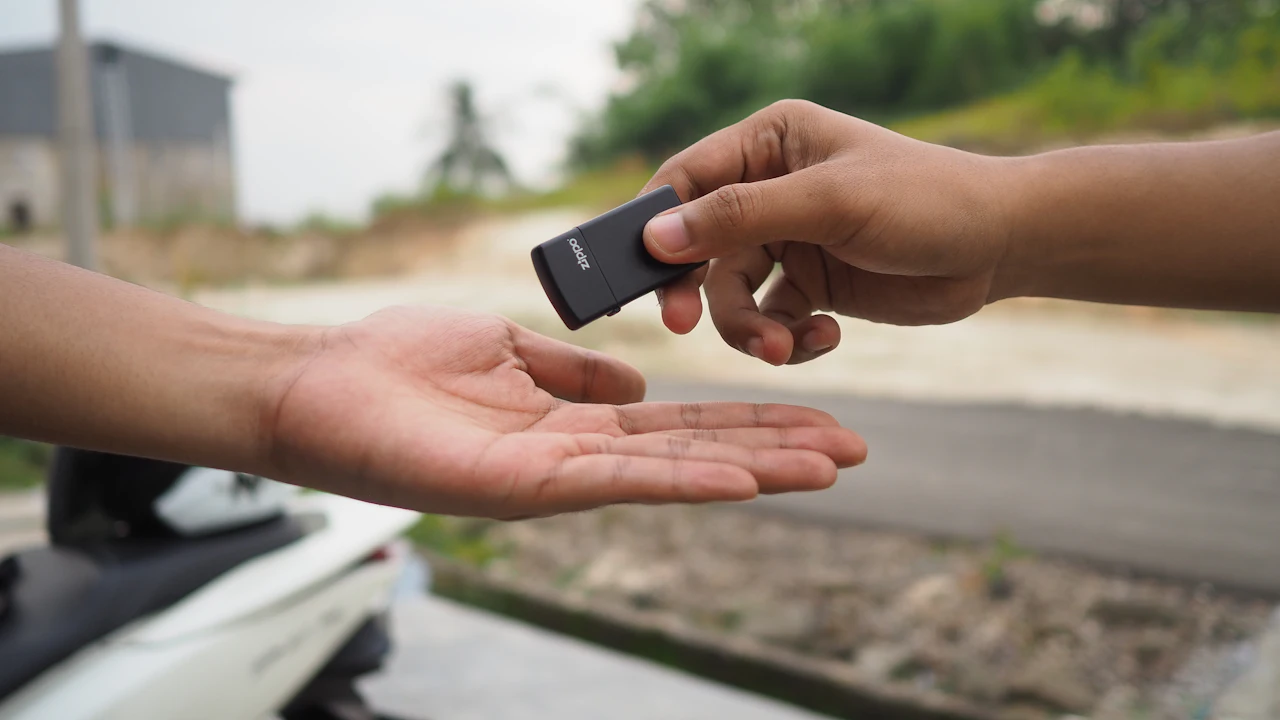
Most people who trade a car in still owe money on it. That is the ordinary case, not the awkward one, and the mechanics are routine: the dealer values your car, pays off your lender, and whatever is left over goes towards the new purchase.
The awkward case is when the payoff is bigger than the valuation. Then there is nothing left over — there is a shortfall, and it has to go somewhere. Where it goes, and whether you notice it going there, is the whole subject.

What actually happens to the loan
A car loan is secured against the car. Your lender holds a lien, and the title cannot pass to a new owner until that lien is released, which happens when the loan is paid. So the loan has to be settled as part of the trade — it cannot simply be transferred to the dealer or to the next buyer.
The dealer handles this by paying your lender directly out of the transaction. From there, one of three things is true.
- The car is worth more than you owe. You have positive equity. The payoff is settled, and the surplus becomes your deposit on the next car. This is the good outcome and it is the one the advertising imagines.
- The car is worth roughly what you owe. The loan clears, nothing is left, and you start the next one from zero. Neutral.
- The car is worth less than you owe. You have negative equity. The dealer still has to pay your lender in full, so the difference has to come from somewhere: your own cash, or the new loan.
Almost nobody pays it in cash. So in practice, "trading in a financed car with negative equity" means borrowing the shortfall again, adding it to the price of a different car, and paying interest on the combined figure for the length of the new term.
The mechanism, plainly. Suppose the trade-in is valued at fifteen thousand dollars and the payoff quote is eighteen thousand. The three-thousand-dollar difference is negative equity. It does not get forgiven when the car leaves. It gets added to what you finance on the next car — so you are now borrowing the price of the new vehicle plus three thousand dollars for a car you no longer own.
What the federal data says about doing this
This is one of the rare consumer-finance questions where a regulator has actually measured the outcome. In June 2024 the Consumer Financial Protection Bureau published a report on negative equity in auto lending, drawn from its auto finance data pilot and covering loans originated from the start of 2018 to the end of 2022.
Across that period, negative equity was financed into around one loan in nine. The share moved with the used-car market: it peaked at just over seventeen per cent in 2020 and fell to just under eight per cent in 2022, when used values were unusually strong and fewer buyers were underwater. Roughly a third of loans involved a trade-in with positive equity, and rather more than half involved no trade-in at all.
The interesting part is what the loans themselves looked like.
| Measure | Financed negative equity | Positive-equity trade-in | No trade-in |
|---|---|---|---|
| Amount financed | $36,805 | $28,244 | $26,767 |
| Loan-to-value ratio | 119.3% | 88.9% | 101.6% |
| Monthly payment | $626 | $496 | $493 |
| Loan term | 73 months | 68 months | 67 months |
| Contract interest rate | 7.7% | 6.1% | 8.0% |
| Credit score | 704 | 752 | 732 |
The loan-to-value row is the one to sit with. An average above one hundred and nineteen per cent means that, on the day the paperwork was signed, the typical borrower in this group already owed nearly a fifth more than the car was worth. Not eventually. Immediately.
The payment row follows from it. On the Bureau's figures the average monthly payment for this group was around twenty-seven per cent higher than for buyers with no trade-in — and the term was longer as well, so the higher payment was also being made for more months.
One row cuts against the story and is worth stating rather than hiding: the average contract interest rate for negative-equity borrowers was lower than for buyers with no trade-in. That is not evidence the practice is harmless. It reflects who is in each group — negative-equity buyers averaged a higher credit score than no-trade-in buyers, and a better score buys a better rate. The damage here is not being done by the rate. It is being done by the size of the balance and the length of the term.
The finding that should decide it
Rates and terms are abstract. This is not.
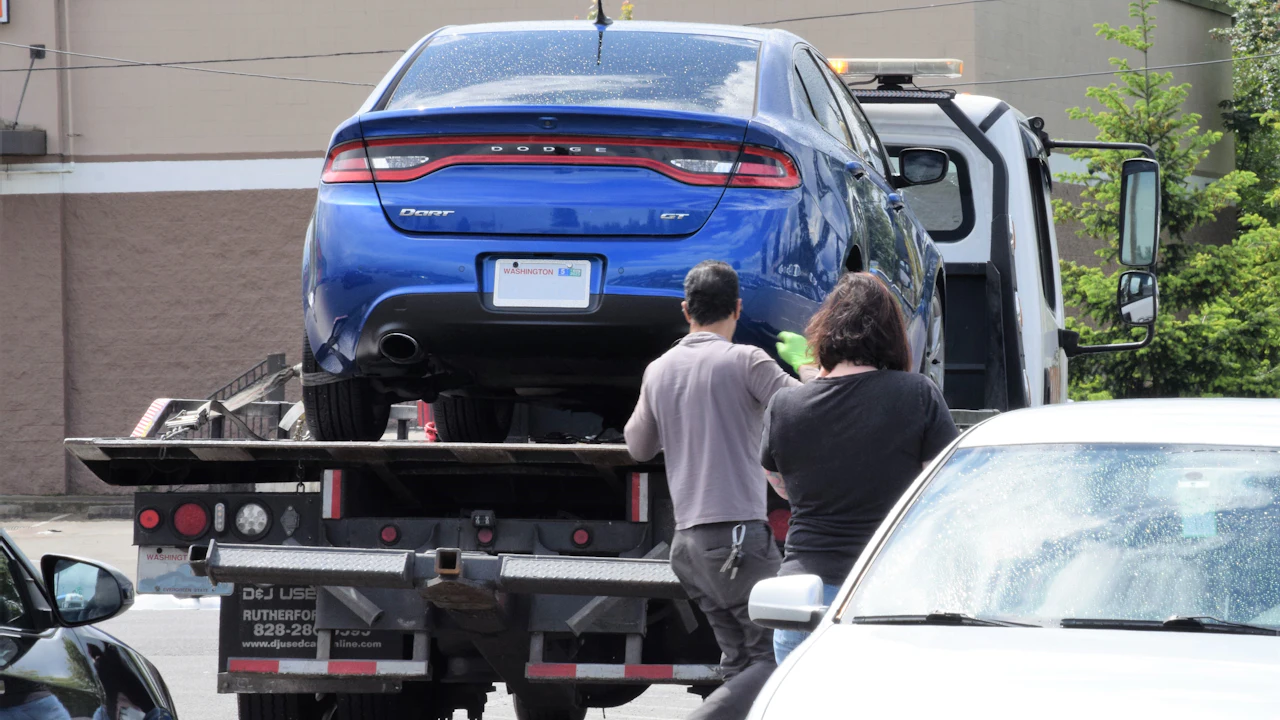
The Bureau found that consumers who financed negative equity were more than twice as likely to have their account assigned to repossession within two years as consumers who traded in with positive equity, and close to one and a half times as likely as consumers with no trade-in at all.
It is worth being careful about what that does and does not prove. This is an association drawn from a large sample, not a controlled experiment, and people who roll negative equity forward may differ from those who do not in ways the data cannot fully separate. The Bureau is measuring outcomes, not proving causation.
But the mechanism is not mysterious. A larger balance on a longer term against a car worth less than the debt means a bigger payment, a longer exposure, and no equity to fall back on if circumstances change. There is nothing to sell your way out of. If you need to stop making the payments, you cannot sell the car and clear the loan, because the car has never been worth the loan.
"We'll pay off your trade, whatever you owe"
This is the advertising line that turns a bad idea into a complaint, and the FTC addresses it directly.
The agency's position is unambiguous: some dealers say you will not be responsible for the remaining balance on your old car loan when you trade it in, and that might not be true — instead, some dealers just roll the negative equity into your new car loan, so you still end up paying it. And the FTC states the consequence plainly: if a dealer told you they would pay off your car themselves, but they really rolled the cost into a loan, that is illegal.
Two things follow.
First, the promise is checkable, and it is checkable in the document rather than in the conversation. If the dealer is genuinely absorbing the shortfall, the amount financed on your new contract will not contain it. If they are not, it will. There is no third possibility and no room for interpretation, which is why the FTC's advice is to make sure the negative equity is not included in your new financing or your final loan contract.
Second, the place to check is the amount financed, not the monthly payment. A rolled-in balance is easy to hide inside a payment by adding months to the term. It cannot be hidden inside the amount financed, because that is simply the total you are borrowing.
The one-line test. Take the agreed price of the new car, add tax and any fees, subtract your deposit and the agreed trade-in allowance. Compare that with the amount financed on the contract. If the contract figure is higher, the difference is your old loan, and it has been rolled in — whatever anyone said in the showroom.
Get the payoff quote first, and get the right one
Everything above turns on one number, and most buyers arrive without it.
The balance printed on your last statement is not the figure that settles your loan. A payoff quote is the amount required to clear the loan on a specific date, including interest accrued since your last payment, and it is usually quoted good through a set number of days. Ask your lender for it directly. Most will give it over the phone or in an online account in minutes.
Knowing it before you walk in changes the conversation completely. Without it, you cannot tell whether the trade-in allowance you are offered is generous or terrible, because you do not know what it has to beat. With it, the trade becomes a single subtraction you can do in your head.
Before you discuss a trade-in
- Get the payoff quote from the lender in writing, with the date it is good through.
- Get at least two independent valuations of your car, from sources that are not the dealer buying it.
- Subtract. The result is your equity, positive or negative, and it is the only number that matters until it is settled.
- If it is negative, decide before you go whether you are willing to finance the shortfall. Deciding that at the desk is deciding it under pressure.
- Ask the lender whether there is a prepayment penalty. Most car loans have none, but it is a one-question check.
The options that are not "roll it in"
Rolling the shortfall forward is presented as the only way to get out of a car you no longer want. It is not.
Wait. This is unglamorous and it is often the correct answer. Negative equity closes on its own as the loan amortises and depreciation flattens. Every month you wait, the gap narrows. If you are a year from break-even, waiting a year costs you nothing but patience and saves you a balance you would otherwise carry for six more years.
Sell it privately and pay the difference in cash. A private sale generally realises more than a trade-in allowance, which shrinks the shortfall before you have to fund it. It is more work — you have to coordinate the lien payoff with the lender and the buyer, and a car with an outstanding loan needs the payoff to happen before the title can transfer — but it converts a financed shortfall into a smaller one-off payment.

Pay the shortfall down first. If you are close, closing the gap with savings before you trade turns a rolled-in balance into nothing at all. The same money spent this way is worth more than it is as a deposit, because it stops interest accruing on the old debt rather than merely reducing the new one.
Buy less car. If the shortfall genuinely has to be financed, financing it on top of a cheaper vehicle over a shorter term is a materially different transaction from financing it on top of a more expensive one over seventy-three months. The CFPB's own figures show negative equity is proportionally heaviest on cheaper vehicles — for cars under twenty thousand dollars it made up roughly a quarter of the purchase price — which is precisely where a shorter term does the most good.
If you are going to do it anyway
Sometimes the car has to go. The commute changed, the family grew, the repairs stopped making sense. In that case the aim is to do it in the least damaging way available.
Doing it least badly
- Negotiate the new car's price before mentioning the trade. A trade-in and a purchase are two transactions, and combining them lets a good number on one hide a bad number on the other.
- Fix the term first. Decide the longest term you will accept before you see a payment quote. Term is the lever used to make a rolled-in balance feel affordable, and it is the lever that does the long-term damage.
- Put real money down. A deposit that at least covers the shortfall means you start the new loan at a normal loan-to-value rather than above the value of the car.
- Check the amount financed against your own arithmetic before signing, using the one-line test above.
- Get pre-approved elsewhere first. An offer from your own bank or credit union gives you a rate to compare against, and it makes the financing conversation a comparison rather than a negotiation.
- Do not let the old loan go unconfirmed. Keep making payments until you have written confirmation the payoff has cleared. A late payment reported after the trade is a real and common outcome.
Two checks on the car you are buying
Everything above is about the car you are leaving. The car you are taking on deserves the same scepticism, and for a trade with rolled-in negative equity it deserves more, because the loan will outlast the car's easy years by a wide margin.
Two things are worth knowing before the paperwork rather than after. The first is whether the vehicle has open safety recalls, which is free to check from the VIN at NHTSA and takes under a minute. The second is the title and damage history — a car carrying a salvage, flood or other loss brand is worth substantially less than its clean equivalent, which matters enormously when you are already starting the loan above the car's value. If the vehicle you roll your shortfall into is itself worth less than it appears, the gap you were trying to escape gets wider rather than narrower.
A full vehicle history report covers the title brands, reported accidents and odometer readings in one place. Whatever source you use, do it before you agree a figure, not after.
If the payoff comes back higher than the car is worth, the trade-in is not the first question to settle. Our guide to negative equity on a car loan covers what actually closes that gap, and why rolling it into the next loan is the option that compounds it.
Common questions
Can I trade in a car I still owe money on?
Yes, and it is the normal case. The lender's lien has to be cleared before the title can pass, so the dealer pays your lender directly as part of the transaction. What varies is whether the trade-in value covers the payoff. If it does, the surplus becomes your deposit; if it does not, the shortfall has to be funded by you or added to the new loan.
What happens to negative equity when I trade in?
It does not go away. Either you pay it in cash at the time, or it is added to the amount financed on the new loan and you pay interest on it for the length of the new term. In the CFPB's data covering loans originated between 2018 and 2022, the average negative equity financed was around five thousand dollars on a new vehicle and around three thousand three hundred on a used one.
Is it illegal for a dealer to roll my old loan into a new one?
Rolling it in is not itself illegal, provided it is disclosed and appears in the contract. What the FTC says is illegal is telling you the dealer will pay off your old car themselves and then rolling the cost into the loan instead. The promise and the paperwork have to match.
How do I find out how much I owe on my car?
Ask your lender for a payoff quote rather than reading the balance on your statement. The payoff figure includes interest accrued since your last payment and is quoted good through a specific date. It is the number the dealer will actually have to send, so it is the number your trade-in allowance has to beat.
Should I sell my car privately instead of trading it in?
A private sale usually realises more than a trade-in allowance, which is worth real money when you are underwater. The trade-off is complexity: with a loan outstanding, the payoff has to be coordinated with the lender before the title can transfer, and buyers are sometimes wary of that. If the gap is small, the extra effort may close it entirely.
Does trading in a financed car hurt my credit?
The trade itself does not. The risks around it are ordinary ones: the new loan is a new account and a hard enquiry, and a larger balance over a longer term raises your exposure. The specific thing to watch is the handover — keep paying the old loan until you have written confirmation it has been settled, because a payment missed in the gap will be reported.
How long should I wait before trading in a financed car?
Until the payoff quote is lower than what the car will fetch. There is no fixed period, because it depends on your deposit, your term, your rate and how quickly your particular vehicle loses value. Get a payoff quote and two valuations every few months; the point at which they cross is the point at which the trade stops costing you a balance you carry forward.
Sources and further reading
- CFPB, Negative Equity in Auto Lending (June 2024)
- FTC: auto trade-ins and negative equity
- CFPB auto loan resources
- FTC vehicle repossession
- NHTSA recall lookup
- NMVTIS (US Department of Justice)
- CFPB consumer complaint database
Recall, complaint and safety-rating figures on this page were retrieved from the federal databases above on August 19, 2026. Federal data changes — re-check any VIN before you rely on it.
Published August 25, 2026 · last updated August 25, 2026. Found something out of date or wrong? Tell us and we will correct it.