What Is a Salvage Title, and Should You Ever Buy One?
The threshold is money, not damage — which is why the same dent totals one car and not another.
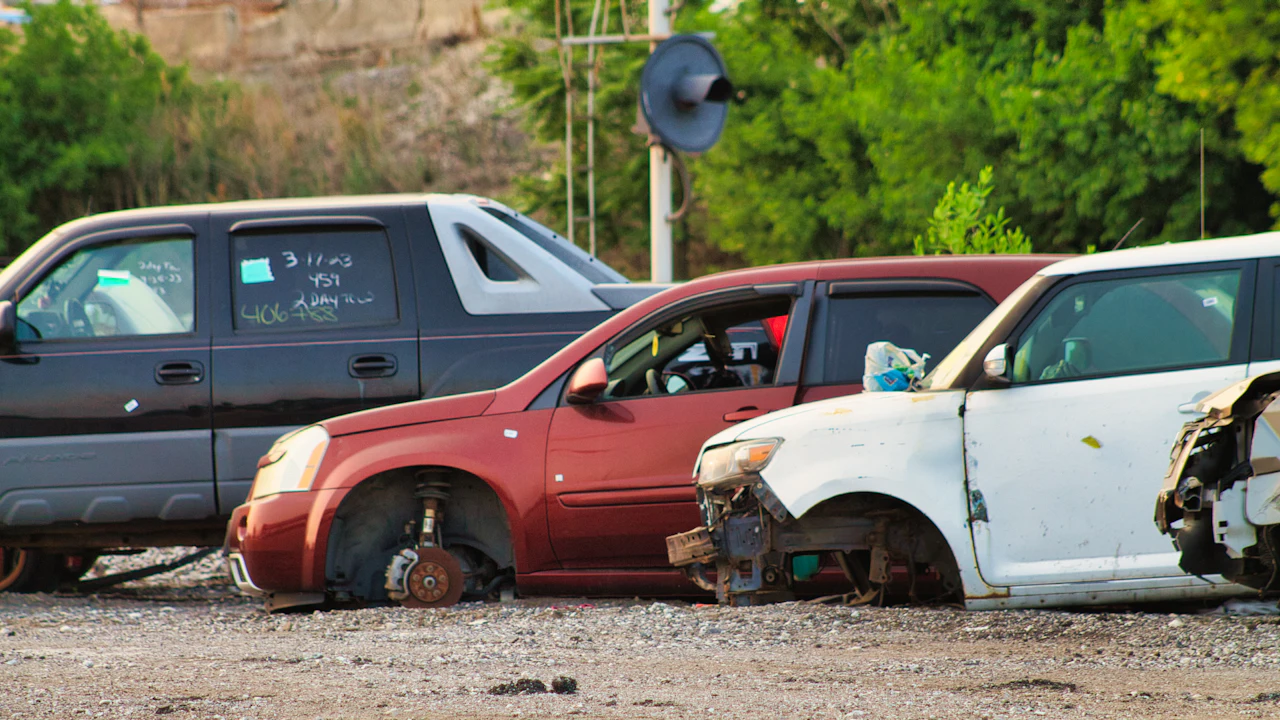
The short version
- A salvage title is a financial verdict, not a mechanical one. It records that an insurer decided repairing the car would cost more than the car was worth — nothing about how the car drives today.
- Because the test is money, the same damage produces different outcomes on different cars. A modest collision totals a cheap old car. Serious structural damage may not total an expensive new one.
- Salvage and rebuilt are the same car at two stages. Salvage means written off and not road legal. Rebuilt means repaired, re-inspected and back on the road with the history permanently attached.
- The state re-inspection that turns salvage into rebuilt is largely a check that the parts were not stolen and the lights work. It does not certify the quality of the repair, and almost everyone assumes it does.
- The consequences that catch buyers out are not mechanical. They are insurance, financing and resale — and they arrive after you own the car, not before.
Somewhere on the listing, usually below the mileage and above the phone number, there is a word: salvage. Or rebuilt. Or reconstructed. The price is thousands under everything comparable, the photos look fine, and the seller has an explanation ready.
What almost nobody searching this phrase actually wants is the statutory definition. They want to know what the word costs them. That question has a real answer, and it is more specific than “avoid salvage cars” — because some branded cars are genuinely worth buying and most are not, and the difference between the two has very little to do with how the car looks in the photographs.
This guide covers what the brand records, why the threshold that triggers it is financial rather than physical, how salvage becomes rebuilt, what the brand does to insurance and financing, and the narrow set of circumstances in which buying one holds up. Salvage is one brand among many, and if the car in front of you carries a different one, the guide to branded titles covers the whole set. If you have not yet established whether it carries a brand at all, start with the full pre-purchase history check and come back here once you know.
What a salvage title actually records
A title is a state document proving who owns a vehicle. A brand is a label the state attaches to that document describing the vehicle’s status. NMVTIS — the National Motor Vehicle Title Information System, run by the US Department of Justice — defines a brand as a descriptive label regarding the status of a motor vehicle, and names junk, salvage and flood as its examples.
The federal definition of a salvage automobile is worth reading closely, because it is the whole article in one sentence. A salvage automobile is one damaged by collision, fire, flood, accident, trespass or other event to the extent that its fair salvage value plus the cost of repairing it for legal operation on public roads would be more than the fair market value of the automobile immediately before the event that caused the damage.
Read that again and notice what is not in it. There is no mention of structural integrity, of airbags, of frame damage, of whether the car is safe. The entire test is an arithmetic comparison between two dollar figures. The definition also covers any vehicle determined to be a total loss under the law of the applicable jurisdiction, or designated a total loss by an insurer under the terms of its policies — regardless of whether ownership actually transferred to the insurer.
The one sentence to carry into every listing. A salvage brand tells you an insurance company made a financial decision about a car. It does not tell you what happened to the car, how badly, or whether it was fixed properly. Those are three separate investigations, and the brand starts none of them for you.
A brand is not a damage disclosure
These get conflated constantly and they are different records. A damage disclosure is something a seller tells you. An accident entry on a commercial history report is something a body shop or insurer reported to a private data company. A brand is something a state wrote onto a legal document, and it follows the vehicle identification number rather than the seller, the state or the paperwork in the glovebox.
That difference matters in both directions. A car can carry a clean title and still have been in a serious accident — if the owner paid cash for repairs, or the damage fell under the insurer’s total-loss threshold, no brand is ever applied. And a car can carry a salvage brand from an event that did it almost no harm at all, which is the case we return to later. Why the commercial reports so often miss the first case is the subject of how accurate Carfax actually is, and what a clean title does and does not prove has a guide of its own.
The threshold is money, not damage
Here is the part that reframes the whole topic once you see it. Whether a car gets totalled is a function of three variables, and only one of them is the damage.
- What the car was worth immediately before the event. The pre-loss market value, not what the owner paid or what it is insured for.
- What it would cost to repair it to legal road condition. Parts and labour, at body shop rates, including the parts nobody thinks about — airbags, sensors, calibration.
- What the wreck is worth as salvage. What the insurer can recover by selling the damaged car to a salvage pool.
Texas puts it in plain language on its state motor vehicle site: a salvage motor vehicle means the vehicle was damaged to the extent that the cost for repair, including materials and labour, was more than the vehicle was worth before it was damaged, and insurance companies usually make this determination.
The federal brand description goes further and names the mechanism directly — the threshold is a jurisdiction-defined percentage of the retail value of the vehicle. Not a fixed dollar figure. Not a national standard. A percentage, set by the state, of a value that changes with every car.
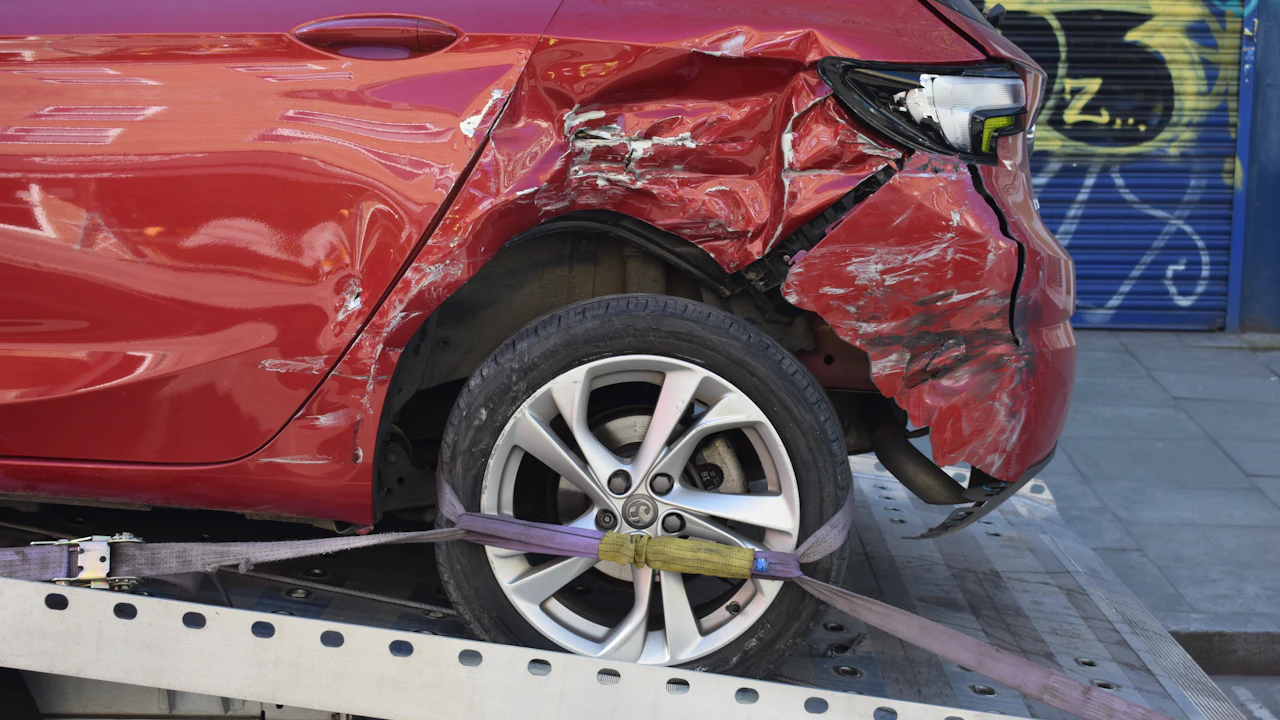
Why the same dent produces two different titles
Work the arithmetic through and the consequence is immediate. Take a fifteen-year-old economy saloon worth very little on the open market. A moderate rear-end collision — bumper, boot floor, one light cluster, a day of labour — can easily exceed what the car is worth. It gets totalled. The car is not dangerous. It is simply not worth fixing.
Now take a two-year-old car worth many times as much. The same impact, plus a deployed airbag, plus a bent structural member, plus a week in a body shop, may still land under the threshold. It gets repaired and returned to the road with a clean title, and a future buyer will never see a brand.
The uncomfortable conclusion. Between two cars of similar age and price, the one with the salvage brand is not reliably the more damaged one. The brand is correlated with low pre-loss value at least as strongly as it is correlated with severe damage. This is exactly why the brand is a reason to investigate rather than an answer in itself — and why “it was only cosmetic” is sometimes true and sometimes the oldest line in the trade.
Clean, salvage, rebuilt, reconstructed: what each word means
These four words describe one vehicle at four different points, and the search results are full of pages that treat them as four grades of quality. They are not grades. They are stages, and one of them is a dead end.
| Title status | What it means | Road legal? | Reversible? |
|---|---|---|---|
| Clean | No brand reported in the issuing state. Not a certificate of health — it means nothing was reported. | Yes | n/a |
| Salvage | An insurer or the state declared it a total loss. The car exists, but the state will not licence it in this condition. | No | Can become rebuilt |
| Rebuilt / reconstructed | Was salvage, has been repaired, has passed a state re-inspection, and has been re-titled for road use. | Yes | Permanent |
| Junk / non-repairable | Parts and scrap only. Federally defined as incapable of operating on public roads with no value except as parts. | No | Never |
The comparison people actually search for — rebuilt versus salvage — is therefore slightly the wrong question. It is not a choice between two things. Every rebuilt car was a salvage car. The rebuilt status means somebody has done the repair work and the state has re-inspected it; the salvage status means nobody has yet.
Which is worse depends entirely on what you intend to do. If you want a car to drive, salvage is worse, because you cannot legally drive it and you are buying an unknown repair bill. If you want to know how much a car has been through, rebuilt is not better — it is the same car with the work already done by someone whose standards you have not seen.
Junk is the one that behaves differently. NMVTIS defines a junk automobile as one that is incapable of operating on public streets, roads and highways and has no value except as a source of parts or scrap. If somebody is offering you a running car on a junk or non-repairable title, something has gone wrong — either with the paperwork or with the seller. That is not a negotiation, it is a reason to leave.
The brands underneath the word “salvage”
“Salvage title” is a summary. The federal record is more specific than that, and the specifics change what you should be worried about. Texas publishes the NMVTIS brands that make a vehicle a salvage vehicle in that state, and the list is instructive:
| NMVTIS brand | What it records | What it should change |
|---|---|---|
| Salvage — damage or not specified | Wrecked, destroyed or damaged past a jurisdiction-defined percentage of retail value. Also covers cars an insurer acquired in a damage settlement. | The default case. Everything depends on the specific damage, which the brand does not record. |
| Fire damage | The vehicle was damaged by fire. | Heat damage to wiring looms and structural adhesive is difficult to inspect and expensive to be wrong about. |
| Salvage — stolen | Previously reported stolen; an insurance claim was paid and the jurisdiction reported it as salvage. | Texas advises contacting the reporting jurisdiction to confirm the vehicle is no longer considered stolen. Do that before money moves. |
| Owner retained / salvage retention | Declared a total loss, but the owner kept the vehicle rather than surrendering it to the insurer. | Often the most informative brand on the list — the person who knew the damage best chose to keep the car. |
| Salvage — reasons other than damage or stolen | The jurisdiction considers it salvage for another reason. Texas gives the example of an abandoned vehicle towed at law enforcement request and never claimed. | May involve no damage at all. Worth asking what the actual reason was. |
That last row is the one that surprises people. A brand can exist for administrative reasons that have nothing to do with a collision. It is also why a blanket rule — never buy anything branded — throws away information rather than using it.
Flood and lemon: two brands that behave unlike the rest
Flood or water damage is the brand with the longest tail. A collision damages a defined area and the repair either holds or it does not. Water gets everywhere, and the consequences — corrosion inside connectors, control modules that fail intermittently years later, wiring that degrades from the inside — surface slowly and in places ordinary rust never appears. NHTSA maintains public guidance on flood-damaged vehicles for exactly this reason. Treat a flood brand as categorically different from a collision brand, not as one more item on the same list.
Lemon or manufacturer buyback runs on completely different logic, and is covered in full in the guide to lemon titles. Nothing was wrecked. The manufacturer repurchased the car because it could not fix a defect within the number of attempts state law allows. The car may be cosmetically perfect and structurally untouched — and still carry the fault that caused the buyback, unless the manufacturer identified and fixed it before resale. New York publishes its own Used Car Lemon Law guidance covering the rights that attach to used vehicles bought from dealers there.
What happens next: salvage becomes rebuilt
A salvage vehicle has two futures. It is dismantled for parts, or somebody repairs it and puts it back on the road. The second route is the same in outline everywhere, even though the details are set state by state. Someone buys the salvage vehicle. They repair it. They present it to the state for inspection. If it passes, the state issues a new title branded rebuilt or reconstructed, and the vehicle may legally return to the road.
Texas states the requirement plainly: for a vehicle carrying one of those brands to be operated on a road again, it must first be rebuilt and inspected — otherwise it is only eligible for a salvage title, a non-repairable title, or authority to dispose of the vehicle.
The single most misunderstood point on the entire topic. That state re-inspection is primarily an anti-theft and basic-roadworthiness examination. It verifies the vehicle is what the paperwork says, that major components carry legitimate identification and were not stolen, and that the required equipment functions. It is not an engineering assessment of the repair — so a rebuilt title certifies that a repair happened, and nothing whatsoever about how well it was done.
That distinction, what the inspection covers, who does rebuilding work and how to read a repair file, is a subject of its own. Our full guide to what a rebuilt title means covers the inspection, the economics of rebuilding, and what to demand from a seller before you buy one. The rest of this page stays with the salvage stage — the car before anyone has repaired it.
What the brand does to insurance, financing and resale
These consequences attach to the brand itself, so they follow the car through the rebuilt stage and every owner after that. They are financial rather than mechanical, and all three arrive after the money has moved.
Insurance. Liability cover is generally obtainable on a branded vehicle. Comprehensive and collision cover — the part that pays for damage to your own car — is where the difficulty sits. An insurer may decline it, may write it only after its own inspection, or may write it on terms that pay out based on a value already depressed by the brand. Get the VIN, ring your own insurer before you commit, and ask two direct questions: will you write physical damage cover on this vehicle, and how would a total loss be valued.
Financing. Many lenders will not write a loan secured against a branded vehicle, and those that will often want a larger deposit, a shorter term or a higher rate. The reason is straightforward: the collateral is worth less and is harder to value and resell if they have to repossess it. The practical effect is that the branded market skews heavily towards cash buyers, which itself narrows the pool of people you can eventually sell to. The CFPB’s auto loan resources are worth reading before you assume the finance will be available.
Resale. The discount is permanent and it compounds. You buy at a discount, which is the attraction. But you also sell at a discount, to a smaller pool of buyers, and the next owner faces the same insurance and financing constraints you did. The saving is only real if the gap between what you paid and what a clean equivalent costs is larger than the gap you will face when you sell. On a car you keep for a decade and drive into the ground, that maths can work. On a car you expect to move on in two or three years, it frequently does not.
Disclosure. A brand is a matter of public record on the title, so you cannot simply not mention it when you sell. Nor can a dealer selling to you — the FTC’s Used Car Rule requires a Buyers Guide displayed on every used vehicle a dealer offers, setting out warranty status and other required disclosures. Read it, and note what it does and does not cover. The FTC’s consumer-side guidance on buying a used car from a dealer is the companion piece.
Title washing, and why the brand can go missing
States apply brands, and states do not use identical vocabulary. One state’s “salvage” is another’s “reconstructed”, and some brands have no clean equivalent when a vehicle is retitled elsewhere. Move a car across enough state lines and the brand can weaken, change wording, or in the worst cases disappear from the document you are handed.
This is not a theoretical loophole. It is the reason the federal system exists. NMVTIS is the only publicly available system in the United States to which all insurance carriers, auto recyclers, junk yards and salvage yards are required under federal law to report on a regular basis, and it keeps a history of brands applied to a vehicle by any state — not just the one that issued the paper in front of you.
Where the vehicle is in a state that sees a great deal of storm and flood damage, the base rate matters as much as the individual record; our guide to checking a vehicle in Texas works through why. The instruction that follows is one line. The document is not the history. A salvage brand that has been through two or three retitlings may be printed in softer language than the state that first applied it used, and the only place the original wording survives is the federal record. Because the same mechanism affects every brand rather than just this one, the wider treatment sits in our guide to branded titles and how they behave. Where the paper in front of you has been through more than one state, the brand history as the federal record still holds it is the version that has not been softened in transit.
When buying one is actually defensible
Absolutism here is dishonest, because the branded market does contain genuine value. What it requires is that the specific circumstances line up. The cases that hold up share a shape: the damage is knowable, the repair is verifiable, and you are not relying on the car’s resale value.
- A theft-recovery brand on an undamaged car. Stolen, claim paid, brand applied, vehicle recovered largely intact. Confirm with the reporting jurisdiction that the vehicle is no longer recorded as stolen, and inspect for the damage that theft normally causes — ignition, steering column, door locks, and any interior stripped for parts.
- Hail damage with a sound structure. Cosmetically extensive enough to exceed the threshold, mechanically irrelevant. The panels are dented and the car underneath is untouched. Check that water has not entered through broken glass or a punctured roof.
- A car you will keep until the end. If you genuinely intend to drive it for a decade and scrap it, the resale penalty never lands on you and the discount is real.
- A cash purchase, insured for liability only, at a price that reflects the risk. No lender, no comprehensive cover to be refused, no expectation of getting the money back out.
- A repair you can trace. Documentation, photographs, invoices, a named shop, and an independent inspector who has looked at it on a lift and told you it is straight.
And the cases that do not hold up, which are worth stating just as plainly:
- Anything you need to finance. If the deal only works with a loan, the branded market is not for you.
- Anything flood-related, unless you are buying it for parts and know exactly what you are doing.
- Any car where the discount is modest. If a branded car is priced close to clean equivalents, you are taking on every consequence in this article and being paid almost nothing for it.
- Any seller who will not let you take it to your own mechanic. On a branded car this is not a preference. It is the entire basis on which the purchase could be rational.
Inspecting a salvage car you intend to repair
This is a different exercise from a normal pre-purchase inspection, and a different exercise again from inspecting a car that has already been rebuilt. On an unrepaired salvage vehicle you are not asking whether the car is sound. You already know it is not. You are producing a number — what it will cost to make this legal and safe — and then testing whether that number plus the purchase price leaves you anywhere worth being.
Take an experienced collision estimator with you, not a general mechanic, and work through these in order.
- Where the impact travelled, not where it landed. Crumple structures are designed to move energy away from the cabin, so the visible damage is the start of the damaged area rather than the whole of it. Open every door, boot and bonnet and check they still close properly — binding at a door catch a long way from the impact tells you the structure moved.
- Whether any structural member needs replacing. This is the line that decides most salvage purchases. A bolt-on panel is a price. A sectioned rail, a bent B-pillar or a damaged floor pan is a frame bench, specialist labour and a repair that may not be permitted where the damage sits.
- Airbags, pretensioners and the sensors behind them. Routinely the largest single line on the estimate and the one buyers forget entirely. Count every deployed module, then add the seat belt pretensioners, the impact sensors and the control unit — the system is replaced as a system, not as individual bags.
- Parts availability for this specific vehicle. A car that is cheap to buy as salvage is often cheap precisely because the parts are scarce, discontinued or only sold as a large assembly. Price the three most expensive items before you bid, not after.
- Whether water was involved at any point. Rust on seat rails, on bolt heads inside the cabin, or a tidemark under the carpet edges changes the calculation completely, because water damage cannot be estimated the way collision damage can. Our guide to telling ordinary corrosion from water damage goes through where each one starts.
- What your state will demand at re-inspection. Requirements, fees and documentation vary, and finding out afterwards is expensive. Ask the titling agency what evidence they want and keep every receipt from the first day.
Then add the two costs nobody budgets for: the time the car sits undriveable, and the discount you will take when you eventually sell a vehicle that is permanently branded. If the arithmetic only works when both of those are zero, it does not work.
How to confirm the brand before you commit
The whole of this article assumes you know what the title says. Establishing that takes about ten minutes and should happen before you drive anywhere to view a car.
- Get the VIN in writing and match it against the dashboard, the door jamb and the physical title. A mismatch anywhere ends the viewing.
- Run the free federal checks first. The NHTSA VIN decoder confirms the car is what the advert says, and the recall lookup shows open safety campaigns. Both cost nothing.
- Pull the title and brand history. This is what NMVTIS holds, and it is the record that spans every state rather than just the current one. You can run a branded title check against the VIN before you spend anything else on the car.
- Check the provider is approved against the Department of Justice register of NMVTIS data providers if federal title data is what you are buying. It is the only way to test a provider’s claim rather than take its word.
- Look at the physical title document before money moves, not a photograph of it, and check the registration geography for the state-hopping pattern described above.
- Book the independent inspection and make the sale conditional on it.
The Department of Justice’s own advice is the same order of operations: before deciding to purchase, obtain an independent vehicle inspection, get an NMVTIS report, and consult other available resources. The inspection is listed first there too, and that is not an accident — no database examines the car.
Insuring one is a separate problem from valuing one, and it catches buyers after the money has moved. Our guide to salvage title insurance covers which cover you can realistically obtain and which carriers decline.
Frequently asked questions
Is a salvage title the same as a rebuilt title?
No, but they describe the same vehicle at different stages. Salvage means an insurer or the state declared the vehicle a total loss and it cannot legally be driven on public roads in that condition. Rebuilt or reconstructed means that same vehicle has since been repaired, has passed a state re-inspection and has been re-titled for road use. Every rebuilt car was once a salvage car. Neither brand ever disappears from the vehicle’s federal history.
Can you drive a car with a salvage title?
No. A salvage title means the state will not licence the vehicle in its current condition, so it cannot legally be registered or driven on public roads. Moving it means towing or trailering it, and it stays that way until it has been repaired, has passed the state re-inspection and has been re-titled as rebuilt or reconstructed. A seller offering test drives in a car they describe as salvage is describing something other than the title in their hand.
Can a salvage title become a clean title?
Not in the sense most people mean. A salvage vehicle that is repaired and passes state inspection is re-titled as rebuilt or reconstructed, not clean, and that brand is permanent. NMVTIS retains the history of brands applied to a vehicle by any state, so a brand that appears to vanish when a car is retitled in a new state has not actually gone — it is still in the federal record, which is precisely why checking the federal record rather than the document in your hand is the point.
Can you insure a car with a salvage title?
Not as a road vehicle, because a salvage car cannot be registered or driven, and ordinary policies cover a registered vehicle in use. What you may be able to arrange while it sits is storage or comprehensive-only cover against fire and theft, which is a different product and worth asking about specifically. Full cover becomes a question once the car is repaired and re-titled — and at that point the brand, not the repair, is what insurers react to.
Can you register a salvage-title car?
Not while it carries the salvage brand. Registration follows the title, and the state will not licence a vehicle it has recorded as a total loss. The route back is the same everywhere in outline: repair the vehicle, present it for the state re-inspection, and receive a new title branded rebuilt or reconstructed. Requirements, fees and the documentation demanded at inspection vary by state, so ask the titling agency before you buy rather than after.
Can you finance a salvage-title car?
Often not, and rarely on good terms. Many lenders will not secure a loan against branded collateral because it is harder to value and harder to resell after a repossession. Those that will typically want a larger deposit, a shorter term or a higher rate. If the purchase only works with financing, treat that as a signal that the branded market is not the right one for this particular purchase.
How much less is a salvage-title car worth?
Substantially less than a clean equivalent, and the discount is permanent rather than something the car grows out of. There is no reliable national figure, because the size of the gap depends on the vehicle, the brand, the market and how well the repair can be evidenced. The useful test is not the headline discount but whether the gap you are buying at is bigger than the gap you will sell at — plus the cost of the insurance and financing constraints in between.
Is it worth buying a salvage car to repair yourself?
Only if you can produce a realistic repair figure before you bid, and only if you can absorb being wrong about it. The three costs that sink these projects are structural work that turns out to need a frame bench, the complete airbag system rather than the individual bags, and parts that are discontinued or only sold as a large assembly. Add the time the car sits undriveable and the permanent discount you will take when you sell, then compare the total against a clean equivalent. If the arithmetic only works when nothing goes wrong, it does not work.
Is a theft-recovery salvage car safe to buy?
It is the most defensible category on the list, with conditions. A vehicle branded salvage after a theft claim was paid may have very little wrong with it. Confirm with the reporting jurisdiction that it is no longer recorded as stolen — Texas advises exactly this for its stolen-salvage brand — and inspect for the damage theft actually causes: ignition and steering column, door locks and glass, and anything stripped from the interior or engine bay.
Is there a three-thousand-dollar rule for salvage titles?
There is no federal rule of that name. The threshold that triggers a salvage brand is expressed as a percentage of the vehicle’s value, defined by the jurisdiction, rather than as a fixed dollar amount — which is why no single dollar figure applies nationally and why the same damage brands one car and not another. If you need to know where the line sits for a specific vehicle, the answer comes from the titling agency in the state where the vehicle was branded.
Can a dealer sell me a salvage car without telling me?
The brand is on the title, which is a public record, and the FTC’s Used Car Rule requires a Buyers Guide on every used vehicle a dealer offers for sale. That does not remove your obligation to check. Run the VIN through the federal title record yourself, read the physical title before money moves, and treat any reluctance to show you the document as the answer to a different question.
Sources and further reading
- NMVTIS (US Department of Justice)
- NMVTIS approved data providers
- Understanding an NMVTIS Vehicle History Report
- TxDMV salvage vehicles and title brands
- NHTSA VIN decoder
- NHTSA recall lookup
- NHTSA flood-damaged vehicles
- FTC Used Car Rule
- FTC used car buying guide
- NY Attorney General: Used Car Lemon Law
- CFPB auto loan resources
Recall, complaint and safety-rating figures on this page were retrieved from the federal databases above on August 19, 2026. Federal data changes — re-check any VIN before you rely on it.
Published August 21, 2026 · last updated August 24, 2026. Found something out of date or wrong? Tell us and we will correct it.