Symptoms of a Bad Brake Rotor: What 395 Reports Show
Counted from 395 federal complaints: the tell is a pulsation through the pedal and wheel when braking (19% vs 2.2%, ×8.6, a warped rotor), then grinding (×7), squeal (×5.2) and scoring. Unlike worn pads (squeal first), a rotor's story starts with the shudder — and they're serviced together.
The short version
- Counted, not remembered: from a brake-complaint pull we took the 395 NHTSA reports that name a brake rotor (or disc), measured against 5,589 other brake complaints from the same cars.
- The rotor’s tell is a pulsation you feel through the pedal or wheel when braking — 19% against 2.2%, nearly nine times the control — the sign of a warped or unevenly worn disc.
- Grinding or scoring (14.7% against 2.1%) and a squeal (10.4% against 2%) follow, along with visible rust or a cracked rotor (9.4% against 1.9%).
- Unlike worn brake pads, whose story starts with a squeal, a rotor’s starts with the shudder — and the two are usually serviced together.
- A crash is well below the control (9.4% against 21.1%): a bad rotor is felt long before it endangers a stop. The median failure is a young 35,000 miles.
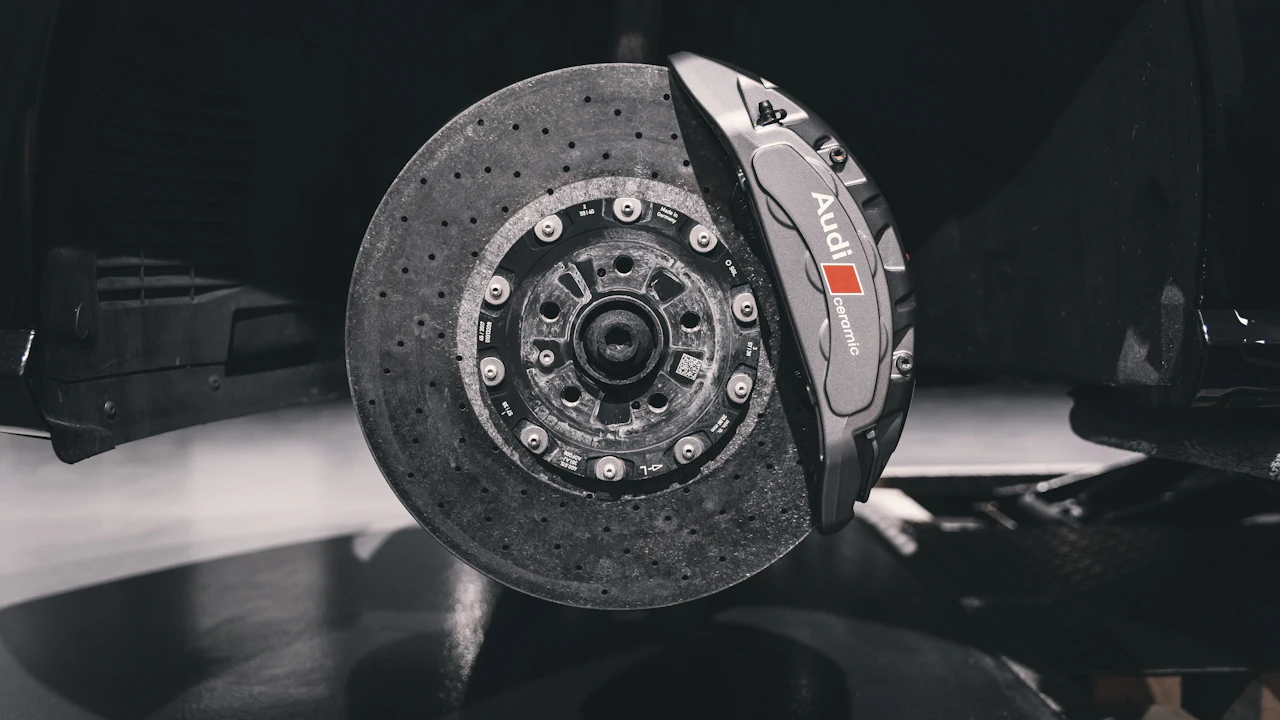
A brake rotor is the metal disc the pads clamp to slow the wheel. It wears thin, warps under heat, and can score, rust or crack — and because you feel it directly through the pedal, its symptoms are among the most recognisable on a car. We pulled the federal complaint file, took the 395 reports that name a rotor against 5,589 other brake complaints, and the data shows what a rotor problem feels like as opposed to the rest of the brake system.
The tell is a pulsation when braking
The signature symptom is a pulsation or vibration felt through the brake pedal and often the steering wheel as you slow — 19% of rotor reports against 2.2% of the control, nearly nine times as often. It is the feel of a rotor that is no longer perfectly flat: as it spins under the pad, its thick and thin spots (a warp, or uneven deposits) push the pad in and out, and you feel that as a rhythmic shudder that grows with braking force and speed. Nothing else in the brake system produces it so specifically. A pulsation that appears when you brake, and only when you brake, is a rotor until proven otherwise.
Then grinding, squealing and scoring
As a rotor wears past its limit or a pad wears down to metal against it, the noises follow: a grinding or scraping (14.7% against 2.1%), a squeal (10.4% against 2%), and visible scoring, deep grooves, rust or a cracked rotor (9.4% against 1.9%). A rotor worn too thin cannot shed heat and warps faster, which feeds the pulsation; one left until the pad backing rides on it grinds metal on metal and gouges deep rings. These are five to nine times more common in rotor reports than in the rest of the brake system, and together they mark a rotor at the end of its life.
Rotors and pads go together
Rotors and brake pads are a pair, and their symptoms overlap because they wear together — but the emphasis differs. Pads announce themselves first with a squeal from the wear indicator, then a grind; a rotor announces itself with the pulsation. That is why a shop almost always inspects and often replaces them together: new pads on a warped or deeply scored rotor will pulse and wear unevenly, and a resurfaced or replaced rotor with worn pads is a false economy. If your symptom is the shudder, think rotor; if it is the early squeal, think pads; in practice, both get checked.
What to do when you suspect it
Treat a braking pulsation, a grind, or visible deep grooving as a reason to have the brakes measured promptly. A mechanic checks rotor thickness against the minimum stamped on it and checks for warp (runout); a rotor within spec can sometimes be resurfaced, but modern rotors are often thin enough that replacement is the sensible call, and always in pairs across an axle. Catching the pulsation early, before the rotor is scored by a worn-out pad, keeps it a routine job. Do not ignore a grinding brake: that is metal cutting metal, and it destroys the rotor and can reduce braking.
On a used car you are about to buy
Rotor condition is easy to check and tells you a brake job may be due. On the test drive, brake firmly from speed a few times and feel for a shudder through the pedal or wheel, and listen for grinding or squealing. Before you buy, look through the wheel spokes at the rotor face: a smooth, even surface is good; deep grooves, a pronounced lip at the edge, heavy rust or a blued, heat-marked surface mean wear. Checking the model and year in the complaint lookup rounds out the picture. Factor a pads-and-rotors job into your offer if the symptoms are there.
Common questions
What are the symptoms of a bad brake rotor?
The clearest is a pulsation or vibration through the pedal and steering wheel when braking (19% of reports against 2.2% of other brake complaints, nearly nine times as often), from a warped or uneven rotor. Grinding or scoring (14.7% against 2.1%), a squeal (10.4% against 2%), and visible deep grooves, rust or cracks (9.4% against 1.9%) follow. A crash is rare, because a bad rotor is felt long before it fails to stop the car.
Why does my steering wheel shake when I brake?
A shake or shudder that appears specifically when you brake, and grows with speed and pedal pressure, is the classic sign of a warped or unevenly worn front rotor — as the rotor’s thick and thin spots pass under the pad, they push it in and out and you feel it in the wheel. It is nearly nine times more common in rotor reports than in the rest of the brake system. Have the rotors measured for thickness and runout.
Can you drive with warped rotors?
You can, but the pulsation worsens and the uneven surface wears the pads unevenly, so it is a repair to plan rather than defer. More important, do not confuse a warp with a grind: a grinding brake means the pad is down to metal and cutting the rotor, which reduces braking and destroys the rotor quickly. A shudder is a book-the-repair problem; a grind is a do-it-now one.
Do I need to replace pads and rotors together?
Usually, yes. Pads and rotors wear as a pair, and putting new pads on a warped or deeply scored rotor brings back the pulsation and wears the new pads unevenly, while a fresh rotor with worn pads wastes the rotor. Shops replace rotors in pairs across an axle for even braking. If your symptom is the shudder it points at the rotor, but the pads are checked and usually done at the same time — see brake pads.
Sources and further reading
Recall, complaint and safety-rating figures on this page were retrieved from the federal databases above on August 19, 2026. Federal data changes — re-check any VIN before you rely on it.
Published September 11, 2026 · last updated September 11, 2026. Found something out of date or wrong? Tell us and we will correct it.