Symptoms of a Bad CV Axle: What 188 Reports Show
Counted from 188 federal complaints — a small set, but the cleanest ratios on the site: the failure runs in order, a torn boot flinging grease (22.9% vs 0.1%), then clicking in turns (×14), then the axle separating. Clicking in turns is the confirmed textbook tell.
The short version
- Counted, not remembered: from a power-train complaint pull we took the 188 NHTSA reports that name a CV axle, measured against 25,599 other power-train complaints from the same cars. It is a small set — but the ratios are the cleanest on the site, because the symptoms are specific to this part.
- The failure runs in order: a torn boot flings grease (22.9% against 0.1% of the control), the dried-out joint then clicks or pops in turns (12.8% against 0.9%), and if it is left the axle can finally separate (12.2% against 1.8%).
- The clicking in turns is the textbook CV-joint symptom — and the file confirms it is genuinely distinctive, more than ten times as common in CV-axle reports as in the rest of the power train.
- No single model dominates, unlike the transmission or clutch files — a CV axle is a universal wear part on front- and all-wheel-drive cars, and the complaints spread across many makes.
- Caught at the torn-boot stage it is a modest repair; ignored to the separation stage it strands the car and can cause damage, so the grease ring on the inside of a wheel is worth acting on.
A CV (constant-velocity) axle is the shaft that delivers power from the transmission to a driven wheel while flexing through the wheel’s steering and suspension travel, using constant-velocity joints packed with grease and sealed by rubber boots. Its failure is one of the most predictable on a car, and the complaint file captures the sequence cleanly. We pulled the federal power-train data and took the 188 reports that name a CV axle against 25,599 other power-train complaints. It is a modest sample, so we lean on the ratios — and here they are unusually stark.
It starts with a torn boot
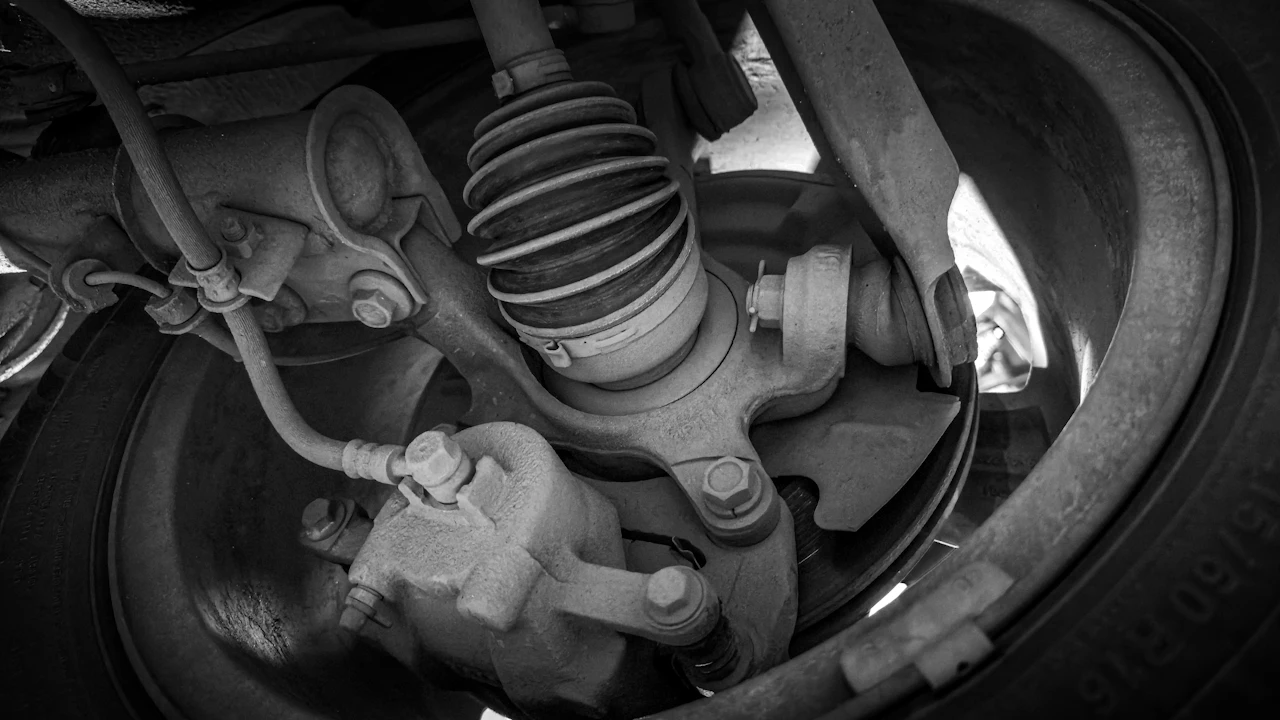
The first and most distinctive symptom is a split boot and the grease it throws — 22.9% of CV-axle reports against just 0.1% of the control. When the rubber boot cracks or tears, it slings grease onto the inside of the wheel and the underbody, and lets road grit and water into the joint. That grease ring is the earliest visible warning, and it is nearly unique to this part: almost nothing else in the power train produces it. Catching a CV axle at the torn-boot stage, before the joint has run dry, is the difference between a modest repair and a failed axle. It is exactly what a mechanic spots on a lift during any routine service.
Then the click in turns
Once the joint loses its grease and takes on grit, it wears, and the classic symptom appears: a rhythmic clicking or popping that you hear turning, especially under power — 12.8% of these reports against 0.9% of the control, more than ten times as often. It is the outer joint’s worn bearings knocking as they articulate under load through a turn. This is the textbook CV-joint sign every guide names, and unlike the clunk of worn suspension, the file shows it really is distinctive to the axle. A click that gets louder in tighter turns and under acceleration is a CV axle until proven otherwise.
Left alone, it can separate
The end stage is the one to avoid: the axle separating or breaking, in 12.2% of reports against 1.8% of the control. A CV joint that has run dry and worn long enough can finally come apart, and because the axle is what drives the wheel, the car loses drive on that side and can be left immobile — the tow appears in 10.1% of these reports. A clunk on acceleration (6.9% against 2.5%) is the mid-stage warning, the worn inner joint taking up slack as power is applied. The lesson of the sequence is that this is a failure you get plenty of notice of: the boot, then the click, then the clunk, and only then the break.
What to do when you suspect it
Treat a grease ring on the inside of a wheel, or a click that appears in turns, as a reason to have the axle inspected promptly — the earlier stage you catch, the smaller the job. A torn boot caught immediately can sometimes be rebooted and repacked; once the joint is clicking, the axle (or at least the joint) generally needs replacing, which on most cars is a straightforward and moderate repair. Do not defer a CV axle that is clicking, and do not drive one that clunks hard on acceleration: those are the stages just before separation. A mechanic confirms it by checking the boots for tears and turning the wheel to feel for play in the joint.
On a used car you are about to buy
A failing CV axle is one of the easiest faults to check and one sellers rarely mention. On the test drive, make slow, full-lock turns in both directions in an empty lot and listen for a rhythmic clicking — it is unmistakable once you hear it. Before you buy, look at the inside face of each driven wheel for slung grease, and have a mechanic inspect the boots on a lift as part of a pre-purchase inspection; a torn boot is cheap to find and tells you a repair is due. Checking the model and year in the complaint lookup rounds out the picture, though CV-axle wear is universal rather than model-specific.
Common questions
What are the symptoms of a bad CV axle?
They arrive in order: a torn boot slinging grease (22.9% of reports against 0.1% of other power-train complaints), then a rhythmic clicking or popping in turns as the dried joint wears (12.8% against 0.9%), then a clunk on acceleration, and finally the axle separating (12.2% against 1.8%). The clicking in turns is the classic tell and, unlike many noises, it is genuinely distinctive to this part.
How long can you drive on a bad CV axle?
It depends on the stage. A torn boot caught early buys time if it is repaired before the joint runs dry. Once the joint is clicking it is wearing steadily and should be replaced soon; once it clunks hard on acceleration, replacement is urgent, because the next stage is separation — which appears in 12.2% of these reports and leaves the car unable to drive on that wheel. Do not keep driving a CV axle that has begun to click.
What does a bad CV joint sound like?
A rhythmic clicking or popping that speeds up with the wheels and gets louder in turns, especially under power — the outer joint’s worn bearings knocking as they articulate. A worn inner joint instead gives a clunk when you get on or off the throttle. The clicking-in-turns is more than ten times as common in CV-axle complaints as in the rest of the power train, so it is a reliable pointer.
Is a clicking noise always a CV axle?
A clicking that appears specifically in turns and rises with speed is very likely a CV joint — the file shows it is distinctive. But confirm it, because a torn boot may be visible first (look for slung grease inside the wheel), and a clunk on acceleration can also point at other driveline play. A mechanic checking the boots and feeling the joint for play settles it quickly.
Sources and further reading
Recall, complaint and safety-rating figures on this page were retrieved from the federal databases above on August 19, 2026. Federal data changes — re-check any VIN before you rely on it.
Published September 10, 2026 · last updated September 10, 2026. Found something out of date or wrong? Tell us and we will correct it.