Symptoms of a Bad Brake Master Cylinder: What 359 Reports Show
Counted from 359 federal complaints: the cleanest signature in the brake file — a fluid leak and a pedal that sinks to the floor — and a brake-failure part (30.6% report no brakes) to act on immediately.
The short version
- Counted, not remembered: from a brake-complaint pull we took the 359 NHTSA reports that name a master cylinder, measured against 5,546 other brake complaints from the same cars.
- It has the cleanest signature in the brake file, and it is the hydraulic opposite of a bad booster: a brake-fluid leak (39% against 2.1%) and a pedal that sinks slowly to the floor (36.8% against 4.5%).
- It is a brake-failure part. Complete brake failure appears in 30.6% of master-cylinder reports against 9.9% of the control — three times as often — because a cylinder that cannot hold pressure can leave you with no brakes.
- As with the booster, one truck dominates: 268 of the 359 reports are Ford F-150s, the subject of a recall for a leaking master cylinder. Check the VIN for a recall before you pay.
- A sinking pedal or any sign of a fluid leak is a stop-driving-now fault, not a wait-and-see one.
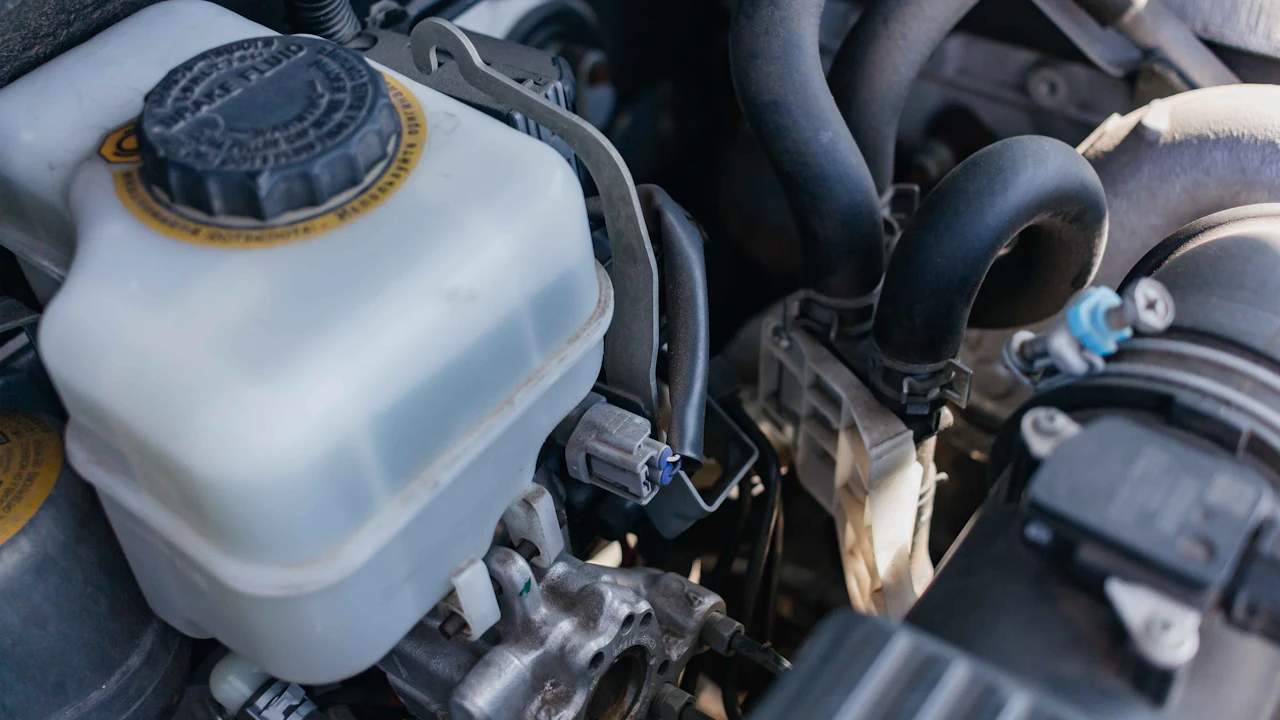
The master cylinder is the heart of the hydraulic brake system: your foot pushes it, and it pushes fluid to all four wheels. When it fails, it fails in a way you can feel with one press — and, unlike most parts, it can fail all the way to no brakes. We took a brake-complaint pull and reduced it to the 359 reports that name a master cylinder, set against 5,546 other brake complaints from the same cars, and it produced the clearest symptom signature of any part we have measured.
The signature: a leak and a sinking pedal
Two symptoms define a failing master cylinder, and both separate it from the rest of the brakes by a wide margin. A brake-fluid leak or low fluid appears in 39% of master-cylinder reports against just 2.1% of the control — and a pedal that sinks slowly to the floor under steady pressure in 36.8% against 4.5%. They are two views of the same fault: a cylinder that can no longer hold hydraulic pressure either lets fluid escape externally, or lets it bypass internally past worn seals so the pedal drifts down while you press. If your pedal slowly sinks when you hold it at a stop, or you are losing brake fluid you cannot see on the ground, the master cylinder is the first suspect.
It is a brake-failure part
This is what raises the master cylinder above most brake faults in seriousness. Complete brake failure — “no brakes,” the pedal going to the floor with nothing there — appears in 30.6% of master-cylinder reports against 9.9% of the control, three times as often. A worn or leaking master cylinder does not just make braking worse; it can remove braking entirely, which is why a sinking pedal must never be treated as something to monitor.
One truck dominates the record
As with the brake booster, this file is concentrated on a single model: 268 of the 359 master-cylinder reports — three-quarters — are Ford F-150s, the subject of a recall for a master cylinder that leaks brake fluid, causing a loss of braking and, on those trucks, contamination of the booster behind it. That concentration reflects the recall and how many F-150s were sold, not a universal law about master cylinders. Its lesson is the same one twice: run the VIN through the recall lookup and read the complaint history before you pay, because a leaking master cylinder is exactly the kind of fault a manufacturer campaign covers.
Master cylinder or booster?
The two are opposites at the pedal, and telling them apart is the fastest triage there is. A bad master cylinder gives a sinking pedal — it drifts to the floor under steady pressure because the hydraulics leak. A bad booster gives a hard pedal — you cannot push it, because the vacuum power assist is gone. Our guide to the symptoms of a bad brake booster covers the vacuum side; if your pedal sinks, think master cylinder, and if it goes hard, think booster. The F-150 recall in this data is the case where the first wrecks the second.
What to do when you suspect it
Treat it as urgent. Check the brake-fluid reservoir: a level that keeps dropping with no visible leak at the wheels points at the master cylinder, which can lose fluid internally or weep at the back where it meets the booster. The sinking-pedal test is simple — hold firm pressure at a stop; a pedal that slowly sinks is a failing cylinder. Do not drive a car with a sinking pedal or a brake-fluid leak; have it recovered rather than risk no brakes. And on an F-150, check the VIN for the recall first — the repair may be covered. Once the diagnosis is settled, our guide to brake replacement cost covers the wider job.
On a used car you are about to buy
The master cylinder is the single most important thing to test on a used-car brake check, because its failure mode is the most dangerous. At a standstill before the drive, press the pedal firmly and hold it: it should stay firm and not sink toward the floor. Check the fluid reservoir for level and for dark, contaminated fluid. Because master cylinders carry recalls — the F-150 being the obvious example — check the model and year in the complaint lookup and its open recalls before you buy.
Common questions
What are the symptoms of a bad brake master cylinder?
The two signatures are a brake-fluid leak or dropping fluid level (39% of reports, against 2.1% of other brake complaints) and a pedal that sinks slowly to the floor under steady pressure (36.8% against 4.5%). Both mean a cylinder that can no longer hold hydraulic pressure. Most seriously, complete brake failure appears in 30.6% of reports — three times the control — so it is a fault to act on immediately.
Is it the master cylinder or the brake booster?
Tell them apart by the pedal. A bad master cylinder gives a pedal that sinks to the floor under steady pressure, because the hydraulics leak. A bad booster gives a hard pedal you can barely push, because the vacuum assist is gone. They are opposites — though a leaking master cylinder can flood and ruin the booster, which is exactly what the Ford F-150 recall in this data describes.
Can you drive with a bad master cylinder?
No — treat it as a do-not-drive fault. A failing master cylinder can progress from a sinking pedal to complete brake failure, which shows up in 30.6% of these reports. If the pedal sinks under steady pressure or you are losing brake fluid, have the car recovered rather than driven, and diagnosed before it is used again.
Why does my brake pedal slowly sink to the floor?
Almost always a master cylinder leaking internally: worn seals let fluid bypass under pressure, so the pedal drifts down while you hold it even though the fluid level looks steady. It is the master cylinder’s clearest symptom — 36.8% of these reports describe it, against 4.5% of other brake complaints — and it warrants immediate diagnosis because it can end in no brakes.
Sources and further reading
Recall, complaint and safety-rating figures on this page were retrieved from the federal databases above on August 19, 2026. Federal data changes — re-check any VIN before you rely on it.
Published September 10, 2026 · last updated September 10, 2026. Found something out of date or wrong? Tell us and we will correct it.