Symptoms of a Bad Driveshaft: What 248 Reports Show
Counted from 248 federal complaints: the tell is a vibration that grows with speed (20.6% vs 7.3%, ×2.8), preceded by a U-joint clunk and ended by the shaft dropping or separating (×4.6). The dry-U-joint squeak everyone lists is a myth — 0.4%, level with the control. RAM 1500 dominates.
The short version
- Counted, not remembered: from a power-train complaint pull we took the 248 NHTSA reports that name the driveshaft, measured against 25,537 other power-train complaints from the same cars.
- The tell is a vibration that grows with road speed — 20.6% of driveshaft reports against 7.3% of the control, nearly three times — the sign of a worn U-joint or an unbalanced shaft.
- Its worst case is dramatic and distinctive: the driveshaft dropping or separating from the car, in 19.8% against 4.3% — over four times as often. A worn joint clunks on acceleration (8.1% against 2.5%) first.
- The myth the data kills: the squeak everyone blames on a dry U-joint is filed by almost no one (0.4%, level with the control). The real early warning is the clunk and the growing vibration, not a squeak.
- RAM 1500 (67) dominates the file — a pickup's long driveshaft and U-joints — and the median failure lands young, around 60,000 miles.
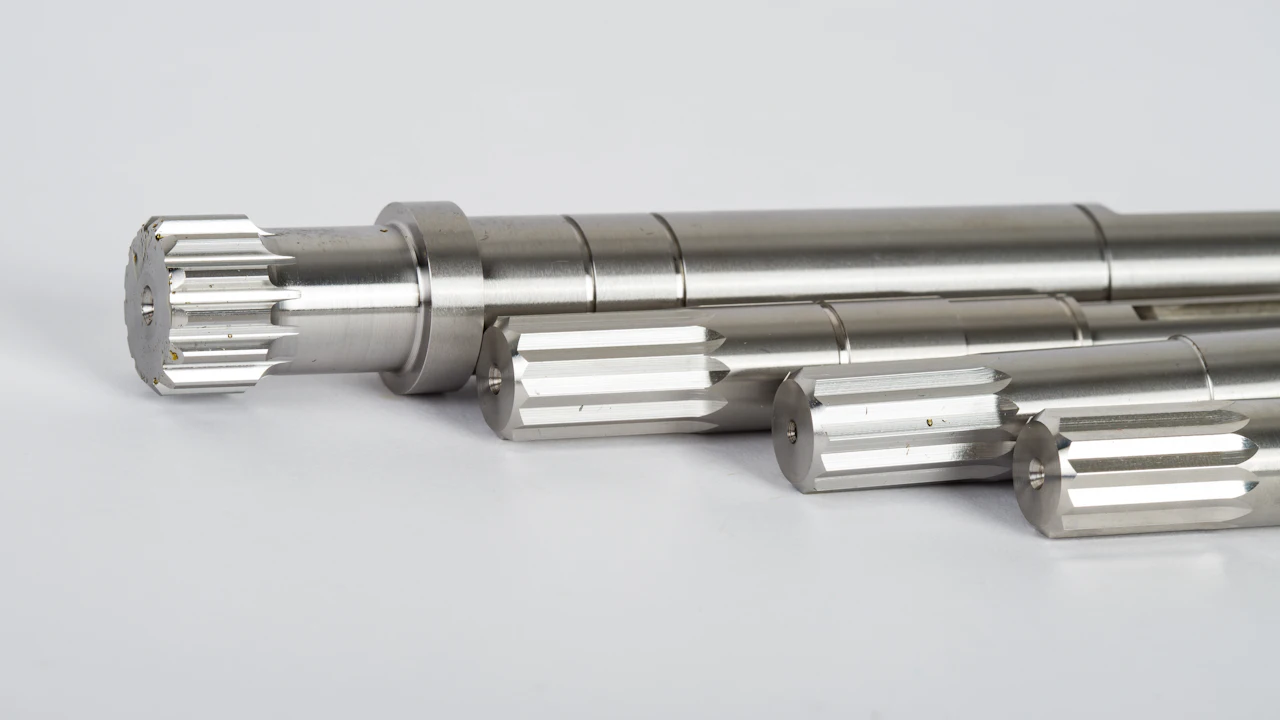
A driveshaft is the spinning tube that carries power from the transmission to a driven axle, usually on rear-wheel-drive and four-wheel-drive vehicles, jointed at each end with universal joints (U-joints) that let it flex as the suspension moves. When it wears, it makes itself felt through the whole car. We pulled the federal complaint file, took the 248 reports that name the driveshaft against 25,537 other power-train complaints, and the data sorts the real warnings from the folklore.
The tell is a vibration that grows with speed
The signature symptom is a vibration that builds as the car goes faster — 20.6% of driveshaft reports against 7.3% of the control, nearly three times as often. A driveshaft spins at road speed, so a worn U-joint, a failing center support bearing, or a shaft thrown out of balance sends a vibration through the floor that gets worse the faster you go and often smooths out or changes when you lift off. That speed-dependent vibration is the clue that points at the driveshaft rather than a wheel or a tire, which vibrate in step with wheel rotation instead. It is the warning to act on before the joint fails outright.
The clunk before it, the drop after
Before the vibration takes hold, a worn U-joint often clunks when you get on or off the throttle — 8.1% of reports against 2.5% of the control — as slack in the joint takes up under load. Left long enough, the failure becomes the one that makes a driveshaft a safety part: the shaft dropping or separating from the car, in 19.8% of reports against 4.3% — over four times as often. A U-joint that fails completely, or a coupling that lets go, drops one end of the spinning shaft onto the road, which can gouge the pavement, damage the underbody, or in the worst case pole-vault the car. That is why the clunk and the vibration are worth chasing down early.
The myth the data kills
Nearly every symptom list leads with a squeak from a dry U-joint that needs greasing. The file does not support it: a squeak or creak appears in just 0.4% of driveshaft reports, essentially the same as the 0.3% of the control — statistically no signal at all. Modern U-joints are largely sealed and not greasable, and owners simply do not report a squeak the way the folklore predicts. Trust the clunk on acceleration and the vibration that grows with speed instead; those are the symptoms that actually separate a bad driveshaft from everything else.
Where it shows up: pickups
The model concentration fits the part. RAM 1500 (67) leads by a wide margin, with the Jeep Grand Cherokee (27) and several Hondas behind — rear- and four-wheel-drive vehicles with a long driveshaft and U-joints doing real work, where a front-wheel-drive car has none. A pickup's driveshaft is longer, spins hard under load and towing, and has more joints to wear, which is why trucks dominate a driveshaft file the way they do not dominate, say, a fuel-injector one. The median failure here lands around 60,000 miles — young, reflecting joints worked hard rather than a part that simply ages out.
What to do when you suspect it
Treat a speed-related vibration or a clunk on acceleration as a reason to have the driveline inspected promptly, because the next stage is separation. A mechanic checks the U-joints for play by hand with the shaft still, looks at the center support bearing on longer shafts, and can rebalance or replace a shaft that vibrates. Where U-joints are greasable, a missed grease interval is a real cause; where they are sealed, a worn joint is simply replaced. Because the symptoms overlap the rest of the driveline, a road test is what separates a driveshaft vibration from a CV axle click or a differential whine.
On a used car you are about to buy
A worn driveshaft is easy to feel and easy to overlook on a short drive. Take a rear- or four-wheel-drive vehicle up to highway speed and feel for a vibration through the floor that grows with speed, and listen for a clunk as you accelerate from a stop or shift into gear. On a truck that may have towed or gone off-road, have a mechanic check the U-joints for play as part of a pre-purchase inspection — it takes minutes. Checking the model and year in the complaint lookup is worth it, since driveshaft and U-joint failures cluster on hard-working trucks.
Common questions
What are the symptoms of a bad driveshaft?
The clearest is a vibration that grows with road speed (20.6% of reports against 7.3% of other power-train complaints), from a worn U-joint or an unbalanced shaft. A clunk on acceleration (8.1% against 2.5%) is the earlier sign, and the worst case is the shaft dropping or separating (19.8% against 4.3%). The squeak often blamed on a dry U-joint barely appears in the data (0.4%).
Is it safe to drive with a bad driveshaft?
Only to get it inspected, and not far once it clunks or vibrates. A worn U-joint can fail suddenly, and a driveshaft that separates drops a spinning shaft onto the road — that separation appears in 19.8% of these reports. A faint vibration buys a little time to book the repair; a pronounced clunk on acceleration or a heavy vibration does not. Have the U-joints checked before it lets go.
What does a bad U-joint sound like?
Most often a clunk or clank when you get on or off the throttle, or when shifting between drive and reverse, as slack in the worn joint takes up — it appears in 8.1% of driveshaft reports against 2.5% of the control. Contrary to the common belief, a squeak is rarely reported (0.4%). If a clunk is followed by a vibration that grows with speed, the U-joint or the shaft is the likely cause.
Why do pickups dominate these reports?
Because they have the part working hardest: a rear- or four-wheel-drive truck like the RAM 1500 (67 reports here) has a long driveshaft with multiple U-joints that spin under heavy load and towing, where a front-wheel-drive car has no driveshaft at all. The concentration reflects where driveshafts are stressed, not a defect in one model, and it is why the median failure here is a relatively young 60,000 miles.
Sources and further reading
Recall, complaint and safety-rating figures on this page were retrieved from the federal databases above on August 19, 2026. Federal data changes — re-check any VIN before you rely on it.
Published September 11, 2026 · last updated September 11, 2026. Found something out of date or wrong? Tell us and we will correct it.