Symptoms of a Bad Intake Manifold: What the Reports Show
Counted from federal complaints (a small, honestly-flagged set): an intake manifold gasket fails as a vacuum leak — a lean code, a rough idle and a hiss — and on coolant-carrying manifolds, a coolant leak.
The short version
- Counted, not remembered — and honest about the sample. From an engine-complaint pull we took the 197 NHTSA reports that name an intake manifold, measured against 43,941 other engine complaints. Read it for direction and lean on the ratios.
- An intake manifold, or more often its gasket, fails as a vacuum leak — so the fingerprint is a lean condition: a check-engine light with a lean code (39.6% against 27%).
- The mechanical tells are a rough idle or vacuum leak (3% against 1.5%) and an audible hiss (1% against 0.2%, five times the control though on few accounts).
- On engines whose manifold carries coolant, a coolant leak is possible too, though in this file it runs at or below the control.
- None of the symptoms is dramatic, which is why a manifold leak is often chased as a mystery lean code before the gasket is found.
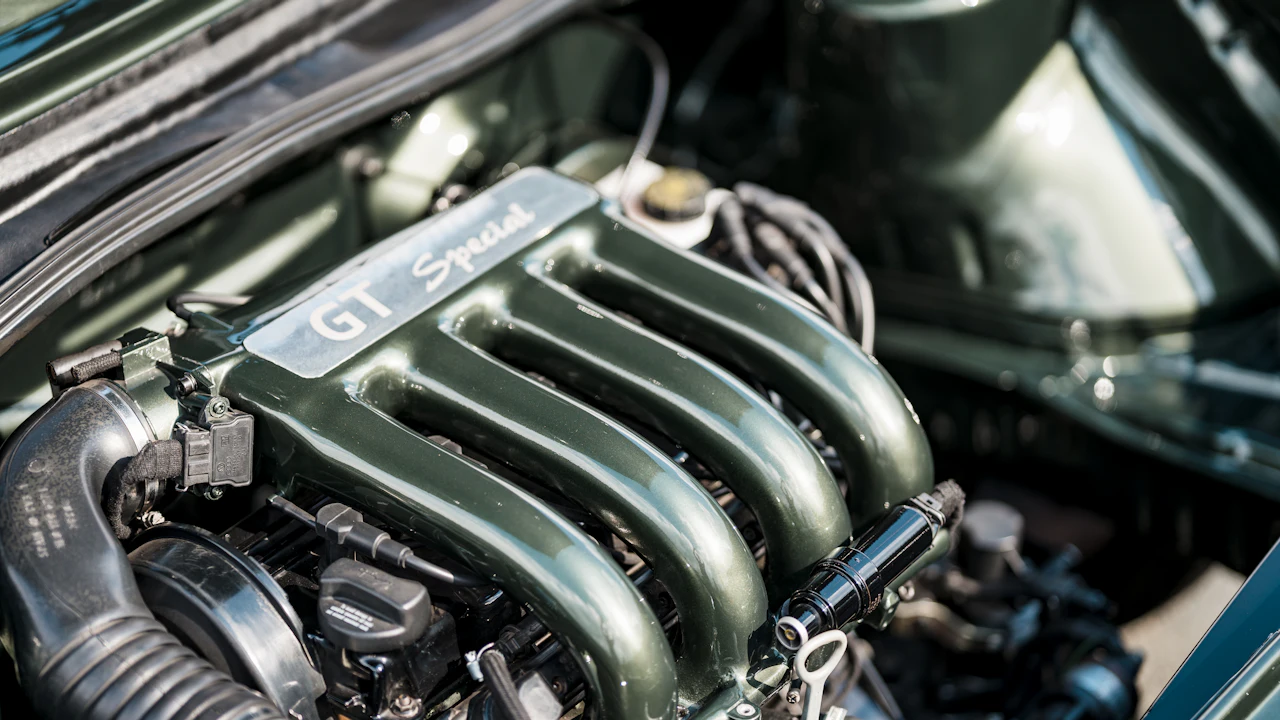
The intake manifold distributes air (and on many engines, coolant) to the cylinders, and it is usually the gasket between it and the head that fails rather than the manifold itself. When that seal goes, unmetered air leaks in past the sensors — a vacuum leak — and the engine runs lean. We pulled the federal complaint file, took the 197 reports that name an intake manifold against 43,941 other engine complaints. It is a small set, treated as such, but its signature fits the mechanism cleanly.
The fingerprint: a lean condition
A vacuum leak lets air into the engine that the mass-air-flow sensor never measured, so the mixture goes lean and the computer notices. The commonest symptom is exactly that: a check-engine light, often a lean code such as P0171 or P0174, in 39.6% of intake-manifold reports against 27% of the control. The mechanical signs that confirm it are a rough or high idle (3% against 1.5%) — a vacuum leak is worst at idle, when manifold vacuum is highest — and sometimes an audible hiss where the air is being drawn in (1% against 0.2%). None is loud in the data, but a lean code paired with a rough idle and a hiss is the recognisable pattern.
The coolant variant
On engines whose intake manifold carries coolant — and some plastic manifolds are notorious for cracking or for gaskets that fail internally — a manifold fault can present as a coolant leak or overheating instead of, or as well as, a vacuum leak. In this file that runs at or below the control (7.1% against 10.4%), so it is not the dominant story across all engines, but on the specific engines prone to it, coolant loss with no obvious external leak is a manifold-gasket suspect. If your engine is one of those, treat a mysterious coolant loss and a lean code together as pointing at the manifold gasket.
What to do when you suspect it
Chase the lean code the right way. A P0171/P0174 lean code has several possible causes — a dirty mass-air-flow sensor, a cracked intake hose, a stuck purge valve, or the manifold gasket — so the diagnosis is to find where the unmetered air is entering. A smoke test of the intake, or spraying a little throttle-body cleaner around the manifold seams and listening for an idle change, localises a manifold leak cheaply and definitively before a gasket is replaced. Reading the code is the start, as our guide to the check-engine light explains; the smoke test is what confirms the manifold specifically.
On a used car you are about to buy
A lean code and a slightly rough idle are easy to miss and easy to clear before a sale. Let the car idle and feel for an unsteady, hunting idle, scan for stored and pending lean codes rather than trusting a dark dashboard, and on coolant-carrying manifolds check for unexplained coolant loss. Checking the model and year in the complaint lookup and its open recalls is worth the minute — some engines have well-known manifold-gasket patterns a seller will not mention.
Common questions
What are the symptoms of a bad intake manifold gasket?
It fails as a vacuum leak, so the fingerprint is a lean condition: a check-engine light with a lean code (P0171/P0174) in 39.6% of reports, a rough or high idle worst at idle, and sometimes an audible hiss where air is drawn in. On engines whose manifold carries coolant, a coolant leak or overheating is a further possibility. The symptoms are subtle, which is why manifold leaks are often chased as mystery lean codes.
Is it the intake manifold gasket or the MAF sensor?
Both cause a lean code, so the question is where the unmetered air is entering. A smoke test of the intake, or spraying throttle-body cleaner around the manifold seams and listening for the idle to change, localises a manifold leak. A dirty mass-air-flow sensor, by contrast, mismeasures air that is entering normally. Diagnose the source rather than replacing parts on the code alone.
Can a bad intake manifold cause overheating?
On engines whose intake manifold carries coolant, yes — a cracked manifold or a failed gasket can leak coolant or let it into the intake, causing loss and overheating. In the complaint file this is not the dominant symptom across all engines, but on the specific engines prone to it, unexplained coolant loss with a lean code points at the manifold gasket.
Can you drive with an intake manifold leak?
A small vacuum leak will run rough and lean and may not strand you, but a persistent lean condition can, over time, run hot and stress other components, and a coolant-carrying manifold leak risks overheating. It is not usually an immediate emergency, but it should be diagnosed and sealed rather than driven on indefinitely.
Sources and further reading
Recall, complaint and safety-rating figures on this page were retrieved from the federal databases above on August 19, 2026. Federal data changes — re-check any VIN before you rely on it.
Published September 10, 2026 · last updated September 10, 2026. Found something out of date or wrong? Tell us and we will correct it.