What Does the Check Engine Light Mean? And Who Cleared It
Erasing the light does not fix the fault, and it leaves evidence. A scan tool finds it in under a minute.
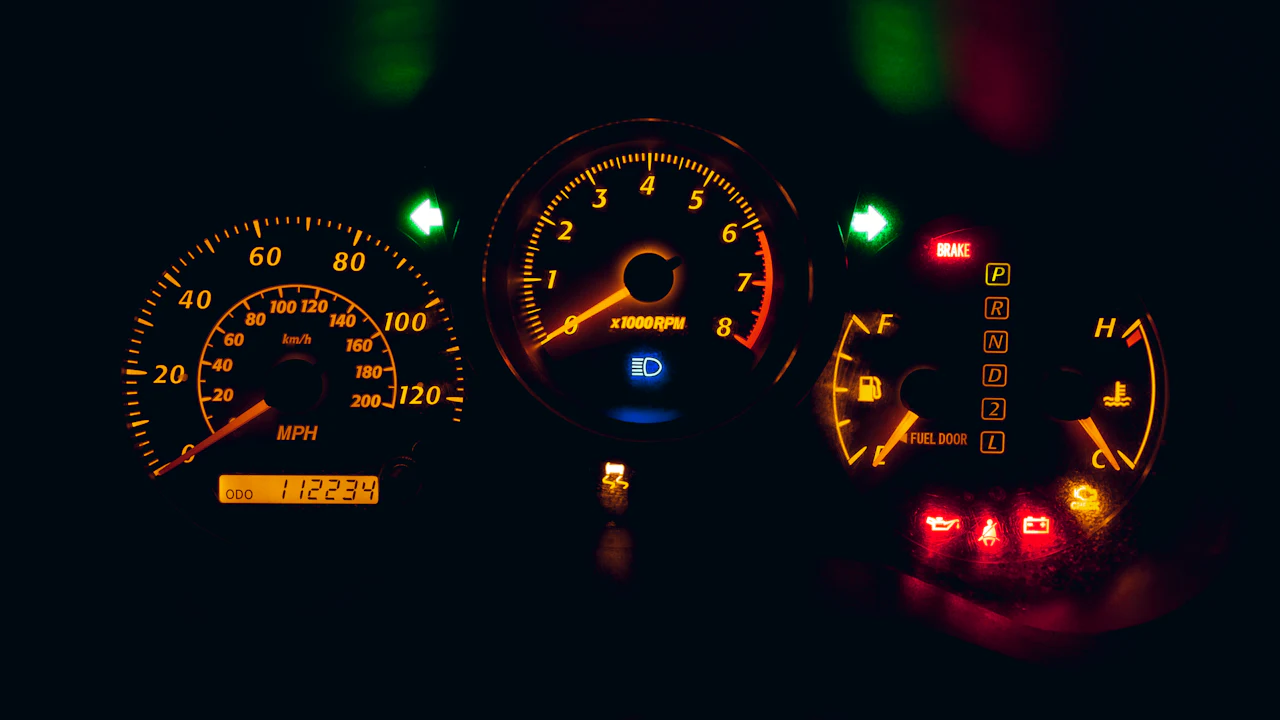
The short version
- It means the engine management system has seen something outside the range it expects and has stored a fault code. It does not name a broken part, and it does not tell you what the repair costs.
- Steady and flashing are two different messages. Steady means a fault is stored and you can normally drive to a workshop. Flashing means an active misfire is pushing unburnt fuel into the catalytic converter, and the correct response is to stop.
- A generic code identifies a circuit, not a component. An oxygen sensor circuit code is a statement about a wire, a connector, a sensor and the module reading it, in that order of likelihood by cost.
- Here is the part that matters when you are buying: any seller can switch the light off in under a minute with a handheld tool. The fault is not repaired by doing that. The evidence is.
- Clearing a code leaves a trace, and the trace is easy to read. The readiness monitors reset to not-ready and need a period of mixed driving to come back, so a car showing no light and not-ready monitors is a car whose light was cleared recently.
- That single check — no light, monitors not ready — is one of the most informative things you can discover at a viewing, and it needs nothing but a basic scan tool and a minute of the seller’s time.
The check engine light is an amber engine outline on most cars, or the words CHECK ENGINE on older ones, and it means both less and more than people assume. Less, because it is not a warning that the engine is about to fail. More, because it is the only lamp on the dashboard that a seller can remove without fixing anything.
That last sentence is the reason this page exists on a used-car site rather than a repair blog. Every other warning — oil pressure, coolant temperature, brake fluid — goes out when the underlying condition goes away. The check engine light goes out when the condition goes away or when somebody plugs a tool into the socket under the dashboard and presses erase. The car cannot tell you which of those two things happened. But it can tell you something almost as good, and almost nobody asks it.
What the light is actually telling you
Every petrol car sold in the United States since 1996 carries a standardised on-board diagnostic system, OBD-II. It exists because of emissions regulation rather than because of reliability engineering, and understanding that origin explains most of its behaviour.
The engine control module holds a model of what the engine should be doing. It knows what the air mass sensor should read for a given throttle position, what the oxygen sensors should be swinging between, how quickly the crankshaft should accelerate through each firing event, what the coolant should reach and how fast. It compares those expectations against what the sensors report, several times a second, and it runs periodic self-tests on the systems it cannot judge continuously.
When a reading sits outside the expected band for long enough, or a self-test fails on more than one attempt, the module stores a diagnostic trouble code and illuminates what the industry calls the malfunction indicator lamp. That is the whole mechanism. The light is the module saying: something in this system is not behaving the way the model says it should.
Two consequences follow, and both are routinely misunderstood.
The first is that the light says nothing about severity. A loose fuel filler cap and a failing catalytic converter light the same lamp in the same colour. So does a cheap sensor, an expensive sensor, a vacuum leak, a corroded earth strap and a transmission fault on cars where the transmission shares the network. The dashboard has one bit of information to give you and it gives you that bit regardless of whether the repair is trivial or ruinous.
The second is that the light is not a diagnosis and was never intended as one. It is a pointer to a stored record. The record is where the useful information lives, and reading it costs nothing beyond owning the tool.
Steady versus flashing, and why the difference is urgent
This is the one distinction worth memorising before you next drive anything.
A steady light means a fault has been confirmed and stored. The car is drivable in the ordinary sense. You should find out what the code is, and you should not ignore it for months, but you are not in an emergency and you do not need to abandon the car at the side of the road.
A flashing light means something different and specific: a misfire severe enough to damage the catalytic converter is happening right now. When a cylinder fails to burn its charge, the fuel does not disappear. It goes out of the exhaust valve and into the catalyst, where it burns instead, at temperatures the catalyst substrate was never designed to survive. A converter can be destroyed in a few miles of driving on a flashing light, which converts a misfire — often a coil pack or a plug — into a considerably larger job.
What to do about a flashing light. Reduce load immediately: off the throttle, out of high gear, no towing, no motorway speed. Get off the road and stop as soon as it is safe. Do not drive it home because home is only ten minutes away, and do not drive it to the workshop the next morning. Our guide to used car maintenance lists the handful of symptoms that mean stop rather than schedule, and this is the first of them.
Two footnotes. Some vehicles flash the lamp for other severe conditions, so a flashing light is best read as “stop, whatever it is” rather than exclusively as a misfire. And a misfire bad enough to flash the lamp is usually bad enough to feel — a stumble, a shudder at idle, a loss of power — so if the car feels wrong and the light is flashing, believe both.
The used-car problem: the light can simply be switched off
Now the part that concerns you as a buyer.
The diagnostic socket sits under the dashboard on the driver’s side of every car built to the OBD-II standard, in a position fixed by regulation so that it can be found without a manual. A handheld code reader plugs into it. Press the button marked erase, and every stored code is deleted and the lamp goes out.
Nothing has been repaired. The oxygen sensor that was reading lazily is still reading lazily. The evaporative system that was leaking is still leaking. The misfire will misfire again the next time the conditions that produced it recur. What has changed is that the car no longer displays evidence of any of it, and the dashboard you are looking at is the dashboard of a car with no faults.
It is worth being fair about motive here. Clearing codes is a normal diagnostic step, not an inherently dishonest act. A mechanic clears codes after a repair to confirm the fault does not return. An owner clears a code to see whether it was a one-off. Neither is deception. But the same button, pressed on the morning of a viewing, produces a car that looks materially better than it is, and the seller does not have to say a word to you for that to work. It is not a lie. It is the absence of a light.
The relevant question, then, is not whether the seller is honest. It is whether the light was on last week. And the car answers that question if you ask it properly.
Why clearing a code leaves a trace
Erasing the codes does not put the car back into the state it was in before the fault. It puts the car into a state that is distinctive in its own right, because three things are wiped alongside the code.
The readiness monitors reset to not-ready. The car runs periodic self-tests on its emissions systems, and each test reports a ready or not-ready status. Clearing the memory sets those back to not-ready, and they only return to ready after the vehicle has completed the specific driving conditions each test requires — a mixture of cold starts, steady cruising and idle, spread over a period rather than achieved in one lap of the block. We set out how the monitors work, and why an emissions test fails on readiness alone regardless of whether anything is actually wrong, in our guide to what an emissions check by VIN can and cannot establish. For your purposes at a viewing, only one line of it matters: monitors do not come back quickly, and they cannot be faked forward.
The distance and warm-up counters reset. The standard makes two values available to any scan tool: the distance travelled since the codes were last cleared, and the number of warm-up cycles since the codes were last cleared. On a car whose memory has not been touched in years, those read as large numbers. On a car cleared on the morning of your visit, they read as almost nothing. This is the most direct answer available and hardly anyone asks the question.
The freeze frame goes. When a code sets, the module captures a snapshot of the operating conditions at that moment — engine speed, load, coolant temperature, fuel trims. That snapshot is genuinely useful in working out what the fault was, and it disappears with the code, which is one reason clearing codes before a diagnosis annoys mechanics.
The finding, in one sentence. A car with no warning light, whose readiness monitors show not-ready and whose distance-since-cleared reads as a handful of miles, had its fault memory erased recently. That is not a suspicion, it is a reading. What it means is a separate conversation — there are innocent explanations, including a battery disconnection, a recent repair or a workshop visit — but it is a conversation you are now in a position to have, holding the facts.
A battery that has been disconnected or has gone flat produces the same reset, which is why the question to ask is open rather than accusatory: has the battery been off recently, or has anything been done to it? A seller with a genuine answer gives it immediately. A seller without one usually gives you something more interesting.
A code names a circuit, not a component
The second widespread misunderstanding is what a code actually identifies, and it costs people real money.
Generic OBD-II codes are defined at the level of the circuit and the observed symptom. A code for an oxygen sensor heater circuit says that the module commanded the heater and did not see the electrical result it expected. That outcome is produced by a failed sensor, and it is also produced by a broken wire, a corroded connector, a blown fuse, a chafed loom rubbing on a bracket, a poor earth, or a fault in the module doing the reading. The code cannot distinguish between those, because from the module’s point of view they are the same event.
The same logic runs through the whole scheme. A catalyst efficiency code says the downstream oxygen sensor is behaving too much like the upstream one, which usually means the converter is worn out and sometimes means a sensor is lying or an exhaust leak upstream is letting air in. A lean mixture code says the module is having to add fuel to reach its target, which points at unmetered air — a split hose, a failed gasket, a leaking intake boot — at least as often as it points at a fuel delivery problem.
Two practical consequences for a buyer:
- Do not price a repair from a code. A code read at a parts counter, followed by the purchase of the part named in the code’s description, is the single most common way to spend money and still have the light come back. The code is the beginning of the diagnosis, not the end of it.
- Distrust a seller who prices it for you. “It just needs a sensor, they’re cheap” is a diagnosis performed by somebody with an interest in the outcome, from a piece of evidence that does not support it. It may well be true. It is not established.
A proper scan is a different exercise again. It queries every module on the network rather than only the engine, and returns stored and historic faults as well as the ones currently lighting the lamp — which is exactly where an intermittent fault hides. Our guide to the used car pre-purchase inspection covers what a full scan turns up beyond the engine, and why the free read at a parts counter is not the same product.
“It’s just the gas cap”
This deserves its own section because it is simultaneously true, common, and the most convenient sentence available to a seller.
The evaporative emissions system is sealed. It captures petrol vapour from the tank, stores it in a charcoal canister and feeds it into the engine to be burnt rather than letting it escape. The car tests that system by sealing it and watching for a pressure change, and a filler cap that is loose, cross-threaded or fitted with a perished seal will fail that test. So will a cracked hose, a failed purge valve, a failed vent valve, a leaking canister, or a corroded filler neck.
All of those produce an evaporative system code. The cheapest cause on that list is a cap. The most expensive is not.
So when a seller says it is just the gas cap, they may be right, and they may be repeating what someone told them, and they may have found the phrase that ends the conversation. The way to tell is not to argue about it but to ask what the code actually was, and whether they still have the printout or the reading. A seller who genuinely had it read can usually tell you. A seller who is reaching for a reassuring explanation usually cannot.
One further note, because it is the detail that makes the excuse checkable: a genuine small-leak evaporative code frequently comes back after the cap has been tightened, because the leak was never the cap. If the seller cleared the light on the strength of the gas-cap theory a fortnight ago and it has not returned, that is mildly encouraging. If they cleared it this morning, you have no information at all, which is the point of the previous section.
What actually turns the light on
It is useful to have a mental map of the categories, not so you can diagnose the car, but so you can tell which conversation you are in.
| Category | What the module has seen | What it usually means for a buyer |
|---|---|---|
| Misfire | A cylinder is not burning its charge, detected through crankshaft speed variation | Ignition or fuel delivery on a good day; compression on a bad one. A flashing lamp moves it to urgent. |
| Evaporative emissions | The sealed fuel vapour system is not holding | Ranges from a filler cap to a corroded tank. Cheap to inspect, so insist it is inspected rather than assumed. |
| Fuel trim and mixture | The module is adding or removing fuel beyond its normal authority to hit the target | Usually unmetered air or a metering fault. Rarely dramatic, often persistent, sometimes cheap. |
| Oxygen sensor | A sensor is slow, out of range, or its heater circuit is not responding | Frequently the sensor, frequently the wiring. Cheap to test properly, easy to replace unnecessarily. |
| Catalyst efficiency | The converter is not doing enough work to separate the two sensors’ signals | One of the more expensive outcomes, and one that is often the consequence of an earlier fault left running. |
| Air and exhaust management | Airflow metering, exhaust gas recirculation, secondary air, turbo boost control | Highly variable. Carbon-related faults recur if the cause is not addressed. |
| Thermostat and cooling | The engine does not reach or hold its operating temperature | Cheap part, real consequences for economy and wear, commonly ignored for years. |
| Transmission and network | Faults raised by other modules that reach the same lamp on some vehicles | The reason a single-module code read is not a scan. |
Read down that middle column and the pattern is clear enough. In almost every row the module is reporting a relationship that has gone out of tolerance, not a part that has broken. That is why the light means “a system is out of range”, and why the leap from lamp to invoice is longer than it looks.
What owner complaint records suggest about the systems behind the lamp
A word about evidence, because this site does not invent numbers and this is a place where numbers are easy to invent.
We hold an archived pull of NHTSA owner complaints in which the reporting owner stated a mileage. It covers 1,324 usable readings drawn from 9,096 complaints scanned, across thirteen models and fifteen component categories, concentrated on the 2018 model year.
What these mileages are, precisely. They are the odometer readings at which owners filed a safety complaint with NHTSA. They are not average failure points, they are not durability estimates, and they are not a service schedule. A median of 49,000 for the electrical system category means that half the electrical complaints in this file were filed below that reading — in other words, when a problem in that category became serious enough for an owner to report it to a federal regulator. The file is also right-censored: it is dominated by cars observed only to the present day, so its upper tail describes how long these vehicles have been on the road rather than how long they last. The safe things to read from it are the ordering of the categories and the shares below a threshold, and nothing else.
With that stated plainly, the ordering is still worth having. Electrical system complaints, of which there are 145 in the file, carry a median of 49,000, and powertrain complaints sit at the same figure across 124 reports. Engine complaints — the largest single category at 200 reports — carry a median of 58,000. Gasoline fuel system complaints, 134 of them, sit much later at 89,000, and engine and engine cooling later still at 98,000 across 97 reports.
What that ordering supports is a modest claim, and it is the only claim we will make from it: the systems that most often sit behind a check engine light are not distributed evenly across a car’s life. Electrical and powertrain problems reach the point of a formal complaint earlier in the file than fuel system and cooling problems do. For someone looking at a car with a lit lamp, that is a reason to treat an electrical or driveability complaint on a low-mileage example as less surprising than instinct suggests — and a reason not to assume that a car which has been trouble-free so far has passed the point where these categories appear.
Using this at a viewing
The whole of the argument above reduces to a short procedure. It takes about five minutes and it needs a basic OBD-II reader, which is the single most useful thing you can carry to a viewing.
- Watch the bulb check. Turn the ignition to on without starting. Every warning lamp should illuminate, including the check engine light, and then go out once the engine runs. A lamp that never lights at all has been disabled — removed, taped over, or unplugged — and that is worse than a lamp that stays on, because somebody had to do it deliberately.
- Insist on a cold start. Ask the seller not to run the car before you arrive, and put your hand on the bonnet when you get there. Cold starts surface faults that a warm engine hides, and a pre-warmed car is a question in its own right.
- Read the codes, including pending and stored. Not just the ones lighting the lamp. A pending code is a fault the module has seen once and is waiting to confirm.
- Read the readiness monitors. Not-ready monitors on a car the seller describes as fault-free is the finding this entire page is built around.
- Read the distance and warm-ups since the codes were cleared. This converts an inference into a number.
- Ask the open question. “Has the battery been disconnected or has anything been done to it recently?” You are giving the seller a fair opportunity to explain a reading you already have.
None of this replaces an inspection. It decides which cars deserve one, which is a different and cheaper job.
If the light is on when you arrive
A lit lamp at a viewing is not automatically a reason to walk away. It is a reason to change what you are doing.
Start by noticing that the seller did not clear it. That is worth something. A car presented honestly with a fault showing is a better signal than a car presented with a dashboard that has been curated, and it is frequently a sign of an owner who simply does not treat the lamp as a marketing problem.
Then read the code, and be clear with yourself about what you have learned. You know the circuit and the symptom. You do not know the part, the labour, or whether it is one fault or the visible end of three. Any figure you attach to it at that moment is a guess, and it is a guess you will be negotiating against your own money with.
The correct move is to make the diagnosis a condition rather than an estimate. Have an independent workshop scan and diagnose it, and treat the resulting written finding as the basis for the conversation about price. That converts an unknown into a known before you own it, which is the only moment when the information has any leverage in it. A fault diagnosed after the money moves is simply a bill.
One more thing worth checking at that point, because it is free: the fault may already be the manufacturer’s problem. Emissions-related recalls are common, the remedy is free regardless of who owns the car now, and the check takes a couple of minutes with the VIN. Our guide to checking a car for open recalls covers the lookup, and the same VIN will tell you whether the car’s recorded history matches the story you are being told — you can run a title and history check by VIN while you are still standing beside it.
You have bought it, and the light has come on
If the lamp appears in the first weeks of ownership, work through it in this order.
Is it flashing? If so, stop. Everything else waits.
Does the car drive normally? A steady lamp with no change in behaviour is a different situation from a steady lamp with a stumble, a smell, a noise or a loss of power. Note what has changed, because that is diagnostic information that will otherwise be lost.
Read it before anyone else does. Owning a reader means arriving at the workshop with the code rather than asking for it, which is a materially better position to be in.
Check the free routes before the paid ones. An open recall is remedied at no charge. Federal law also requires manufacturers to warrant certain emissions-related components for extended terms — longer than the general warranty, and routinely forgotten by everybody including dealers. Establish what is left on the car before you pay anyone, which our guide to pre-purchase inspection touches on from the other direction.
Do not clear it and hope. You will erase the freeze frame, reset the monitors, and if you are due an emissions test you will have converted a diagnosable fault into an automatic test failure on readiness.
What an unlit dashboard does not prove
Finally, the mirror image of the whole argument, because it is worth saying explicitly.
No check engine light means the emissions and engine management self-tests have not raised a confirmed fault. That is all it means. It does not mean the clutch is good, the suspension is tight, the automatic transmission shifts cleanly, the structure is straight, the mileage is genuine or the title is clean. The lamp watches a defined set of systems for a defined set of regulatory reasons, and the most expensive things that go wrong with a used car sit entirely outside its field of view.
It also does not mean the light was never on. That is the whole point of the readiness check, and it is why a dark dashboard is a starting condition rather than a conclusion.
One warning does not wait for a scan tool. A temperature gauge climbing is the fault where what you do in the next two minutes decides the size of the repair, and our guide to what to do when a car overheats sets out the order to do it in.
Two specific cases are common enough to have their own guides. The P0420 code is the most-searched of all of them and rarely means what people assume, and a misfire or rough idle is the fault behind a lamp that flashes rather than holds steady.
Common questions
What does the check engine light mean?
It means the engine management system has detected a reading or a failed self-test outside the range it expects, and has stored a diagnostic trouble code. It identifies a system that is out of range rather than a part that has broken, and it gives no indication of severity — a loose fuel filler cap and a failing catalytic converter produce the same amber lamp. The stored code is where the information is, and reading it takes under a minute with a basic scan tool.
Can I drive with the check engine light on?
A steady light generally yes, in the short term, while you arrange to have it read and diagnosed. A flashing light no: it indicates a misfire severe enough to send unburnt fuel into the catalytic converter, which can destroy the converter within a few miles. Reduce load, stop as soon as it is safe, and do not drive it home on the basis that home is close.
Can a seller clear the check engine light before I arrive?
Yes, in under a minute, with a tool anyone can buy. Erasing the codes switches the lamp off without repairing anything. What it cannot hide is the side effect: the readiness monitors reset to not-ready and take a period of mixed driving to return, and the tool also reports the distance and the number of warm-up cycles since the codes were cleared. A car with no lamp, not-ready monitors and almost no distance since the clear had its memory erased recently.
How can I tell if the codes have been cleared recently?
Plug in a scan tool and look at three things: monitor readiness status, distance travelled since the codes were cleared, and warm-up cycles since the codes were cleared. All three reset together. Ask the seller openly whether the battery has been disconnected or any work has been done, because a flat or disconnected battery produces the same reset and there are honest explanations.
Is it really just the gas cap?
Sometimes, genuinely. A loose, cross-threaded or perished filler cap will fail the evaporative system’s leak test and set a code. But so will a split hose, a failed purge or vent valve, a leaking charcoal canister or a corroded filler neck, and all of them produce the same family of codes. Ask what the code actually was rather than accepting the explanation, because it is also the most convenient thing a seller can say.
Will the light reset itself if I ignore it?
Sometimes, and that is not the reassurance it sounds like. Many codes require the fault to be absent for several consecutive drive cycles before the lamp goes out, and the code usually remains stored in memory as a historic fault even after the light clears. A fault that comes and goes with temperature or humidity will keep returning. A scan tool reads the stored history whether the lamp is lit or not, which is exactly why a proper pre-purchase scan looks beyond the active codes.
Should I buy a car with the check engine light on?
Possibly, but never on an estimate. You know the circuit and the symptom from the code; you do not know the part, the labour or whether it is one fault or several. Make an independent diagnosis a condition of the sale rather than negotiating against your own guess, and check the VIN for open recalls first, because emissions-related recalls are common and the remedy is free. A seller who declines an independent diagnosis has given you the answer without needing to price anything.
Sources and further reading
- NHTSA Office of Defects Investigation complaint database
- NHTSA recall lookup
- NHTSA odometer fraud
- FTC used car buying guide
- NMVTIS (US Department of Justice)
Recall, complaint and safety-rating figures on this page were retrieved from the federal databases above on August 19, 2026. Federal data changes — re-check any VIN before you rely on it.
Published August 28, 2026 · last updated August 28, 2026. Found something out of date or wrong? Tell us and we will correct it.