How to Check for a Lien on a Car Before You Buy It
The one defect that can cost you the whole car. History reports are the wrong tool for finding it.
The short version
- A lien is a lender's legal claim on the car. Until it is released, the lender — not the seller, and not you — controls whether the title can transfer.
- This is the only used-car defect that can cost you the entire car rather than a repair bill. Every other problem leaves you owning something.
- Vehicle history reports are the wrong tool for this. Liens live in state title records, and most reports either omit them or show a stale snapshot.
- Several states let you check lien status yourself, free, from the VIN. That check takes about a minute and almost nobody buying a used car runs it.
- The safest private sale with a loan outstanding is the one that happens at the lender's counter, with your money paying the lender directly and never passing through the seller.
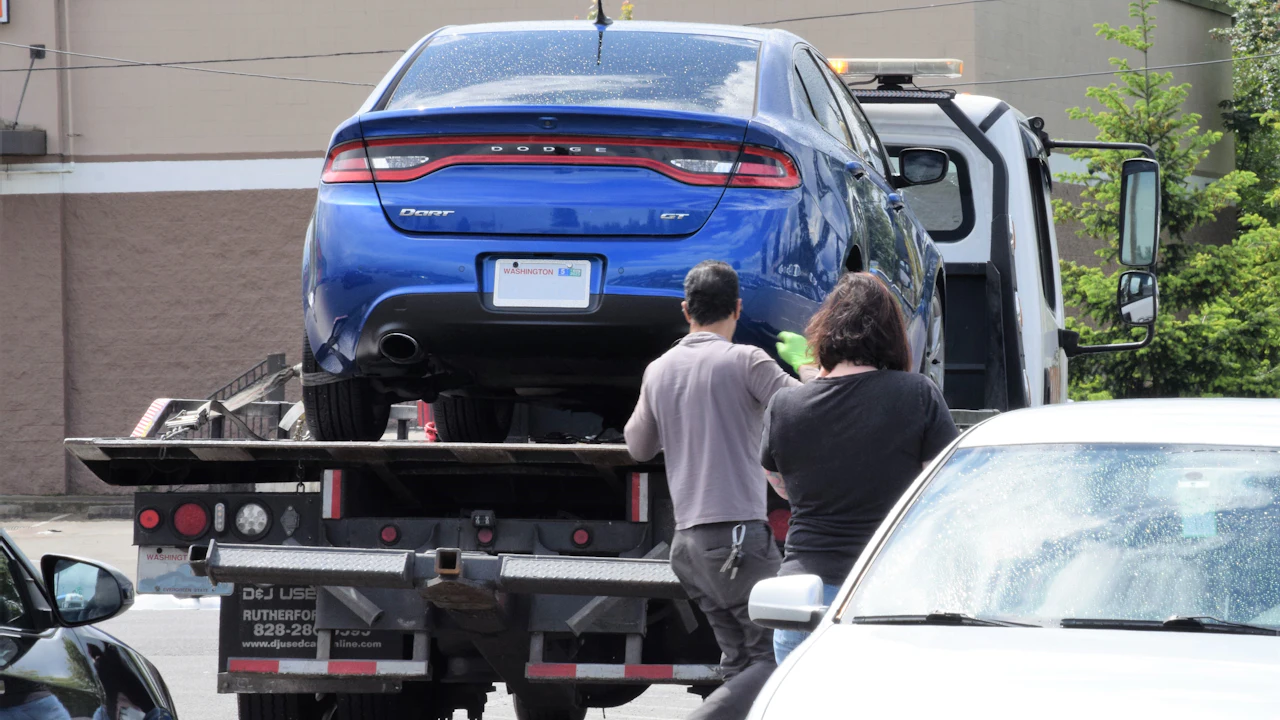
Everything about the car is right. It drives well, the service history is thick, the inspection came back clean, and the seller is pleasant and unhurried. You pay. Six weeks later a flatbed arrives for a vehicle you believed was yours, and the driver is entirely within his rights.
That is what a lien does, and it is the reason this check belongs before the test drive rather than after it. Damage you can see. Mileage you can question. A lender's claim is invisible from the driver's seat, survives the handshake, and does not care that you paid in good faith.
This guide covers what a lien actually is, why history reports are unreliable here, the four ways to find one before you pay, and how to structure a private sale when the seller still owes money. If you want the whole picture on the car first, start with the pre-purchase history check and come back for this step.
What a lien on a car actually is
A lien is a recorded legal interest in a vehicle held by someone other than the person driving it. In almost every case that someone is the lender who financed the purchase. The borrower drives the car, insures it, pays for its tyres and its servicing, and in ordinary speech owns it. The lender holds a claim against it until the loan is settled.
The claim is recorded on the title itself. Depending on the state, the lender is printed on the document as the lienholder or the legal owner, and in many states the lender physically holds the title — or its electronic equivalent — until the debt is cleared. That is the mechanism that matters to you as a buyer: the seller cannot give you a clean transfer of something the state has flagged as encumbered.
The distinction that causes most of the trouble. Possession and title are separate things. A seller can genuinely, honestly possess a car, hold the keys, have driven it for years, and still be unable to sell it to you outright. Nothing about the car in the driveway tells you which situation you are in.
Liens that are not car loans
Finance is the common case, not the only one. A repair shop that was never paid can record a mechanic's lien in many states. Unpaid storage can generate one. So can a judgment, a tax claim, or a title loan taken out against a car the owner already owned outright — that last category is the one that surprises people most, because the car was bought and paid for years ago and the debt arrived afterwards.
The practical consequence is identical whichever kind it is. Somebody else has a recorded claim, and the transfer cannot complete cleanly until that claim is released.
Why this is the one defect that can cost you the whole car
Used-car risk is usually a question of degree. A worn clutch costs you a repair. A rolled-back odometer costs you the difference between what you paid and what the car was worth. Even a structurally compromised rebuilt car leaves you holding a vehicle — a bad one, but a vehicle.
A lien is different in kind. If the seller takes your money and never settles the loan, the lender's claim is unaffected by your payment. The lender did not agree to anything. From its side of the transaction nothing happened: the borrower stopped paying, and the collateral is recoverable. Your recourse is against the seller, who by then has your cash and may have very little else.
And you may never get the title. In states where the lender holds the document until payoff, an unpaid loan means there is no title to hand over, which means you cannot register the car in your name. You have bought a vehicle you can neither legally register nor legally resell.
Paying the seller is not paying the lender. This is the single most expensive misunderstanding in private car sales. Handing the seller enough money to clear the loan creates no obligation on the seller to actually clear it, and no protection for you if they do not. The only version of this that protects you is money moving from you to the lender directly.
Why a history report is the wrong tool for this
Buyers reasonably assume that a paid vehicle history report covers this. It usually does not, and the reason is structural rather than a failing of any one provider.
The federal title system, NMVTIS, exists to stop a branded car being retitled clean in another state. Its subject is the brand history of a vehicle — salvage, flood, junk, buyback — and the Department of Justice's own description of what a report contains is built around exactly that. Financial encumbrance is not what the system was designed to track, and commercial reports built on top of it inherit the gap.
There is a timing problem on top of the coverage problem. A lien is a live status that changes the day a loan is settled. A report is a snapshot compiled from records of varying freshness. A report showing no lien can be describing a state of affairs from months ago, and a report showing a lien can be describing one that was cleared last week. Neither is what you need at the moment you are about to pay.
Use the report to learn what has happened to the car. Use the state record to learn who currently has a claim on it. They are different questions and they have different sources.
Four ways to check, in the order worth doing them
None of these takes long, and the first two are free. Do them in this order, because each one narrows what the next needs to establish.
- Query the state title record by VIN. Several states publish a free lookup that reports lien status directly. This is the closest thing to an authoritative answer available to a member of the public.
- Read the physical title document — not a photograph of it, and not a registration card. The lienholder, if there is one, is printed on the face of it.
- Ask for a payoff letter from the lender, in writing, dated within the last few days.
- Run the history report as a backstop, for the brand and mileage picture that the state lookup does not give you.
Checking the state record by VIN
This is the step most buyers do not know exists. New York, for example, publishes a public title and lien status check. You supply the vehicle identification number, the model year and the make; it returns the date the title was issued, the number of liens if there are any, and the name and address of each lienholder. It deliberately shows no personal information about the owner or registrant, which is why it can be public at all.
Read that list of outputs again, because it is better than it sounds. A named lienholder with an address is not a warning that something might be wrong — it is the identity of the organisation you will need a release from, handed to you before you have spent anything.
Texas takes a different route to the same information: the state documents how a lien is added to and removed from a vehicle record, including the requirement that a lienholder release the lien within 10 days of being paid. Knowing the rule matters when a seller tells you the loan was settled recently — there is a defined window in which the record should have caught up, and if it has not, that is a question rather than a shrug.
Not every state offers a public lookup, and the ones that do differ. Some publish an online check, some require a written records request, some restrict access to the registered owner or to permitted users under federal privacy law. Search for your state's motor vehicle agency plus title or lien status rather than assuming the tool does or does not exist. Where no public check is available, the paper title and the payoff letter carry the whole weight.

Reading the title document itself
Ask to see the actual certificate of title. Not the registration, which proves the car is permitted on the road and says nothing about who has a claim on it. Not a photograph, which can be of a document that has since been superseded. The paper itself.
On the face of it you are looking for a lienholder or legal owner section. If a company is named there, a lien was recorded. If that lien has since been satisfied, there should be a release — signed, dated, and on the document or attached to it. A seller who tells you the loan is paid but has nothing showing the release is describing a state of affairs that the state's record may not yet agree with.
Three specific things to check while you have it in your hand:
- The VIN on the title matches the VIN on the car. Check the dashboard plate and the door jamb sticker, not just one of them. The federal VIN decoder will confirm that the number describes the vehicle you are standing next to.
- The name on the title is the name of the person selling it to you. A seller who is not the titled owner is either acting for someone else, which needs documenting, or is selling cars as a business without saying so.
- The title is the current one. A duplicate or replacement title, particularly a recent one, is worth asking about — it is a normal thing to need, and also the route by which a lien-encumbered car occasionally gets sold.
If the seller cannot produce the title at all, stop. In states where the lender holds it until payoff, the absence of the document is not an administrative delay. It is the answer.
The payoff letter, and why it has to be recent
A payoff letter is a statement from the lender saying what is required to clear the loan, and through what date that figure holds. It is the only document in this process that is both authoritative and current.
The reason it has to be dated within days rather than weeks is that the number moves. Interest accrues. A figure the seller quotes from memory, or from a statement a month old, will be lower than the real one, and the shortfall lands somewhere in your transaction. Ask for it in writing, ask for it dated, and read the date.
Two things the letter tells you that the seller might not. First, whether the loan balance exceeds what you have agreed to pay — negative equity, where the debt is larger than the car is worth, is common and turns a simple sale into a complicated one. Second, whether the lienholder on the letter matches the lienholder on the state record. Loans get sold between institutions; a mismatch is usually benign and always worth resolving before money moves.
Buying privately from someone who still owes money
This is a normal transaction, not a doomed one. Most people selling a car with a loan on it are ordinary sellers in an ordinary situation, and the deal is perfectly safe if it is structured so that the lender is paid before the seller is.
The version that works looks like this. You and the seller meet at a branch of the lending institution. Your payment goes to the lender, in the amount on the payoff letter, at the counter. If the sale price exceeds the payoff, the balance goes to the seller then and there. The lender releases the lien, and the title — or the electronic release that produces one — follows through the state's process.
What that structure removes is the window in which your money and the outstanding debt exist at the same time. There is no point at which the seller is holding your cash and still owing the lender.
The three arrangements to refuse. Paying the seller and trusting them to clear the loan. Paying in cash away from the lender because it is simpler. Taking the car now with the title to follow once things are sorted out. Each of these is offered in good faith most of the time, and each of them puts your money and the lender's claim on the car in the same room at the same moment, which is the only situation you are trying to avoid.
The rest of the private-sale routine still applies. Our guide to buying from a private seller covers the identity checks, the paperwork and the handover; this section is the financial layer that sits underneath it.
Dealers, trade-ins and the lien you can inherit
Buying from a franchised dealer generally moves this problem off your plate. Dealers settle liens on trade-ins as a matter of routine, and the retail sale to you is a separate transaction with its own paperwork. That is a genuine part of what a dealer's margin buys.
Two situations still deserve attention. Small independent lots operate on thinner cash reserves, and a lot that is slow to pay off the loans on the cars it has taken in is a lot where a title can be slow to appear. Ask when the title will be delivered and get the answer in writing. If it is more than a few weeks, ask why.
The other is the lien you create rather than inherit. Trading in a car you still owe money on rolls the outstanding balance into the new loan if the trade allowance does not cover it. That is a lien on the new car from day one, larger than the car is worth. The CFPB's auto loan material is the plain-English reference for how that arithmetic works, and it is worth reading before you sign rather than after.
Whatever the source, dealer disclosure obligations under the FTC Used Car Rule concern the vehicle and its warranty status. They are not a substitute for you establishing who has a claim on the title.
The signals that mean stop
Most of these are about the paperwork rather than the car, which is why they are easy to miss when the car is good.
- The title cannot be produced today. Whatever the explanation, the check cannot be completed without it.
- The seller's name is not on the title, and the explanation involves a friend, a relative or a business that is not present.
- Pressure to complete quickly, particularly pressure that appears at the moment you ask about the lien rather than before it.
- A payoff figure quoted from memory, or a refusal to obtain the letter because the loan is nearly settled.
- An insistence on cash away from the lender, framed as convenience or as a discount for simplicity.
- A state record showing a lienholder the seller has not mentioned, which is the reason to run the state check before the conversation rather than after it.
- A price well under the market on a car with no visible reason for it. Debt is one of the reasons a car is cheap, and it is the one that does not show up on an inspection.
If you have already bought a car with a lien on it
Act on the assumption that time matters, because it does. Gather everything documenting the transaction: the advert, the messages, the bill of sale, the payment record, the identity of the seller. Establish what is actually recorded by running the state title check on the VIN, so that you are working from the record rather than from what you were told.
Contact the lienholder directly. Being the party in possession who is trying to resolve the debt is a materially better position than being the party the lender has to find, and lenders deal with this situation more often than you would expect. Ask what would be required to release the lien and get the answer in writing.
Then take advice. This is a question about title and contract, and it turns on state law. The FTC's guidance on vehicle repossession sets out what a lender may generally do and where state law limits it, which is useful context — but it is context, not a substitute for someone looking at your paperwork. Filing a complaint with your state's consumer protection office and with the CFPB complaint database creates a record, and the record is worth having. Do one more thing first, because advice is easier to give when the facts are in front of you: pull the title record for the VIN you now own so that whoever you speak to is reading the same history you are.
Running the whole check on one car
Here is the sequence compressed into something you can do from a listing, before you have met anyone.
- Take the VIN from the advert and confirm it describes the car being advertised — right year, right model, right engine.
- Run your state's title and lien status check if it publishes one. Note the lienholder if there is one.
- Pull the brand history so that you know whether you are also dealing with a salvage, flood or buyback record. You can run a VIN lien and title check against the number before you arrange to see the car.
- Ask the seller, plainly, whether there is finance outstanding, and compare the answer with what you already know. This is the most informative question in the entire process, and its value comes from asking it after you have the record rather than before.
- See the paper title in person and check the VIN, the name and the lien section against everything above.
- Get the payoff letter if there is a lien, and structure the payment through the lender.
Note that the informative step is step four, and that it costs nothing. A seller who has already told you there is no finance, on a car whose state record names a lienholder, has given you the only piece of information you really needed.
Frequently asked questions
Can you check for a lien with just the VIN?
In some states, yes — New York's public check asks for the VIN along with the model year and make, and returns the number of liens and the lienholder's name and address. Elsewhere the VIN alone may not be enough, and the state may require a records request or restrict access to permitted users. Where no public lookup exists, the paper title and a current payoff letter are the substitute.
Does a vehicle history report show liens?
Treat it as unreliable for this specific question. The federal title system these reports draw on was built to track brands — salvage, flood, junk, buyback — rather than financial claims, and lien status changes the day a loan is settled, which a compiled snapshot cannot reflect. Use the report for the damage and mileage picture, and the state record for the lien.
What happens if I buy a car that still has a lien on it?
Your payment to the seller does not extinguish the lender's claim, because the lender was not party to your transaction. The car can be repossessed, and in states where the lender holds the title until payoff you may be unable to register it at all. Your remedy is against the seller, which is only worth as much as the seller is worth.
Can I buy a car from someone who still owes money on it?
Yes, and it happens constantly. Do it at the lender's counter, with your money paying the lender the amount stated on a recent payoff letter and any surplus going to the seller at the same moment. What you are avoiding is not the seller's debt but the gap in time where your money and that debt both exist.
How long does it take for a lien to be released?
Texas requires the lienholder to release within 10 days of receiving payment, and other states set their own windows. Separately, the state's own paperwork takes time — New York notes that a title certificate can take up to 45 days to arrive by post. So a seller saying the loan was recently paid may be telling the truth while the record still shows the lien. That is a reason to see the release document, not a reason to proceed on trust.
What is the difference between a clean title and a clear title?
They are different words for different things and are constantly used interchangeably. Clean normally refers to brands: no salvage, flood, junk or buyback record. Clear normally refers to encumbrance: no outstanding lien. A car can easily be one and not the other, which is why we treat them as two separate checks — see our guide to what a clean title actually proves.
Does a private seller have to tell me about a lien?
Selling a car while concealing an outstanding claim on it is not defensible in any state, but the practical protection that gives you is limited, because it is a remedy you pursue afterwards. The protection that works is the one that operates before you pay: check the state record, read the title, and route the money through the lender.
Sources and further reading
- NY DMV check a title or lien status
- TxDMV add or remove a lien
- FTC vehicle repossession
- CFPB auto loan resources
- CFPB consumer complaint database
- NMVTIS (US Department of Justice)
- Understanding an NMVTIS Vehicle History Report
- NHTSA VIN decoder
- FTC Used Car Rule
- FTC used car buying guide
- NY DMV register and title a vehicle
Recall, complaint and safety-rating figures on this page were retrieved from the federal databases above on August 19, 2026. Federal data changes — re-check any VIN before you rely on it.
Published August 24, 2026 · last updated August 24, 2026. Found something out of date or wrong? Tell us and we will correct it.