RV VIN Lookup: Why the Decode Names a Company You Do Not Recognise
The badge on the side and the manufacturer in the record are usually two different companies. That is normal.
The short version
- Motorhomes have VINs and the federal decoder handles them, returning vehicle type, body class, weight rating, manufacturer and plant.
- The complication is that most motorhomes have two makers: a chassis manufacturer and a coachbuilder, and the VIN usually belongs to the chassis.
- That means a decode often returns a commercial van or truck chassis rather than the RV brand on the side.
- Towable RVs are trailers, with trailer VINs and trailer rules, which are a different problem again.
- The gross vehicle weight rating is the number that decides licensing, and on larger motorhomes it can cross thresholds owners do not expect.
- Recalls are issued against both the chassis and the coach, and buyers routinely check only one.
An RV VIN lookup behaves differently from a car lookup, and the difference is not a limitation of the tool. It reflects how these vehicles are actually built.
Why the decode names a company you have never heard of
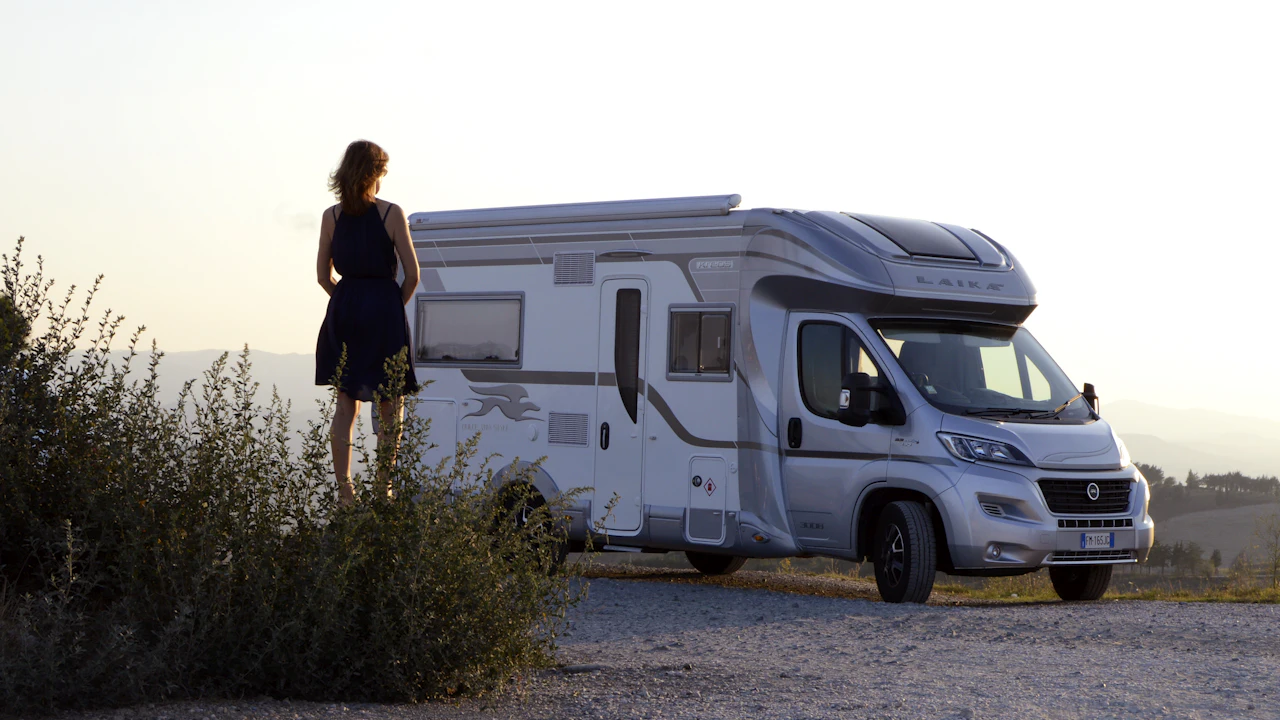
Most motorhomes are not built by one company. A chassis manufacturer produces a stripped or cutaway chassis — engine, frame, running gear, often a cab — and a coachbuilder mounts a body on it.
The VIN is assigned by the chassis manufacturer. So decoding it returns their data: their name, their plant, their vehicle type, their weight rating. The brand painted on the side of the coach frequently does not appear at all.
This surprises owners and it is entirely normal. A decode returning a commercial van chassis for a Class B motorhome, or a stripped chassis for a Class A, is the system working correctly rather than failing.
The practical consequence is that a VIN decode identifies the mechanical half of the vehicle. The coach half — floorplan, appliances, tanks, build quality — is documented by the coachbuilder and is not in the federal record.
Which class you are actually looking at
The decode’s vehicle type and body class fields are the reliable way to establish what a listing is describing, because the informal class names are used loosely.
Class A is built on a stripped chassis with the coach forming the cab. Class B is a van conversion, retaining the van’s body. Class C is built on a cutaway chassis, keeping the original cab with a coach behind it, usually with the over-cab bunk that makes them recognisable.
Sellers use these terms inconsistently, particularly around the boundary between B and C. The chassis type in the decode settles it, because the classes are defined by exactly that.
The weight rating, which decides more than people expect
Gross vehicle weight rating is published in the decode and it is the most consequential field for an RV buyer.
It determines the registration class and, above certain thresholds in some states, the licence required to drive it. Buyers of larger Class A motorhomes occasionally discover this after purchase, which is a poor time to find out.
It also constrains how the vehicle can be loaded. An RV is a house, and houses accumulate weight — water, propane, batteries, tools, food, personal effects. The margin between an empty coach and its weight rating is frequently much smaller than owners assume, and exceeding it stresses tyres, brakes and suspension that were already working hard.
Our guide to GVWR by VIN covers how to turn the rating into a usable payload figure. For an RV that calculation is worth doing before purchase, not after loading.
Towables are a different problem
Travel trailers, fifth wheels and pop-ups are not motorhomes. They have no engine, they are titled as trailers, and their VINs decode against the trailer variables rather than the vehicle ones.
NHTSA publishes trailer body type, trailer type connection and trailer length, so the decode does work — it simply answers different questions. Titling rules for trailers also vary far more between states than vehicle rules do.
Our guide to trailer VIN lookup covers that side, including the homemade-trailer problem that catches buyers out.
Recalls come from two directions
This is the check most RV buyers get wrong, and it is free to get right.
Recalls can be issued by the chassis manufacturer, covering the engine, brakes, steering or fuel system, and separately by the coachbuilder, covering the body, appliances, propane systems or electrical installation.
Searching only the chassis VIN can miss coach recalls, and coachbuilder recalls on propane and electrical systems are not minor. Check the VIN through the federal recall database, and separately check the coachbuilder’s own recall notices for that model and year.
Our guide to checking a car for open recalls covers the federal tool, which is free and takes a minute.
What the decode will never tell you
With an RV, the condition questions are unusually decisive and unusually invisible to any lookup.
Water ingress is the defining failure mode. Roof seams, window seals, slide-out seals and skylights all leak eventually, and the damage happens inside walls and floors where it is not visible until it is structural. A soft floor or a delaminated wall is frequently a bigger problem than a tired engine.
Appliances, tanks, the propane system and the electrical installation are all separate systems with their own condition and their own service history, and none of them appears in the VIN record.
An RV inspection is a specialist job rather than an ordinary pre-purchase inspection, and on a vehicle of this value it is the cheapest part of the transaction.
Before you drive out to see one
The VIN checks are quick and they eliminate a meaningful fraction of listings before travel, which for RVs is often a long way.
Decode it to establish the chassis, the class and the weight rating, and to confirm the vehicle matches the advertisement. Then check the title record and the open recalls.
You can decode the VIN and pull the title and recall record before committing a day to a viewing.
Common questions
Can I look up an RV by VIN?
Yes. Motorhomes have standard 17-character VINs and NHTSA’s decoder returns vehicle type, body class, gross vehicle weight rating, manufacturer and plant.
Why does my decode show a van manufacturer instead of the RV brand?
Because the VIN belongs to the chassis, which is built by a different company from the coach. That is normal. The coachbuilder’s brand is generally not in the federal record.
Does the decode tell me the floorplan or appliances?
No. Everything above the chassis is documented by the coachbuilder rather than submitted for federal certification, so no VIN lookup returns it.
Do travel trailers have VINs?
Manufactured ones do, and they decode against the trailer variables — body type, connection type and length. Titling rules for trailers vary considerably more between states than vehicle rules.
Where do I check RV recalls?
Both places. Run the VIN through the federal recall database for chassis recalls, then check the coachbuilder’s own notices for the model and year. Coach recalls on propane and electrical systems are the ones most often missed.
What licence do I need?
It depends on your state and on the gross vehicle weight rating, which the decode provides. Larger motorhomes can cross thresholds requiring a non-commercial upgrade, so check before buying rather than after.
Sources and further reading
- NHTSA VIN decoder
- NHTSA recall lookup
- NHTSA odometer fraud
- NMVTIS (US Department of Justice)
- FTC used car buying guide
- NICB VINCheck
Recall, complaint and safety-rating figures on this page were retrieved from the federal databases above on August 19, 2026. Federal data changes — re-check any VIN before you rely on it.
Published August 27, 2026 · last updated August 27, 2026. Found something out of date or wrong? Tell us and we will correct it.