Walmart Car Battery: Warranty, Free Fitting and the Core Charge
Walmart’s written promise is a 90-Day Automotive Battery Guarantee for the original purchaser; after that it is exchange only, under warranty terms Walmart prints on product pages and battery paperwork rather than in its policies. What its pages say about EverStart lines, free installation, testing, the core charge and returns.

The short version
- Walmart’s written battery promise is its 90-Day Automotive Battery Guarantee: if the battery “tests bad within 90 days,” the original purchaser gets money back or an exchange. After day 90 it is exchange only, “per the warranty terms.”
- Those warranty terms, the free-replacement months and any prorated tail, are not printed on any Walmart policy, help or category page we could read. Walmart says to check “the product page and the paperwork that comes with the battery.”
- Walmart sells EverStart batteries in four lines (Value, Plus, Maxx and Platinum AGM) beside other brands. It says EverStart batteries are made for it by “leading battery manufacturers” it does not name.
- “Free installation with Walmart battery purchases” carries an asterisk with no footnote. The fine print is in the FAQ: it applies at participating Auto Care Centers and depends on the battery and on where your car keeps it.
- Walmart prints no core charge amount and no refund deadline. Its pages say a core credit or refund “may” apply and that “some stores” refund it, so ask at the counter before you leave the old battery behind.
- Keep the receipt or make sure the purchase is in your Walmart account. Warranty help runs through the store, the battery’s serial code and proof of purchase, and the 90-day guarantee is for the original purchaser only.
A Walmart car battery comes with one guarantee Walmart prints in its own policy and one warranty it mostly leaves to the box. On 7 October 2026 we read Walmart’s documents on the subject: the corporate Return Policy (updated August 17, 2026), the Battery Install page, the EverStart page and the pages for its four battery lines, the Car Batteries category page, an Auto Care Center store page, the Standard Return Policy help article and the Walmart.com Terms of Use. We also read EPA’s guidance on lead-acid batteries and Washington’s core-charge law as one state’s example. This site has no commercial relationship with Walmart or any battery maker.
What batteries Walmart sells, and who makes them
Walmart’s own battery brand is EverStart. Its EverStart page sorts the range by vehicle (Auto, Marine & RV, Powersports, Lawn & Garden) and by type, where it lists four lines: Value, Plus, Maxx and Platinum AGM. Each line has a category page that describes it in general terms.
The differences Walmart spells out are modest. The Value page says Value batteries “focus on affordability and basic reliability for standard vehicles” and that Maxx batteries “typically offer higher cold cranking amps (CCA) and may include longer warranty coverage.” Platinum AGM is the absorbent-glass-mat line; the EverStart page says you “may choose AGM when you want spill-resistant construction, vibration support, and maintenance-free convenience,” and the Battery Install page adds that “Vehicles with start‑stop features or added electronics may benefit from AGM.” If your car has start-stop, our page on start-stop and AGM batteries explains why fitting a cheaper flooded battery in its place tends to end early.
EverStart is not the only name on the shelf. The Car Batteries category page showed all four EverStart lines alongside an Interstate Batteries banner marked as sponsored, ACDelco and Motorcraft batteries, and a long run of other brands; its brand filter offered 23. Some listings are sold by Marketplace sellers, which matters for returns (see buying online). We recorded brand names only, never a listing or price.
Who actually builds an EverStart battery is a question Walmart declines to answer. Its Plus page says the batteries “are produced specifically for Walmart by leading battery manufacturers” and that “Walmart doesn’t publicly disclose the exact manufacturer for every model.” So there is no maker’s warranty booklet to fall back on: the warranty is the one Walmart and the battery’s paperwork describe, and claims go through Walmart.
Whatever the brand, the battery your car takes is not a free choice. Walmart’s installation FAQ tells you to use “your owner guidance and current battery label to confirm group size (e.g., Group 35, Group 24, Group 51R) and terminal position,” and to match the hold-down style and tray footprint. Our page on battery group sizes covers what happens when either is wrong.
The EverStart warranty: where Walmart prints the length
None of the Walmart pages we read prints a free-replacement period or a prorated period for any EverStart line. What they print is where to look and what kind of terms to expect.
The EverStart page’s answer to “How do battery warranties and returns work?” makes four points:
- “Battery warranty terms differ by product and retailer. Check the product page and the paperwork that comes with the battery for exact details.”
- “Proof of purchase is usually required for warranty service or returns.”
- “Some batteries let you register for warranty coverage,” which Walmart says can speed claims.
- “Warranties sometimes include an initial full-replacement window followed by a pro-rated period; details vary by item.”
That last line is the shape to keep in mind. A full-replacement window means a battery that fails inside it is swapped at no charge. A prorated period means you get credit toward a new battery that shrinks as the old one ages, so a failure late in the term is worth less. Our battery warranty explainer goes through why the long headline number is often the prorated tail. Walmart does not print how its proration is calculated on any page we read.
The line pages hint at lengths without committing to them. The Platinum AGM page says “EverStart Platinum warranty information commonly includes a three-year free replacement period on qualifying batteries,” that “Some options may also list four-year limited coverage after the free replacement period,” and that “You should read the product page carefully so your expectations match the exact battery you select.” The Plus page says only that “Many shoppers look for a two-year free replacement warranty,” which is a remark about shoppers, not a statement that Plus batteries carry one. The Maxx page prints no length at all.
The one product page we tried answered with a “Robot or human?” check, which we did not complete, so the months for each line are not here. Read them on the listing for your exact battery, or on its label and paperwork at the store.
You are also entitled to see the terms before you pay. The federal rule on pre-sale availability of written warranties, 16 CFR 702.3, says the seller of a consumer product with a written warranty “shall make a text of the warranty readily available for examination by the prospective buyer” by displaying it near the product or “Furnishing it upon request prior to sale.” At a Walmart counter, asking to read the warranty before the battery goes in is a request the rule anticipates.
The 90-Day Automotive Battery Guarantee
The battery promise Walmart does print sits in its corporate Return Policy, under the heading “Our Guarantees.” It reads: “90-Day Automotive Battery Guarantee: Money back refund or exchange to original purchaser if battery tests bad within 90 days. After 90 days, the original purchaser can only exchange the battery per the warranty terms.”
Three conditions are packed in: the battery has to test bad, within 90 days, and the claim comes from the original purchaser. Inside those limits you choose money back or an exchange. After day 90 the policy allows an exchange only, on the warranty’s terms, which is where the free-replacement and prorated periods come in.
The policy does not say who performs the test, what result counts as bad, or whether a battery killed by a charging fault qualifies. That last point matters more than it sounds. A battery that keeps going flat is often a symptom of an alternator or a drain rather than the battery itself, which is the pattern we found in owner complaints for our page on a battery that keeps dying. A new battery fitted to a car with a charging fault can test bad within weeks, and swapping it for another one fixes nothing.
The walmart.com help article on returns does not mention batteries at all. It gives the general rule, “90 days after purchase or upon receipt to return most items unless noted in our exceptions,” and sends readers to the corporate policy for the exceptions. The battery line is one of them. These are the lines in Walmart’s return documents that touch a car battery:
| Rule | What Walmart prints | Where |
|---|---|---|
| Battery guarantee | Money back or exchange to the original purchaser “if battery tests bad within 90 days”; exchange only after that | Corporate Return Policy |
| General window | “90 days after purchase or upon receipt” for most items, with the store receipt or order number | Corporate Return Policy and help article |
| Marketplace sellers | “Items sold and shipped by a Marketplace seller may be returned within 30 days” | Help article |
| Bought from a reseller | Items bought from “dealers or resellers” rather than Walmart “aren’t eligible for return, refund, or exchange” | Help article |
| Hazardous materials | Returns “may be subject to specific requirements, such as mail-back or in-store returns only” | Corporate Return Policy |
| No receipt | Walmart “can attempt to look up store purchases with a debit/credit card or online orders with a phone number or email” | Corporate Return Policy |
| Private brand promises | Private brand items with “a satisfaction guarantee or promise on the package are not subject to the 90-day return or exchange period” | Corporate Return Policy |
The private-brand row could matter for a battery whose package carries a printed promise, but Walmart’s pages do not say whether a battery warranty counts as one. Treat it as a question to ask, not a right to rely on.
Making a claim: receipt, serial code and the original purchaser
Walmart runs battery warranty claims through its stores. The EverStart page says that if you are making a claim you “should locate the battery label and any serial information,” and that you “can bring that information to a Walmart store, where associates can help review your next steps.” Its FAQ says to “contact customer service or visit your local store with the battery and purchase information.”
Proof of purchase sits at the centre of every Walmart page on the subject. The EverStart FAQ says it “is usually required for warranty service or returns.” The page adds two ways to find it. Online, “you may begin with your Walmart account history when your purchase appears there.” On the battery, look for “the printed code on the battery case or label,” which Walmart says you can use “along with your receipt, when you ask for warranty support.” The Platinum page puts it plainly: “Keeping your receipt and product details accessible can make future service easier.”
If the receipt is gone, the Return Policy offers a fallback: Walmart “can attempt to look up store purchases with a debit/credit card or online orders with a phone number or email.” Note the word attempt. A store purchase paid in cash leaves no card for that search to use, so a photo of the receipt taken on the day is cheap insurance for a battery you expect to keep for years. The help article also says your Walmart.com purchase history “displays the latest eligible date for a return or replacement” for orders placed there.
What voids an EverStart warranty is not printed on any Walmart page we read. There is no list of exclusions online, no wording on misuse, commercial use or damage from a charging fault. Those terms, if the battery carries them, are in the paperwork. Read them before the old battery goes back over the counter.
A battery that came with a used car is not yours to claim on. The 90-day guarantee is for the “original purchaser,” and after day 90 the exchange is for “the original purchaser” too. A seller who points to a nearly new Walmart battery is pointing to coverage that stayed with the person on the receipt. On a car you are about to buy, a fresh battery is also worth a question of its own, which we cover in the brand-new battery that should make you ask questions.
Free installation: what the asterisk leaves out
The Battery Install page leads with “Fast battery installation for less” and, in a row of three promises, “Free installation with Walmart battery purchases.*” We searched the page for the footnote that asterisk points to and found none. The conditions are in the page’s FAQ panels instead, and they are worth reading before you assume the fitting is free.
The first panel says “Free installation with purchase can apply at participating Auto Care Centers, but eligibility depends on both your selected battery and your vehicle’s design.” It asks you to confirm three things: that your local center “offers battery installation for your vehicle type,” that “free installation applies to the battery you’re buying,” and that “your vehicle allows standard under‑hood access.” Then comes the exception: “Some vehicles have battery locations that are more involved, which can change service terms.”
The second panel, on cost, is plainer still. “Installation cost can vary based on where the battery is located and how your vehicle is designed,” and “Store participation, coverage for your vehicle type, and local policies can influence fees.” Lower down the page Walmart mentions “any standard installation fee based on vehicle design.” It prints no figure for that fee anywhere, so you will only learn it at the store.
So the free fitting holds for the common case, a Walmart battery going under the hood at a center that does the work, and is uncertain outside it: a battery under a seat or in the trunk, for example. Our page on where the battery lives and what disconnecting it costs explains why those cars take longer.
On the work itself, Walmart says installation support “can include managing terminals, hold‑down hardware, and battery orientation for your vehicle,” and that “Participating Auto Care Centers support many cars, SUVs, and trucks, plus some motorcycles, depending on store coverage and battery access.” The Battery Install page says there are “over 2,000 locations” with an Auto Care Center. You can book through the page or ask about “walk‑in vs. appointment options,” in Walmart’s words; we did not use the booking tool.
One step is missing from every Walmart installation page we read: battery registration. Many newer cars with intelligent charging need to be told a new battery has been fitted, and some need to know if the type changed from flooded to AGM. Walmart’s pages do not mention registration, coding or a memory saver. If your car is one that needs it, ask the Auto Care Center before the old battery comes out whether they do it; our page on battery registration explains what goes wrong when nobody does.
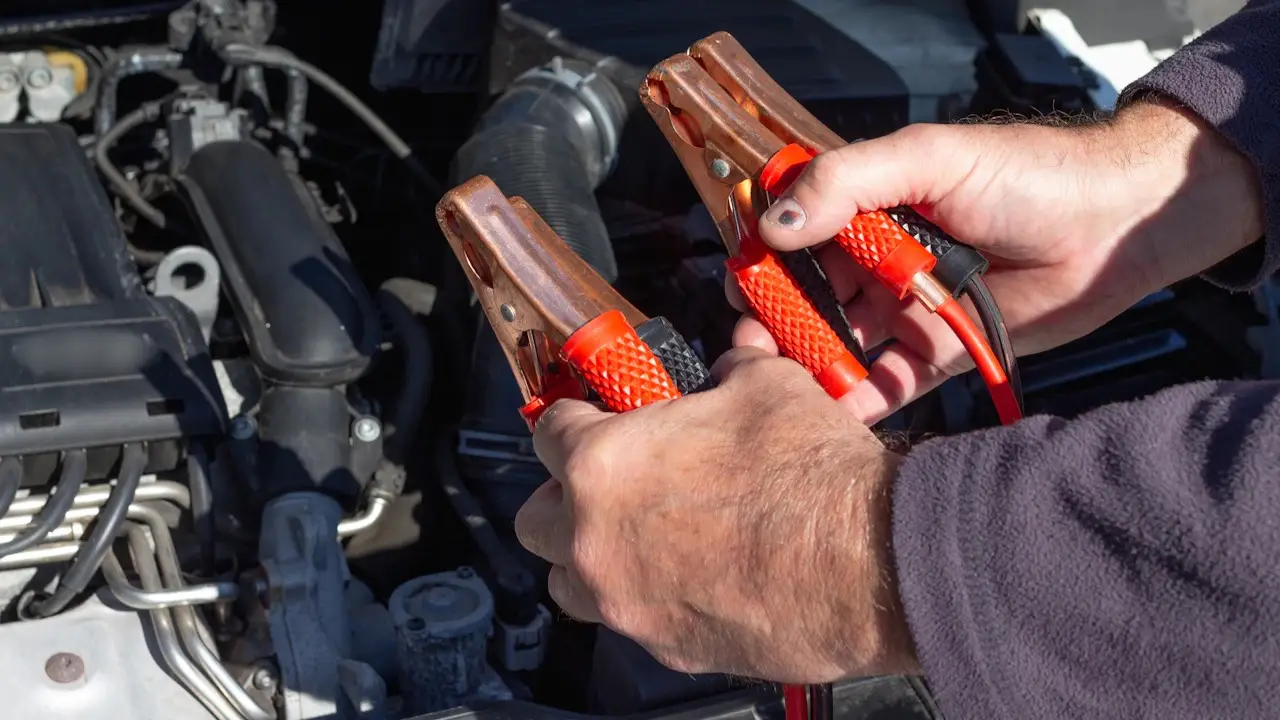
Battery testing at an Auto Care Center
Walmart does not have a battery-testing service page that we could find. Testing comes up in two places. The Car Batteries page answers “How can I tell if a battery needs replacing?” with signs to look for (slow starts, dim headlights, “corrosion on terminals or a swollen case”) and the line “Walmart Auto Care Centers can test your battery’s health for you.” And a store’s Auto Care Center page says “Every oil change at Walmart’s Auto Care Center includes a few added benefits at no extra cost,” among them a “battery inspection.” What each oil change package includes is on our Walmart oil change page.
Neither page prints a price for a test on its own, and neither says what the test measures or whether you get a printout. That gap matters because the 90-day guarantee turns on the phrase “tests bad.” If you are bringing a battery back inside 90 days, ask for the test result in writing or on the screen, so you know what the decision rests on.
A test is also the step that separates a worn-out battery from a car that is killing batteries. If a battery you bought recently tests fine but the car keeps failing to start, the battery is not the problem, and a replacement will not fix it. Our pages on when a dead battery is not the battery and why the battery gets replaced first cover what to check next. If you are stuck in a parking lot right now, start with how to jump start a car or what a single click from the starter means.
Don’t read too much into a battery’s age, either. The EverStart page says many lead-acid batteries “last roughly three to five years under average conditions”; the Value page says “between 2 to 4 years.” Across Walmart’s own pages that is 2 to 5 years (our arithmetic: the lowest and highest figures across its three printed ranges), and all of them name temperature and short trips as things that cut it short.
The core charge and recycling the old battery
A core charge is a deposit added to the price of a new lead-acid battery and taken off again when you hand in an old one. It is one of the first things people ask about a Walmart battery, and the honest answer from Walmart’s own pages is that they do not print the amount. Nor do they print how long you have to bring the old battery back, or how the refund is paid.
What the pages do say is hedged. The EverStart Maxx page: “When you purchase a new battery, Walmart offers a core return program for used automotive batteries. Simply bring your old battery to the store’s Auto Care Center.” Then: “Returning your used battery may qualify you for a core credit at checkout.” The Car Batteries page says Walmart recycles used car batteries “at many store locations” and that “Some stores may offer a refund on the core charge when you recycle your old battery”, then tells you to “check with your local automotive desk for details.” The EverStart Value page says you “can typically receive a core charge refund when you return your old battery through the stated process,” and the Plus page says to review “the product page details to understand how the exchange process works with your old battery.” The process those pages refer to is not stated on any page we could read, and the corporate Return Policy does not mention core charges at all.
The simplest way around it is to bring the old battery, or have the Auto Care Center take it out when it fits the new one, and check the receipt for a core line before you leave.
State law sometimes sets the rules Walmart’s pages leave out. Washington is one example, and we read its statute rather than a summary of it. RCW 70A.205.520 says each retail sale of a vehicle battery “shall include, in the price of the battery for sale, a core charge of not less than five dollars,” and that the seller “shall omit the core charge” when the buyer offers a used battery of equivalent size. RCW 70A.205.515 requires the retailer to accept used batteries at the time of purchase and lets a buyer who did not bring one reclaim the core charge “by returning, to the point of purchase within thirty days, a used battery or batteries and a receipt showing proof of purchase.” Other states have their own rules or none; this is Washington’s, not a national one.
Recycling the old battery is not optional in practice. EPA’s page on used household batteries (last updated on July 21, 2026) says lead-acid batteries “may contain up to 18 pounds of lead and about one gallon of corrosive lead-contaminated sulfuric acid,” and recommends returning them “to a battery retailer or local household hazardous waste collection program.” It also says not to put them “in the trash or municipal recycling bins.” Walmart’s Car Batteries page adds its own handling advice: “Always carry batteries upright and avoid contact with leaking fluids for safety.”
| Question | Walmart’s pages | Washington law (RCW 70A.205.515 and .520) |
|---|---|---|
| How much is it? | Not printed on any page we read | “not less than five dollars” |
| Is it waived if I bring a battery? | A core credit “may” apply at checkout | The seller “shall omit the core charge” for a used battery of equivalent size |
| Can I bring the old battery later? | “Some stores may offer a refund”; process not stated | Yes, to the point of purchase within thirty days, with the receipt |
| Where do I take it? | The store’s Auto Care Center, or the local automotive desk | The place where new batteries are handed over |
| Must the store take used batteries? | “Walmart provides recycling services for used car batteries at many store locations” | Yes, at least as many as the new batteries bought, if offered |
Buying online, pickup and Marketplace sellers
Buying a battery on walmart.com adds two things to check. The first is who is selling it. Walmart’s help article says “Items sold and shipped by a Marketplace seller may be returned within 30 days,” and the corporate policy puts most Marketplace items in its 30-day group. The 90-Day Automotive Battery Guarantee is written into Walmart’s own return policy; for a battery from another seller, that seller’s terms and its own warranty are what you are buying. The help article adds that items “purchased from dealers or resellers and not Walmart or Walmart.com directly aren’t eligible for return, refund, or exchange.”
The second is the old battery. The EverStart Plus page suggests checking “whether your local store supports convenient core exchange during pickup or installation planning,” which is as specific as the pages we read get; per-item pickup and core rules sit on product listings we could not read.
Returns of a battery bought online are also caught by the hazardous-materials line in the Return Policy: such returns “may be subject to specific requirements, such as mail-back or in-store returns only.” Ask before you try to send a lead-acid battery back by mail; the straightforward route is a store, ideally one with an Auto Care Center.
Walmart and Sam’s Club: same company, different battery terms
Sam’s Club is a Walmart Inc. business (Walmart’s own coupon policy covers properties of Walmart Inc. and its subsidiaries “excluding Sam’s Club locations”), and its Tire & Battery Centers fit batteries too, but its published terms read differently. We read Sam’s Club’s help pages on 7 October 2026 for our Sam’s Club tires page. Its Tire & Battery Center article lists “free battery installation” among perks it calls “exclusive benefits for Sam’s Club members,” and says “an active membership is required to purchase products or services from our Tire & Battery Center.” Walmart’s Battery Install page mentions no membership; its conditions are the battery, the car and the store.
On returns the two part company more clearly. Walmart prints a 90-day battery guarantee. Sam’s Club’s returns page puts “Automotive tires and batteries” under “Check with your club,” and says some products “may be offered with their own return policy, product-specific warranties, limitations, restrictions and/or requirements.” If you are comparing warehouse-club terms more widely, our page on Costco car batteries reads Costco’s.
What Walmart’s pages leave out, and where they disagree
We read 12 walmart.com pages and Walmart’s corporate Return Policy; 2 more walmart.com pages answered with a “Robot or human?” check and were left unread. Across what we could read, these are the gaps:
- No warranty length for any line, and nothing online on what voids one.
- No core-charge amount, deadline or refund method.
- No figure for the “standard installation fee.”
- No maker named, and no battery registration step.
And in 6 places the pages disagree with each other or point at terms that are not there:
- Battery life. Three to five years on two pages, 2 to 4 on a third, “several years” on a fourth.
- Tier names. The EverStart page lists Value, Plus, Maxx and Platinum AGM, then describes warranty tiers “such as Maxx, Plus, and Standard.”
- The free-installation asterisk has no footnote.
- Core refunds. “Some stores may offer a refund” on one page; a refund you can “typically” get “through the stated process” on another, with the process stated nowhere.
- Where to recycle. “at many store locations” on one page; “the store’s Auto Care Center” on another.
- Warranty terms that point elsewhere. The Return Policy relies on “the warranty terms” without printing them.
None of this means the terms are bad. It means the binding version is the one on the product listing, the label and the paperwork for the exact battery you buy, and you should read that version rather than a summary, ours included.
Before you buy a car battery at Walmart
- Confirm the battery your car takes. Group size, terminal position and hold-down style from the owner’s manual or the old battery’s label; AGM if the car has start-stop.
- Read the warranty for that exact battery. On the product listing or, at the store, on the label and paperwork. Note the free-replacement period and any prorated period separately. You can ask to see the written terms before you pay.
- Check who is selling it online. An item “sold and shipped by” a Marketplace seller comes with different return terms from Walmart’s own.
- Ask whether fitting is free for your car. Free installation depends on the battery, the store and where the battery sits. If yours is not under the hood, ask about the fee first.
- Ask about registration. If your car needs a new battery registered or coded, ask whether the Auto Care Center does it before the old one comes out.
- Bring the old battery, and check the core line. Make sure the receipt shows the core charge taken off, or ask how and where you can get it back.
- Keep the proof of purchase. The receipt, the order in your Walmart account, or a photo of the receipt. Note the serial code on the battery case.
- Mark day 90. Before it, a battery that tests bad means money back or an exchange; after it, exchange only on the warranty’s terms.
- If it fails early, get the test result. And have the charging system checked before you accept a second battery.
Common questions
What is Walmart’s car battery warranty?
Walmart prints two layers. Its Return Policy gives a 90-Day Automotive Battery Guarantee: money back or an exchange to the original purchaser if the battery tests bad within 90 days. After that, the original purchaser can exchange the battery under its own warranty terms, which differ by battery and are printed on the product page and in the paperwork, not on Walmart’s policy pages. Check the exact battery.
Does Walmart install car batteries for free?
Often, but not always. Walmart advertises “Free installation with Walmart battery purchases,” and its FAQ says this “can apply at participating Auto Care Centers” and depends on the battery you buy and your car’s design. Batteries in less accessible places can change the service terms, and Walmart mentions a standard installation fee it does not print.
How much is Walmart’s battery core charge?
Walmart does not print the amount on any page we could read on 7 October 2026. Its pages say returning your old battery “may qualify you for a core credit at checkout” and that “some stores” refund the charge later. Bring the old battery when you buy, and check the receipt. Some states set their own rules; Washington’s is at least five dollars, reclaimable within thirty days with the receipt.
Can I return a car battery to Walmart?
Within 90 days, if the battery tests bad and you are the original purchaser, Walmart’s policy offers money back or an exchange. After 90 days it is exchange only, under the warranty. Batteries sold by Marketplace sellers follow the seller’s terms, most within 30 days. Take a lead-acid battery back to a store rather than mailing it.
Does Walmart test car batteries?
Walmart says its “Auto Care Centers can test your battery’s health for you,” and every oil change there includes a courtesy “battery inspection.” It prints no price for a stand-alone test. If a battery is failing early, have the charging system checked too.
Who makes EverStart batteries?
Walmart does not say. Its EverStart pages describe the batteries as produced “specifically for Walmart by leading battery manufacturers” and say Walmart “doesn’t publicly disclose the exact manufacturer for every model.” Warranty claims go through Walmart stores, not a maker.
Sources and further reading
Recall, complaint and safety-rating figures on this page were retrieved from the federal databases above on August 19, 2026. Federal data changes — re-check any VIN before you rely on it.
Published October 7, 2026 · last updated October 7, 2026. Found something out of date or wrong? Tell us and we will correct it.