Used Car Pre-Purchase Inspection: What It Covers, What It Costs
An independent hour on a lift is the cheapest thing you will buy in the whole transaction. Here is what it checks and how to use what it finds.

The short version
- A pre-purchase inspection is an independent mechanic putting a specific used car on a lift before you buy it, and reporting what they find to you rather than to the seller. It usually takes an hour or two and costs $100 to $250.
- The inspection and the vehicle history report answer two different questions. The report tells you what was recorded about the car’s past. The inspection tells you what is wrong with it now. Neither one substitutes for the other, and buyers who skip either usually skip the wrong one.
- A state safety inspection is not a pre-purchase inspection. It confirms a car meets the minimum legal standard for the road, which a car can do while still needing thousands of dollars of work.
- The findings that save you money are rarely dramatic. Uneven inner-edge tyre wear, a weeping seal, a wing that reads thicker on a paint gauge, and stored fault codes are all cheap to see on a lift and expensive to discover in your own driveway.
- If a seller will not let you take the car to a mechanic of your choosing, that is the inspection result. You do not need to pay anyone to interpret it.
You have found the car. The photographs are good, the mileage is believable, the price is a little under the others, and the seller sounds reasonable on the phone. The only thing standing between you and the money is the question nobody enjoys asking: what is actually wrong with it?
A pre-purchase inspection is the answer to that question, and it is the cheapest thing you will buy in the entire transaction. It is also the step most people talk themselves out of, usually for one of three reasons — the car looks fine, the seller seems honest, or the appointment is inconvenient. All three of those are assessments of the situation rather than the vehicle.
This guide sets out what an inspection covers, in what order, what it costs and why the price varies, who to get it from, what the common findings actually mean, and what to do with the report once you have it. It also covers the two situations where the whole thing gets complicated: buying a car you cannot physically reach, and a seller who does not want the car looked at.
What a pre-purchase inspection actually is
A pre-purchase inspection — PPI in the trade — is an examination of one specific vehicle, commissioned and paid for by the prospective buyer, carried out by a mechanic with no financial interest in whether the sale happens. That last clause is the whole product. Everything else about the inspection can be replicated; independence cannot.
The output is a written report. A good one lists what was checked, what was found, what condition each system is in, and — critically — an itemised estimate of what it would cost to put right the things that need putting right. A report that says “car appears to be in good condition overall” is not a report. It is a receipt.
Three things it is frequently confused with
A dealer’s multi-point inspection. This is a document produced by the seller, at the seller’s expense, using the seller’s technicians, describing a car the seller wants to sell. It may be entirely honest. It is still not independent, and the items marked green are the items the dealer chose to check.
A certified pre-owned inspection. Manufacturer CPO programmes involve a genuine checklist and a genuine warranty behind it, which makes them meaningfully better than the average lot inspection. But the technician still works for the party selling the car, and CPO reconditioning standards are written to a price. A CPO badge lowers your risk. It does not remove your reason to look.
A state safety inspection. New York, for instance, requires a safety and emissions inspection annually, covering items such as brakes, steering, tyres, lights, windscreen and exhaust. That is a floor, not a verdict. A car can carry a current, valid inspection sticker and simultaneously need a clutch, a set of tyres at the wear limit, and a transmission that is starting to slip. The state is asking whether it is legal. You are asking whether it is worth the money.
The single sentence that reframes this. You are not paying a mechanic to tell you whether to buy the car. You are paying them to convert an unknown risk into a priced list of jobs. Once every defect has a number next to it, the decision becomes arithmetic instead of instinct — and arithmetic is something you can negotiate with.
Screen the car yourself before you pay anyone
Inspections cost money, and most cars you consider will not survive contact with them. The efficient approach is to run your own filter first, so you only pay for inspections on cars that deserve one. This takes about 20 minutes at the viewing and requires nothing but daylight and a willingness to get your knees dirty.
Insist on a cold start. This is the most important instruction in this entire section and the easiest one to lose. Tell the seller, in advance and in writing, not to start or move the car before you arrive. Put your hand on the bonnet when you get there. A warm engine hides cold-start knocks, blue smoke on the first firing, a slow crank from a tired battery, and the rough idle that settles after a minute. If the car is warm when you arrive and you were clear about this, you have already learned something.
Look at the fluids. Engine oil should be brown or black and translucent, not milky and not gritty. Coolant should be the colour it left the factory, not brown, and the expansion tank should be free of oily film. Automatic transmission fluid, where there is still a dipstick, should be red or pink rather than dark brown, and should not smell burnt.
Read the tyres. Four matching tyres of the same brand and roughly equal wear suggests an owner who replaced them as a set. Four different brands suggests an owner replacing them one at a time, as cheaply as possible, which tells you how the rest of the maintenance has probably been handled. Then look at where they are worn — feathering, or wear confined to one edge, points at alignment or suspension rather than at the tyre.
Walk the panel gaps and the glass. Compare each gap with the same gap on the opposite side. Every pane of glass carries a manufacturing date code; if three match and one does not, that pane has been replaced, and you now want to know why.
Use your nose. Damp, mould, or a strong air freshener in a car that has no other reason to smell are all worth pursuing. Lift the boot floor, pull up a corner of the carpet at the sill, and put a hand under the seat rails. Rust on seat rails or on bolt heads inside the cabin is not age; that is water, and NHTSA maintains public guidance on flood-damaged vehicles for good reason.
Drive it properly. Not around the block. Get it to highway speed, brake hard once from speed on a clear road, turn the radio off, and drive it over a rough surface with the windows down. Then let it idle for several minutes at the end and look underneath where it has been standing.
What the inspector actually checks, and in what order
A competent PPI follows a sequence, because some checks are only valid before others have happened. Understanding the order helps you read the report and helps you tell a thorough inspection from a quick look.
Before it moves
Cold start, again — this is why you book the car in for the morning and ask that it not be driven in. The inspector listens to the first few seconds of running, watches the exhaust, and reads the crank speed. Then the bonnet comes up: fluid levels and condition, belt and hose condition, battery age and terminal corrosion, evidence of leaks around the cam cover, the front crank seal and the power steering system. Coolant residue at the expansion tank, on the radiator seams, or crusted around a hose clamp is noted and traced.
They also look at the engine bay for signs of collision work — overspray on rubber seals and wiring looms, fasteners with the paint cracked around the heads, radiator support panels that have been disturbed, or a bay that has been steam-cleaned to the point of suspicion.
On the lift
This is the part you are actually paying for, and it is the part no seller’s photographs will ever show you. With the wheels off the ground and ideally off the car, the inspector examines:
- Structure. Frame rails, subframes, floor pans, sills and suspension mounting points. Factory spot welds are uniform and evenly spaced; hand welds, grinding marks, freshly applied seam sealer, or paint on inner structure that was never painted at the factory all indicate section replacement.
- Suspension and steering. Ball joints, bushes, tie rod ends, shock absorbers and struts, wheel bearings. Each corner is checked for play by hand, which is not possible with the car on the ground.
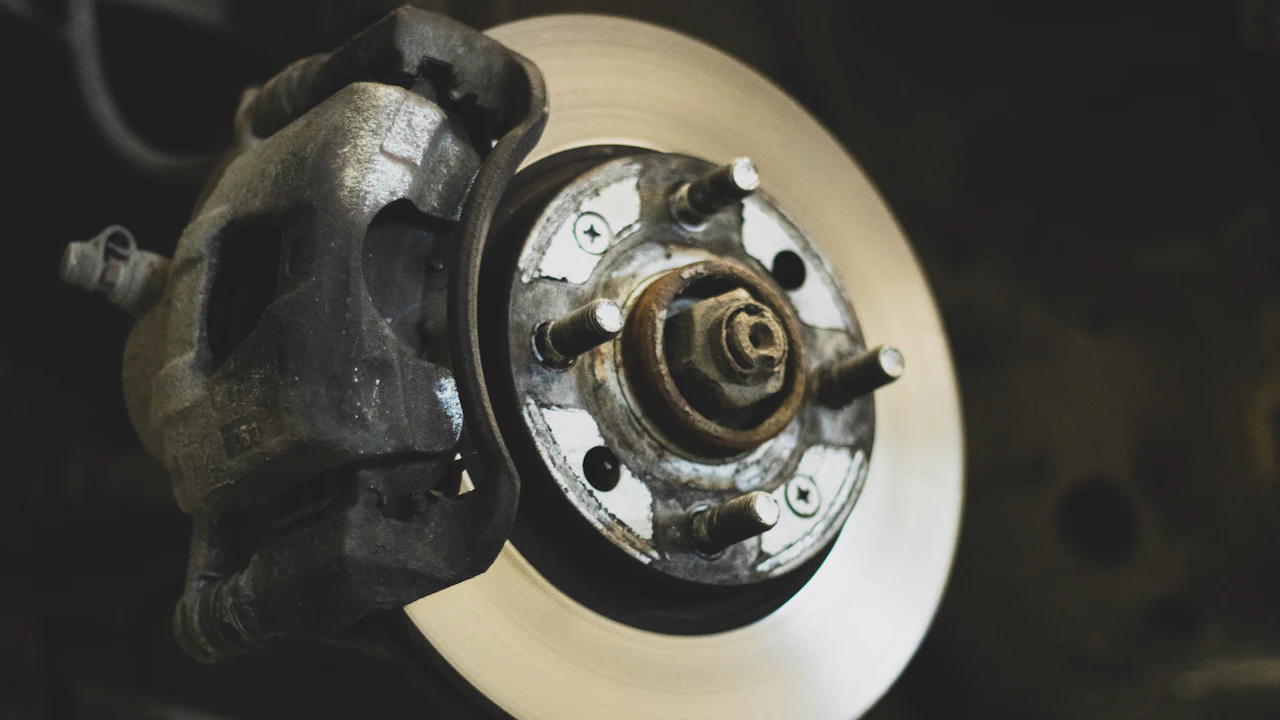
- Brakes. Disc thickness and the lip at the outer edge, pad material remaining, caliper and slider condition, hose perishing, and whether the wear is even across the axle.
- Leaks, properly traced. A wet gearbox is a fact. Whether it is a seal, a gasket or a cracked casing is the finding, and the difference between them is a few hundred dollars and a few thousand.
- Corrosion. Where it is, whether it is surface or structural, and whether anyone has recently sprayed underseal over it. Fresh, thick undercoating on an older car is worth more scrutiny than bare, honest surface rust.
- Exhaust and driveline. Catalytic converter presence and condition, heat shields, driveshaft boots, CV joints, differential and transfer case seals.
The electronic scan
On any car built in the last two decades, this is as important as the lift. A proper scan is not the free code read at a parts counter, which only interrogates the engine module and only returns codes currently illuminating a light. A full scan queries every module on the network — engine, transmission, ABS, airbag, body, climate, infotainment, driver assistance — and returns stored and historic faults as well as active ones.
Two things matter beyond the code list. First, readiness monitors: if the emissions monitors have been reset recently, someone cleared the codes, and the question is what they were. Second, the airbag system: the warning light must illuminate at ignition and then go out. A light that never comes on at all is worse than one that stays on, because it usually means the fault has been hidden rather than fixed.
The road test
The inspector is testing specific things rather than driving around. Cold-to-hot behaviour. Gear changes under light and heavy load, including the kickdown. Whether it tracks straight with hands relaxed on the wheel. Brake feel, pedal travel and whether it pulls under hard braking. Any vibration and the speed at which it appears. Clutch bite point and whether it slips under load in a high gear. Then, on modern cars, the driver assistance systems: does the adaptive cruise engage, does the lane camera calibrate, do the parking sensors and cameras all work.
The paperwork and identity check
Good inspectors finish by matching the VIN on the dashboard, the door jamb and the title, checking that the service records belong to this car, and looking at the pattern of the recorded mileage. A mismatch anywhere ends the inspection and the viewing.
What a used car inspection costs
For a mainstream car at a competent independent garage, expect roughly $100 to $250. That typically buys an hour or two of a technician’s time, a lift, a scan and a written report. Mobile inspectors who come to the car sit in a similar range, sometimes a little higher to cover travel, and they trade the lift for convenience — which is a real trade, not a detail.
For a European car, a diesel, a performance model or anything with air suspension, budget $200 to $400 at a marque specialist. It costs more because it takes longer and requires manufacturer-specific diagnostic software that a general garage may not hold.
Several things push the price up, and most of them are worth paying for on the right car:
- A paint depth survey. An electronic gauge read at multiple points on every panel. Factory paint sits in a consistent band; a panel that reads several times thicker has filler under it. Cheap to do, and it finds accident repair that no history report recorded because nobody claimed on insurance.
- A compression or leak-down test. Adds time because plugs come out. Worth it on a high-mileage engine, on anything turbocharged, or where the oil consumption story is vague.
- A borescope through the plug holes. Direct view of cylinder walls and piston crowns without stripping anything.
- A cooling system pressure test. The reliable way to distinguish “it was topped up once” from a head gasket beginning to fail.
- An EV or hybrid battery state-of-health report. On an electric or hybrid car this is close to the whole valuation, and it requires the right tooling to read properly.
The arithmetic that settles the “is it worth it” question. A set of four tyres is $600 to $1,200. A timing belt and water pump service is often $800 to $1,500. A transmission rebuild starts around $3,000 and climbs from there. Against those figures, a $200 inspection needs to be right about one thing, once, in your entire car-buying life to have paid for itself several times over. It is the only part of the purchase where the potential return is measured in multiples.
Who should carry out the inspection
The question of who does it matters more than the exact price. The failure mode is not paying too much; it is paying someone who was never going to be candid with you.
| Who | Typical cost | Best for | Watch for |
|---|---|---|---|
| Independent general garage | $100 to $250 | Mainstream cars. Best value, has a lift, and you can build a relationship with the shop that will service the car afterwards. | Ask specifically whether the price includes a full multi-module scan. Many do not by default. |
| Marque or brand specialist | $200 to $400 | German, British, performance, diesel, air-sprung or heavily electronic cars. They know the model’s known failure points before they look. | Waiting lists can be long. Book before you find the car, not after. |
| Mobile inspector | $100 to $250, plus travel | Private sellers who will not move the car, and remote purchases where you cannot attend. | No lift means the structural and suspension examination is materially weaker. Ask what they can and cannot assess on jack stands. |
| National inspection service | $200 to $300 | Out-of-state and online purchases where you have no local contacts at all. | Report quality varies with whoever they subcontract. Ask to see a sample report before you book. |
| The selling dealer’s own workshop | Often free | Nothing. This is not an inspection. | The technician is paid by the party whose sale your findings would kill. |
Two practical filters when you call. Ask whether they will put it on a lift, and ask whether you get a written itemised report with estimated repair costs. A shop that says yes to both and quotes a specific time slot is the shop you want. A shop that says “bring it down and we’ll have a look” is offering you a conversation, not a document, and a conversation is worth nothing in a negotiation.
Do the desk research before you book the appointment
An inspection tells you about the car in front of the mechanic. It cannot tell you about the car’s recorded past, because that lives in databases rather than in the metal. Running the paperwork first is free or cheap, takes minutes, and frequently ends the process before you have spent anything at all.
- Get the VIN in writing. Every car built since 1981 carries a 17-character VIN. Match it on the dashboard, the door jamb and the title. A refusal to supply it before a viewing is itself informative.
- Decode it. NHTSA’s free VIN decoder confirms the car is the model, engine, trim and build plant the advert claims. Listings are wrong about trim more often than people expect, and trim drives value.
- Check open recalls. NHTSA’s recall lookup returns open safety campaigns for a specific VIN. Remedies are free at a franchised dealer, so an open campaign is not a reason to walk — but it is a job you will have to book, and our guide to checking a car for open recalls explains why campaigns keep appearing on cars that are already years old.
- Check title brands and reported mileage. This is what the federal NMVTIS record holds, and it spans every state the car has been titled in rather than only the one on the document in your hand. If a brand appears, read our explanation of what a salvage title actually records before drawing conclusions from it — and if the brand is rebuilt or reconstructed, the inspection you need is a different one, set out in what to check on a rebuilt-title car. You can run a VIN history report against the car before you spend anything on an inspection, which means you only pay a mechanic to look at cars that survived the paperwork.
- Look at the odometer pattern, not just the number. Readings that go backwards, or a long gap with implausibly few miles added, are the shape odometer fraud makes in a record. The FTC and NHTSA both publish guidance on odometer fraud, and our page on the mileage check by VIN goes through what a clean reading history looks like.
- Read the model’s complaint file. This is the step almost nobody takes, and it is the one that makes the inspection sharper. The NHTSA complaints database shows what owners of that model year actually report, grouped by system. If the largest category is the electrical system, or the transmission, you hand that to your inspector before they start and ask them to look there first.
The full sequence, with everything each source does and does not cover, is set out in our guide to checking a used car’s history before you buy. The order matters: paperwork first because it is cheap, inspection second because it is not.
What inspections find, and what each finding means
Most reports come back with a list rather than a verdict, and the skill is in sorting the list. Almost every finding belongs to one of three tiers: consumables, which every used car has and which are a price negotiation; deferred maintenance, which tells you how the car was owned; and systemic or structural, which is a different question entirely.
| Finding | What it usually means | What to do |
|---|---|---|
| Tyre wear confined to the inner edges | Alignment out, or worn suspension bushes and arms letting the geometry move. The tyres are the symptom. | Price the suspension work, not just the tyres. Replacing tyres alone repeats the problem. |
| One panel reads much thicker on a paint gauge | Filler or a respray. Very often accident repair that never reached a history report because nobody claimed. | Have the structure behind that panel examined specifically before anything else. |
| Fresh, thick underseal on an older car | Sometimes genuine protection. Frequently a cosmetic cover over corrosion that a buyer would otherwise see. | Ask when and why it was applied. Have the inspector probe the sills and floor edges. |
| Weeping cam cover or crank seal | Usually a hardened gasket or seal. Common and normal at higher mileage. | Consumable-tier. Get the labour quoted, since access drives the cost far more than the part does. |
| Oily film or brown residue in the coolant tank | Could be a leaking oil cooler, could be an early head gasket failure. These cost very different amounts. | Pay for a cooling system pressure test before you decide anything. Do not accept a guess. |
| Stored airbag codes, or a warning light that never illuminates | A restraint system fault, or a fault that has been suppressed rather than repaired. | Treat as a stop. Restraint work is expensive and this is the classic hidden-repair signature. |
| Emissions readiness monitors recently reset | Somebody cleared fault codes not long before you arrived. | Drive the car far enough for the monitors to reset themselves, then rescan. Or walk. |
| Rust on seat rails, seatbelt bolts or under carpet edges | Water was inside the cabin. That is flood or a persistent leak, not age. | Walk, unless you have a documented and repaired sunroof drain or screen seal to explain it. |
| Brand-new fluids and a spotless engine bay on a neglected car | Preparation for sale. Not dishonest in itself, but it removes evidence. | Weight the service records and the lift findings more heavily, since the visual cues have been erased. |
The tier that ends deals is the third one. Structural repair that was never disclosed, a suppressed restraint fault, evidence of water inside the cabin, or an engine or transmission with a real symptom rather than a cosmetic one. Everything else is a number, and numbers can be negotiated.
Buying remotely, where the inspection matters most
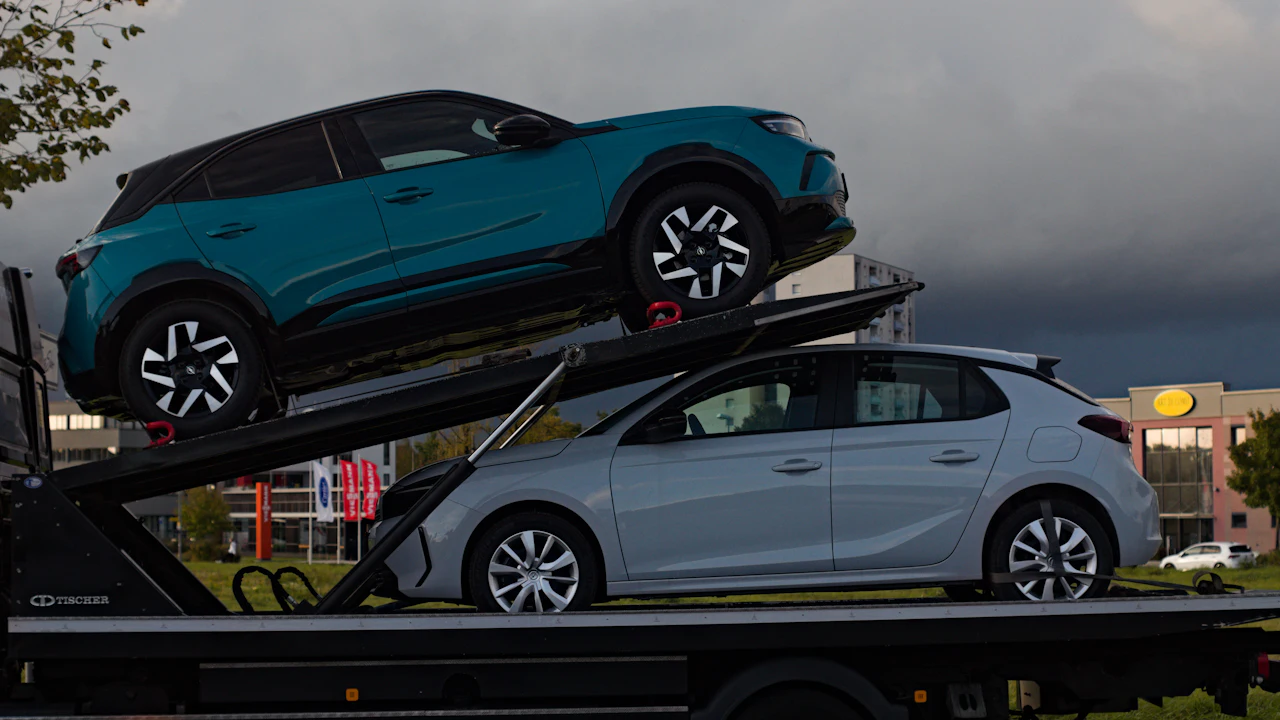
A growing share of used cars are bought by people who never stand next to them before the money moves — online retailers, out-of-state private sales, auction platforms, cars delivered on a transporter to a driveway hundreds of miles from where they were listed. This is precisely the situation an independent inspection was invented for, and precisely the situation in which buyers skip it, because the process is designed to feel like it has already handled that for you.
Three things to get right when the car is far away:
Book an inspector local to the car, not to you. Search for independent garages near the seller’s address, call two, and ask whether they carry out pre-purchase inspections for remote buyers and whether they will send photographs with the report. Most will. A good remote report comes with images of every finding, which is exactly what you need for a negotiation you are conducting by phone.
Do not treat a return window as an inspection. A seven-day return policy is a real consumer protection and worth having, but it puts the burden on you to detect a problem, arrange the return and absorb whatever the policy does not cover. It also does nothing about the faults that take a month to show themselves. The inspection happens before delivery; the return window is what you fall back on when it did not.
Verify the history harder, not less. When you cannot see the car, the recorded past is a larger share of what you know. Pull the title brand and odometer record and read the ownership pattern before you agree anything — a used car report by VIN costs a fraction of the transporter fee and tells you how many owners the car has had, which states it was titled in and what mileage was reported when. Cars that have moved through several states in quick succession deserve more scrutiny than the document in the seller’s hand will ever give them.
Finally, photograph the car at both ends. Take date-stamped images before it is loaded if you can, and again the moment it comes off the truck, before you sign the bill of lading. Transport damage is a real category and the paperwork is what settles it.
When the seller says no
There is no version of this that is fine. “The car has already been inspected.” “I have three other buyers coming.” “I don’t let people take my car away.” “It’s sold as-is.” Every one of these has a solution you can offer — pay a mobile inspector to come to the car, agree to meet at a garage of the seller’s choosing that you both accept, leave a refundable deposit, go with them. If the seller declines every accommodation, the sale is conditional on you not looking. Walk. You will find another car; you will not find your money again.
That said, some hesitation is legitimate and worth handling rather than reading as guilt. A private seller does not want a stranger driving their car away unaccompanied, and that is reasonable. So do not ask for that. Propose that you both drive to a garage you have already booked, that you pay for the inspection, that it takes an hour, and that you will make a decision the same day. Framed that way, it costs the honest seller very little and gives them a serious buyer instead of another tyre-kicker.
Dealers have a different set of reflexes. Some will insist their own inspection is sufficient — see above. Some will agree readily, which is a good sign. Where it gets murky is the phrase as-is. The FTC’s Used Car Rule requires dealers to display a Buyers Guide on every used vehicle they offer, stating whether it comes with a warranty or is being sold as-is. Read that document before you talk about price. As-is means exactly what it sounds like: once you drive away, every fault on the car is yours, including the ones nobody mentioned.
The FTC’s consumer-side guidance on buying a used car from a dealer makes the same point in plainer language, and adds one worth repeating: any promise a salesperson makes verbally is worth nothing unless it also appears on the Buyers Guide or in the contract. If they will fix the tyres, that goes in writing, on the document, before you sign.
What to do with the report
The report is not a verdict, it is leverage. There are only three things you can do with it, and knowing which one you are doing before you make the call keeps the conversation short.
Proceed. The findings are consumables and minor deferred maintenance, they were roughly what you expected for the age and mileage, and the price already reflects them. Buy the car.
Renegotiate. This is the common outcome and the one people handle badly. Do not ask for a round number off. Send the itemised list with the estimated cost of each job at your own shop’s labour rate, separated into three groups: things that must be done now for safety, things that must be done within a few thousand miles, and things that are cosmetic. Then ask for the first two groups. A specific request supported by a document from a named garage is very hard to argue with; “can you do better on the price” is very easy to refuse.
Be willing to have some of it done rather than discounted, particularly with a dealer. A dealer buys parts at trade and pays their own technicians, so having them replace the tyres and do the brakes often costs them less than what it would cost you — which means they can agree to more work than they can agree to in cash.
Walk. Structural repair that was not disclosed, a suppressed airbag fault, water inside the cabin, or a seller who becomes hostile when presented with a mechanic’s findings. In each of those cases the inspection has done its job and the money is already saved.
Whichever way it goes, put the agreement in writing. If you are paying a deposit before the inspection, the deposit needs a written condition attached: refundable in full if the pre-purchase inspection identifies faults above an agreed value. Get that on paper before any money moves, not afterwards.
What an inspection cannot tell you
It is worth being honest about the limits, because overconfidence in a clean report is its own risk.
It is a snapshot. The inspector is describing the car on that day. A bearing that is quiet this morning can be audible in a month. A clean report is not a warranty and no inspector will offer it as one.
Intermittent faults hide. The electrical fault that appears once a fortnight in the rain will not appear during a two-hour appointment. This is exactly why the stored-code portion of the module scan matters more than the live one — stored history is how an intermittent fault leaves a trace.
Internal engine and transmission condition is inferred, not seen. Compression and leak-down tests, a borescope and an oil analysis get you a long way, but nobody is opening the engine. Beyond a certain point you are reading evidence, not observing the parts.
A well-executed repair may be invisible. A properly repaired structural job, done on a jig with new factory panels and correct refinishing, can be extremely difficult to detect. This is where the paper record and the metal complement each other — the history report may show a reported accident the metal hides, and the paint gauge may find a repair no report ever recorded.
It does not check the legal side at all. Liens, title brands, theft records and odometer history are database questions. No mechanic can answer them from under the car, which is why the two halves of the process exist and why doing only one is the common expensive mistake.
Once the car is yours, the sequence changes from investigation to upkeep — what to service and when is covered in our maintenance guide, and the first job on any newly bought used car is usually to bring the deferred items on the inspection report up to date.
Two moments during a viewing are worth more than the rest of it put together. Our guide to what the check engine light means covers how to tell whether one was cleared before you arrived, and what a car that will not start is telling you explains why a pre-warmed engine has removed your best diagnostic.
Worth knowing before you book anything: three different things are called a car inspection, and they cost and prove different amounts. Our guide to what a car inspection costs separates the state test from this one and from the dealer’s own free check.
One thing an inspection cannot judge by eye is whether a replaced windscreen was ever recalibrated afterwards. Our guide to windshield replacement covers why the camera behind the glass has to be reset to the manufacturer’s procedure, and what happens to lane keeping and automatic braking when it is not.
Frequently asked questions
How much does a used car pre-purchase inspection cost?
For a mainstream car at an independent garage, expect roughly $100 to $250 for an hour or two of a technician’s time, including a lift and a written report. European, diesel, performance and air-sprung cars typically run $200 to $400 at a marque specialist, because the work takes longer and needs manufacturer-specific diagnostic software. Extras such as a compression test, a borescope inspection or an EV battery health report add to that.
Is a pre-purchase inspection worth it?
Almost always, on straightforward arithmetic. A set of four tyres runs $600 to $1,200 and a transmission rebuild starts around $3,000, so an inspection has to be right about one significant fault once to repay itself many times over. It is also the only document that gives you specific, priced leverage in a negotiation, which frequently recovers the fee on the purchase price alone.
Can the dealer’s own mechanic do the inspection?
No, and this is the most common way the step gets neutralised. A dealer’s multi-point inspection is produced at the seller’s expense by the seller’s technicians, describing a car the seller wants to sell. It may be perfectly honest and it is still not independent. Take the car to a shop that has no interest in whether the sale completes.
How long does a used car inspection take?
Usually an hour to two hours for a general inspection, plus travel time. A marque specialist doing a full module scan and a paint depth survey on a complex car may want half a day. Book the car in for the morning and ask the seller not to start or move it beforehand, because the cold start is one of the most revealing parts of the whole appointment.
What should I do if the seller refuses an inspection?
Offer every reasonable accommodation first: a mobile inspector who comes to the car, a garage the seller chooses that you both accept, a refundable deposit, or going along for the drive. If the seller declines all of them, treat the refusal as the finding and walk away. A genuine seller with a sound car has nothing to lose from an hour on a lift.
Does an inspection replace a vehicle history report?
No, they answer different questions and you need both. The inspection tells you the mechanical and structural condition of the car today. The history report tells you what was recorded about its past — title brands, reported odometer readings, ownership count and accident records — which no mechanic can see from under the vehicle. Run the paperwork first, because it is cheaper and it eliminates cars before you pay for a lift.
Is a state safety inspection the same as a pre-purchase inspection?
No. A state inspection confirms a vehicle meets the minimum legal requirements for road use, covering items such as brakes, lights, tyres, steering and emissions. A car can pass one while needing a clutch, a full set of tyres at the wear limit and expensive suspension work. A valid inspection sticker tells you the car is legal, not that it is sound.
Can I get a car inspected if I am buying it out of state or online?
Yes, and this is the situation where an inspection is most valuable. Book an independent garage local to the seller rather than to you, ask for a photographic report, and have it done before the car is loaded onto a transporter. Do not rely on a return window as a substitute, since it puts the burden of detecting and returning a faulty car entirely on you.
For sale near you
Dealer listings, checked liveFinding used cars near you…
Sources and further reading
- FTC used car buying guide
- FTC Used Car Rule
- NHTSA recall lookup
- NHTSA Office of Defects Investigation complaint database
- NHTSA VIN decoder
- NMVTIS (US Department of Justice)
- NHTSA flood-damaged vehicles
- NHTSA odometer fraud
- NY DMV inspection requirements
Recall, complaint and safety-rating figures on this page were retrieved from the federal databases above on August 19, 2026. Federal data changes — re-check any VIN before you rely on it.
Published August 24, 2026 · last updated August 24, 2026. Found something out of date or wrong? Tell us and we will correct it.