Used Car Maintenance Tips: The Schedule That Actually Matters
The short version
- Owner complaints filed with NHTSA against ten 2018 midsize sedans cluster in a handful of systems — engine, powertrain, brakes and electrics — not in the exotic failures forums obsess over.
- Oil and tyre rotation on a 5,000 to 7,500 mile cycle covers most of what goes wrong mechanically. Almost everything else is a longer interval you can plan for.
- Brake fluid every two to three years and coolant at five years or 100,000 miles are the two services most often skipped and most expensive to skip.
- The dealer’s printed service menu is not the manufacturer’s schedule. Ask which line items appear in the owner’s manual and which do not.
- Recall work is free maintenance. Every open campaign on your VIN is a repair the manufacturer already agreed to pay for.
A used car does not fail because you missed one oil change. It fails because a slow, cheap problem was allowed to become a fast, expensive one — a weeping hose that emptied a cooling system, a brake fluid change deferred until the calipers seized, a transmission serviced for the first time at 90,000 miles when the fluid had already given up. Maintenance on a car past its factory warranty is less about following a chart and more about knowing which of those slow problems is actually likely on the car you own.
So rather than reprint a generic schedule, this guide starts with evidence. The National Highway Traffic Safety Administration runs a public complaints database where owners report problems on their own vehicles, categorised by the system that failed. It is not a reliability ranking — people complain about safety-relevant faults far more than about a worn wiper blade — but it is a genuine record of what owners of ordinary cars found serious enough to report to the federal government. We pulled that record for ten 2018 midsize sedans and used it to decide which maintenance items were worth writing about at length.
What actually breaks, according to owners
The pattern across those ten cars is remarkably consistent. Engine, powertrain, service brakes and electrical system dominate almost every model’s complaint profile, and everything else trails far behind.
Take the 2018 Honda Accord, which carries the largest complaint file of the group: 1,838 reports spread across 33 component categories. The single largest category is the engine, with 527 reports, followed by forward collision avoidance at 330 and fuel and propulsion at 297. Electrical system accounts for 283 and service brakes for 256. Those five categories carry the bulk of the file on a car with a very good reputation.
The 2018 Chevrolet Malibu tells a similar story from a different starting point — 694 complaints across 30 categories, led by engine at 278, electrical system at 191 and powertrain at 168. The 2018 Toyota Camry logs 731 complaints across 34 categories, but its ordering is different again: powertrain first at 190, service brakes second at 166, engine third at 130.
Compare that with the 2018 Volkswagen Passat, which has only 45 complaints across 14 categories — service brakes at 12, engine at 11, electrical system at 10. Or the 2018 Mazda6, with 56 complaints across 17 categories, 32 of them against the engine. Lower volume does not automatically mean a better car; a model that sold in smaller numbers generates fewer reports by definition. But the ordering within each file is the useful part, and the ordering barely moves from model to model.
There is a second reason to read these files before deciding where to spend money. The 2018 Hyundai Sonata has 368 complaints, of which 208 name the engine, 13 involved a fire and one involved a death. The 2018 Kia Optima has 230 complaints with 129 against the engine and 10 involving fire. When a complaint file skews that heavily toward one system and that system also shows up in fire reports, the maintenance conversation for that specific car is not really about cabin filters.
How to read complaint counts honestly
A complaint is an unverified owner report, not a confirmed defect. High-volume sellers accumulate more of them. Cars with a well-publicised issue accumulate many more still, because publicity prompts reporting. Use the shape of a complaint file — which systems dominate, whether crashes, fires or injuries are attached — rather than the raw total. You can search any model yourself at NHTSA’s complaints database.
Engine oil: the one interval worth being strict about
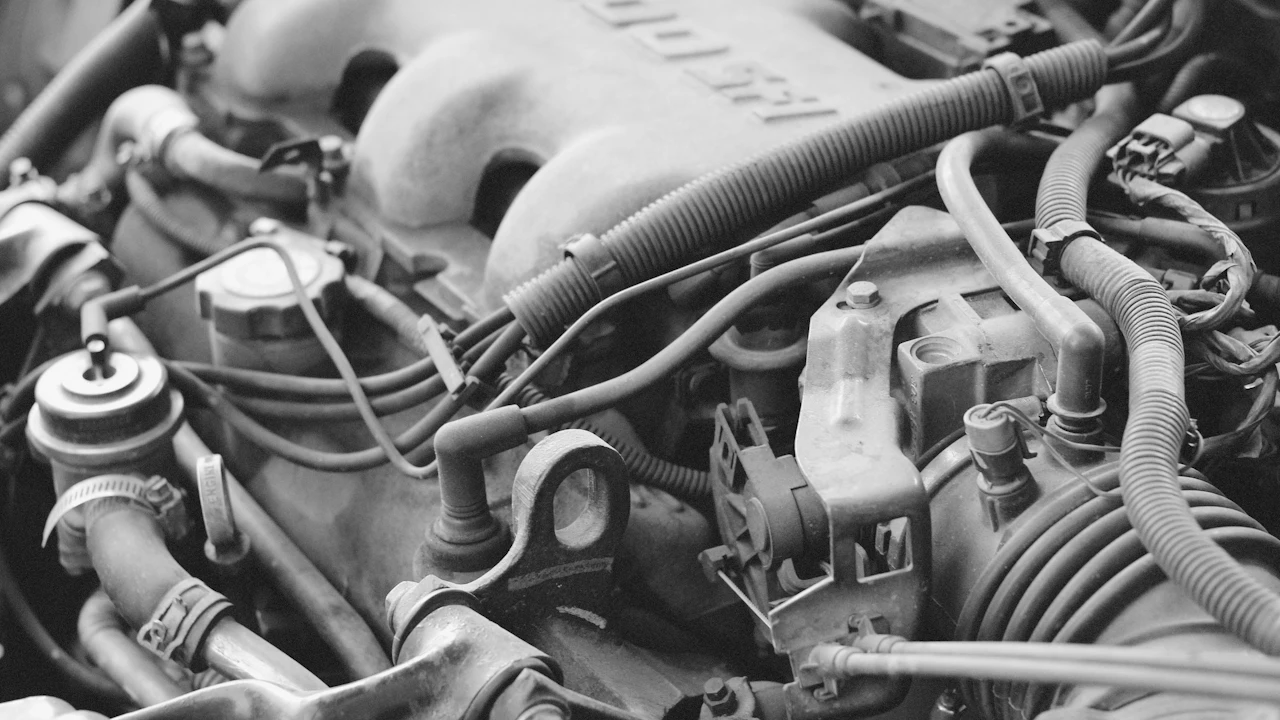
Change the oil every 5,000 to 7,500 miles and most of what appears in those engine complaint categories never reaches you. That range is wide because it has to be. A car doing long motorway runs in a mild climate sits at the top of it. A car doing four-mile commutes in a Long Island winter, where the oil never fully reaches operating temperature and water condenses inside the crankcase, belongs at the bottom.
Two habits matter more than the exact number of miles. The first is using the oil grade printed on the filler cap rather than whatever the quick-lube place has in the bulk tank; modern engines with variable valve timing route oil through narrow passages and solenoids that are sensitive to viscosity. The second is checking the level between changes. An engine that consumes half a litre between services is not necessarily unhealthy, but an engine that runs low because nobody looked will eventually be.
If a car’s oil-life monitor is doing the counting for you, understand what it is counting. Those systems model oil degradation from engine temperature, revs, load and cold starts. They are good. They are also easy to defeat by resetting the counter without doing the work, which is exactly what happens to some cars before they are traded in. On a used purchase, a monitor showing 90 percent life on a car with no receipts is not evidence of anything.
The intervals that matter once the warranty ends
Past the warranty, the schedule you follow is your own. Here is the set of intervals that repay the effort, drawn from typical manufacturer guidance rather than from the complaint data above — treat them as planning ranges and always defer to the figure printed in your own owner’s manual.
The two entries on that timeline that get skipped most often are brake fluid and coolant, and they are skipped for the same reason: neither has a symptom until it has a serious one.
Brake fluid, every two to three years
Brake fluid is hygroscopic — it pulls moisture out of the air through the reservoir cap and through the flexible hoses themselves. Water lowers the fluid’s boiling point, so a system that has gone five or six years without a change can vaporise under hard repeated braking and leave you with a pedal that goes to the floor. Long before that, dissolved water corrodes the bores of calipers and the ABS unit from the inside. A fluid change is one of the cheapest services on the list. Replacing a seized caliper is not, and replacing an ABS module is genuinely expensive.
Service brakes show up prominently in these complaint files — 166 reports on the Camry, 256 on the Accord, 49 on the 2018 Nissan Altima, 70 on the Malibu. Not all of that is fluid neglect. But fluid neglect is the part of it you control for the price of an hour’s labour.
Coolant, at five years or 100,000 miles
Coolant is not just antifreeze. The additive package in it is a corrosion inhibitor protecting aluminium heads, iron blocks, plastic housings and the joints between them. That package depletes. Once it does, the coolant becomes mildly acidic and starts eating the very components it was there to protect — which is how a car ends up with a weeping water pump, a cracked plastic thermostat housing, or a heater core that has to come out through the dashboard.
The 2018 Ford Fusion’s complaint file makes the point plainly: 199 reports against the engine and a further 87 against engine and engine cooling as a separate category. Cooling faults are their own class of problem, and coolant that has been in the car since it left the factory is the most common contributing cause you can actually do something about.
Transmission fluid, and the myth of the sealed box
Plenty of modern cars are sold with transmissions described as filled for life. What that phrase means in practice is filled for the life of the warranty. Transmission fluid does the same job as engine oil — lubricating, cooling, and in an automatic, transmitting hydraulic pressure to clutch packs — and it degrades under heat like anything else.
Powertrain is the top complaint category on the 2018 Camry with 190 reports, appears at 168 on the Malibu, 105 on the Fusion, and 23 on the Altima. Continuously variable transmissions in particular are sensitive to fluid condition, and they are common across this class of car.
A drain-and-fill at 30,000 to 60,000 miles is inexpensive and low-risk. The thing to be careful about is a high-pressure flush on a transmission that has never been serviced and has 120,000 miles on it. There is a real argument that dislodging accumulated deposits in a worn box causes more problems than it solves. If you have inherited a car with no service history and high mileage, a conservative drain-and-fill is the sensible middle path; ask the shop which they are proposing before you agree.
Filters, plugs and belts: the planned expenses
These are the items you can put in a calendar and forget about until they come round.
| Item | Typical interval | Consequence of ignoring it |
|---|---|---|
| Engine air filter | 15,000–30,000 miles | Reduced airflow, sluggish response, and on some engines a mass airflow sensor fouled by debris |
| Cabin air filter | 15,000–30,000 miles | Weak ventilation, misted windows that will not clear, mould smell from the evaporator |
| Spark plugs | 60,000–100,000 miles | Misfires under load, poor economy, and on direct-injection engines a coil pack working hard enough to fail |
| Timing belt (if fitted) | 60,000–105,000 miles | On an interference engine, a snapped belt destroys valves. This is the one interval you do not gamble with |
Two notes on that table. First, not every engine has a timing belt — many use a chain designed to last the life of the engine, and a chain has no service interval. Find out which yours has before you either panic or relax about it. Second, the cabin filter is the cheapest item on the entire list and the one most likely to have been ignored on a used car. It takes minutes and lives behind the glovebox on most of these cars. Pull it out and look at it; it will tell you something about how the previous owner treated the vehicle.
Tyres, alignment and the cheap handling fix
Rotate tyres on the same 5,000 to 7,500 mile cycle as the oil and you get two things: even wear, which stretches the life of a set, and a scheduled reason to have all four wheels off the ground where somebody can look at the brakes, the suspension bushings and the underside for corrosion.
That last point matters more than it sounds. Nobody inspects the parts of a car they cannot see, and the parts you cannot see are exactly where road salt does its work. If you drive through winters where roads are treated, the rotation appointment is your one regular opportunity to catch corrosion early — which is why our guide to protecting a car from rust treats it as a rust-prevention step rather than a tyre step.
Alignment is the other item worth doing on condition rather than schedule. If the car pulls, if the steering wheel is off-centre on a straight road, or if the inner or outer shoulder of a front tyre is wearing faster than the rest, get it aligned. A set of tyres destroyed by a misalignment nobody corrected costs several times what the alignment would have.
The dealer service menu versus the manufacturer’s schedule
Walk into a dealer service department at 30,000 miles and you will typically be handed a printed package with a single price. Somewhere inside it are the items the manufacturer specifies. Around them are items the dealer has added: induction cleaning, fuel system treatment, throttle body service, a coolant flush well ahead of schedule, an engine flush.
The way to handle this without a confrontation is to ask one question: which of these lines appear in the maintenance schedule in the owner’s manual, and which are the dealership’s own recommendations? A good service advisor will answer directly, because the answer is written down and they know you can check it. You can then approve the manufacturer’s items and decline the rest, or approve an extra if you have a reason to — a car that has genuinely done a lot of short-trip city driving may well benefit from an induction clean that the schedule does not call for.
The exception: never decline a recall
Recall work is not part of any service package and is never billed to you. It is free regardless of how many owners the car has had or where you bought it. Across the ten sedans in our data set, recall counts ranged from a single campaign on the 2018 Sonata to eight on the 2018 Camry, and the 2018 Passat carries four campaigns of which one was classified “Park It” — meaning owners were told not to drive the vehicle until the remedy was performed. If you do not know your car’s status, our guide to checking a car for open recalls walks through the free two-minute lookup.
How to read a maintenance record on a used car
If you are buying rather than maintaining, the service history is a document you should read sceptically rather than gratefully. A thick folder is a good sign only if what is in it is coherent.
- Do the mileages progress sensibly? Receipts at 12,000, 24,000, 36,000 and 48,000 miles describe a car maintained on a schedule. Receipts at 12,000, 19,000 and then 71,000 describe a car that was maintained and then was not.
- Do the dates match the mileages? A car with 40,000 miles added in a single year was almost certainly a long-distance commuter or a fleet vehicle. That is not automatically bad — motorway miles are gentle miles — but it changes what you should check.
- Is there anything other than oil? A folder consisting entirely of oil changes means brake fluid, coolant, transmission fluid and plugs are all still original. Price those in.
- Does the work match the car? Receipts for a timing belt on a car with a timing chain, or for a service the model does not have, means the paperwork belongs to a different vehicle or was never done.
- Is there a gap around a known repair? A car that was off the road for six months and reappears with fresh paint on one panel has a story the receipts are not telling.
Records are only one strand of a car’s history, and they are the strand a seller controls. The federal and commercial records they cannot edit — recall campaigns, title brands, reported odometer readings — are covered in our full guide to checking a used car’s history before buying.
A maintenance budget that survives contact with reality
The mistake most people make with a used car is budgeting for the purchase and not for the first year of ownership. A more realistic approach is to assume that any car bought without a complete service history needs a catch-up round in its first few months: oil and filter, brake fluid, cabin and engine air filters, and an inspection that puts it on a lift.
Do that once and you convert an unknown car into a known one. From that point the running costs become predictable, and predictable costs are the entire point of maintaining a car rather than reacting to it. Set aside a monthly figure that reflects the age and complexity of what you bought — a ten-year-old German saloon and a five-year-old Japanese one are not the same proposition, which is a large part of what our guide to buying a used luxury car is about.
Fuel is the one running cost you can look up precisely before you buy. The EPA publishes an estimated annual fuel cost for every model it tests, calculated at 15,000 miles a year. For the 2018 Camry that figure is $1,800 a year with the 2.5-litre four-cylinder and $2,350 with the 3.5-litre V6. The 2018 Passat is $2,100 a year with the 2.0-litre turbo and $2,800 with the 3.6-litre V6. Those gaps compound over the years you will own the car, and they are knowable in advance from fueleconomy.gov.
The symptoms that mean stop, not schedule
Most maintenance can wait a few weeks. These cannot.
- A flashing check-engine light. A steady light means a fault is stored. A flashing one means an active misfire is dumping unburnt fuel into the catalytic converter, which will destroy it. Pull over and stop driving.
- A brake pedal that has gone soft or long. Air or water in the system, or a fluid leak. Not a next-week problem.
- Temperature gauge climbing above normal. Overheating warps heads and blows gaskets in minutes. Stop, let it cool, and find out why before you drive again.
- Oil pressure warning. Not the oil-level reminder — the pressure light. Switch the engine off immediately.
- A new noise that changes with road speed, or a new vibration under braking. Wheel bearings and warped discs both get worse, and one of them gets worse suddenly.
- Any burning smell. Fire appears in these complaint files more often than people expect — 13 fire-related complaints on the 2018 Sonata, 10 on the 2018 Optima, four each on the Camry, Accord and Malibu. Investigate a burning smell the same day.
Three of those items now have guides of their own: how long brake pads last reads the federal complaint archive for what actually gets reported, how often to change transmission fluid takes apart the “lifetime fluid” claim, and what sets a battery replacement price explains the six variables behind a quote.
Two of those intervals have guides of their own now. How often to change oil takes apart the three-thousand-mile habit and explains what a service folder’s cadence tells a buyer, and how long tyres last covers the date code moulded into every sidewall, which is the half of tyre life that tread depth cannot show you.
Two of the commonest complaints on an older car have guides of their own. A car that shakes while you drive can usually be narrowed by noting when the shake appears, and air conditioning that has stopped blowing cold is almost always a leak rather than something that needs topping up.
Two items on that list have guides of their own now. Spark plug replacement covers the interval so long that a used car has often never reached it, and what the serpentine belt drives explains why one belt failing takes out charging, cooling and steering assistance together.
Three items on that table now have guides of their own: brake fluid, the only entry measured in years alone, the timing belt, the only one whose failure can end the car, and the water pump, which is usually replaced alongside it.
Frequently asked questions
How often should I really change the oil in a used car?
Every 5,000 to 7,500 miles covers almost every case, with the shorter end of that range for short-trip city driving, towing, or a car that spends its winters on cold starts. Follow your owner’s manual if it specifies something different, and use the oil grade printed on the filler cap rather than whatever is cheapest.
Is a dealer service more thorough than an independent garage?
Not inherently. A dealer has model-specific training, factory tooling and access to technical service bulletins, which matters for diagnosis of an unusual fault. A good independent garage does routine servicing to the same standard, usually for less, and is more likely to tell you when something does not need doing. The useful test either way is whether they can show you which items come from the manufacturer’s schedule and which are their own recommendation.
What maintenance is most often skipped on a used car?
Brake fluid and coolant, because neither produces a symptom until the damage is already done. Transmission fluid comes third, largely because some manufacturers describe the unit as sealed for life. If you buy a car with an oil-change-only service history, assume all three are original and budget accordingly.
Does a full service history actually raise resale value?
It raises the price a private buyer will pay and it shortens the time the car sits unsold, because it removes the buyer’s biggest unknown. Against a trade-in appraisal the effect is smaller, since appraisers work primarily from condition, mileage, trim and market data — which is covered in our guide to how trim level and options affect trade-in value. Keep the folder regardless; it costs nothing and it can only help.
Do I need to service a car I barely drive?
Yes, and in some respects more carefully. Time-based intervals — brake fluid at two to three years, coolant at five years — apply regardless of mileage. Cars that sit also suffer from flat-spotted tyres, discharged batteries, seized brake calipers and condensation in the oil from repeated short trips. A low-mileage car with no history is not automatically a well-preserved one.
Are recall repairs free even if I am not the original owner?
Yes. A safety recall follows the vehicle, not the buyer, and any franchised dealer for that make must perform the remedy free of charge. There is no time limit for most safety recalls and no requirement that you bought the car there. Look your VIN up at nhtsa.gov/recalls — the tool covers the last 15 calendar years.
How do I know whether my engine has a timing belt or a chain?
The owner’s manual will list a timing belt replacement interval if the engine has one; if there is no such interval, it almost certainly has a chain. A dealer parts department can confirm it from your VIN in under a minute. It is worth knowing, because a belt is the single maintenance item where deferring the work can destroy the engine outright.
Sources and further reading
- NHTSA Office of Defects Investigation complaint database
- NHTSA recall lookup
- EPA fueleconomy.gov
- NHTSA safety ratings
- FTC used car buying guide
Recall, complaint and safety-rating figures on this page were retrieved from the federal databases above on August 19, 2026. Federal data changes — re-check any VIN before you rely on it.
Published August 5, 2026 · last updated August 19, 2026. Found something out of date or wrong? Tell us and we will correct it.