American Car Companies: Registrants, Badges and Birthplaces
The companies and the badges are different lists — and several of the most famous American brands manufacture nothing at all, which the registry has recorded all along.
The short version
- The American car companies and the American car brands are different lists, and the federal build-code registry keeps the honest one: it files manufacturers, and several famous American brands hold no codes at all.
- General Motors is the extreme case — Chevrolet, its biggest badge, registers nothing of its own because the parent files at corporate level over every division.
- Ford holds the largest own-name register in the system — sixty codes — spread across twelve countries.
- Chrysler’s register is the sharpest lesson on the page: thirty-six of its fifty-two codes are registered in Mexico.
- “American car” therefore names a headquarters and a heritage, not a birthplace — and the first character of any specific vehicle’s number settles the birthplace in one glance.
- Meanwhile the registry’s American pages fill with foreign-badged registrants: the most American-built vehicle in a given year has repeatedly worn a Japanese badge.
Ask for a list of American car companies and you will receive brands: the Detroit three’s badges, some electric newcomers, a heritage roll-call. This page builds the list the way the federal identification registry builds it — by who actually manufactures vehicles and where — because that version answers questions the logo version cannot, starting with the one buyers actually argue about: how American is this specific car?
Companies versus badges, drawn from the register
The registry’s first lesson is structural. General Motors — the biggest American maker by any traditional measure — appears as a parent filing over its divisions: Chevrolet, the country’s definitional badge, holds not one build code of its own, a fact our Chevrolet page builds its whole reading method around. Buick, GMC, Cadillac: same structure, same answer. The company manufactures; the badges market.
Ford runs the opposite architecture — the company files under its own name, and at scale: sixty codes, the largest own-name register in the system, with Lincoln riding the parent’s filings. And the Chrysler lineage — Chrysler, Dodge, Jeep, Ram under their long-evolving parent — files as a group in which the historic Chrysler name holds fifty-two codes while Dodge and Jeep, like Chevrolet, hold none.
Add the newcomers — the electric manufacturers whose filings are young and small — and the heavy-truck houses, and the company list is complete without a single logo having settled anything. The registry’s point, made three different ways in three families: the manufacturing entity is the fact; the brand is the costume.
Where the American companies actually build
Now the chart’s lesson. Ford’s sixty codes spread across twelve countries — twenty-eight American registrations alongside Canada, Mexico, and a scatter from Germany to Brazil to India. Chrysler’s register is blunter still: thirty-six of fifty-two codes registered in Mexico, against five American entries — the register of a manufacturer whose centre of production gravity crossed a border while the marketing stayed home.
None of this is scandal; it is the ordinary industrial history of a continental industry, recorded honestly. But it retires a phrase: “buy American” as a badge decision. The badge decides nothing. A famous American nameplate may open with Mexico’s 3 or Canada’s 2; the pickup in the next lane wearing a Japanese badge may open with an American 1, 4 or 5, born in a plant the registry lists under a state’s name. Our companion page on the Japanese brands shows that mirror image in its own registry numbers.
For the buyer to whom assembly origin matters — a legitimate preference this site neither mocks nor manufactures — the method is one character: the first digit of the specific vehicle’s number, read off the windscreen, beats every flag in every advert ever printed.
Reading a car when the brand holds no codes
The parent-filing structure changes decoding practice for most American-badged cars, so the method deserves its section.
On a Chevrolet, a Dodge, a Jeep, a GMC: the first three characters resolve to the parent — the corporate registrant — and the brand identity lives further inside the number, in the middle-block content the parent’s filing scheme assigns. The decode is not confused; it is layered, and reading it means asking two questions in order — which company’s register? then which of its products? Our General Motors decoder guide walks the deepest version of this layering, and the Chrysler-family pages apply it across that group.
The practical payoffs repeat from every decoder page on this site: campaign scoping, since recalls chase manufacturer populations and plants rather than badges; specification verification, since the middle block outranks the trim sticker; and fraud resistance, since a number whose registrant and badge disagree in impossible ways is a one-minute finding available free.
Why two filing architectures exist at all
The parent-files versus own-name split — General Motors one way, Ford the other — looks arbitrary until you read it as fossilised corporate history, which is what registry structure always is.
A company that grew by acquisition and divisional consolidation naturally centralises its filings: the divisions were businesses once, became badges, and the manufacturing entity that survived the mergers is the corporation. A company that grew as one continuous manufacturer keeps filing as itself, accumulating codes the way Ford has for a century. Neither architecture is better; each is a corporate biography written in prefixes — and the Chrysler group, restructured more times than any American peer, wears every chapter of its ownership saga in the layering of its register.
The reason a buyer should care is diagnostic. When a decode surprises you — a badge resolving to an unexpected registrant, a corporate name you did not associate with the brand — the surprise is almost always history, not fraud. Check the surprise against the family structures on this page before checking it against our stolen-car material; the registry’s oddities are mostly mergers wearing paperwork.
The label on the door, which co-signs the registry
One physical artefact anchors everything the registry files: the certification label on the driver’s door jamb, required by federal rule, naming the manufacturer of record and the build date, carrying the vehicle’s number, and standing as the on-car counterpart to the registrant’s filing. Our page on the numbers a vehicle carries maps the full set; the point here is corroboration. Registry says one thing, label says another? That is not a paperwork quirk — that is the identity conversation, immediately. Between the two, the American-badged car’s whole manufacturing story — who, where, when — is documented twice, in public, at a cost of zero to check. Few countries’ consumers are handed that much verifiable provenance and use so little of it.
The pickup question, since it is really the American question
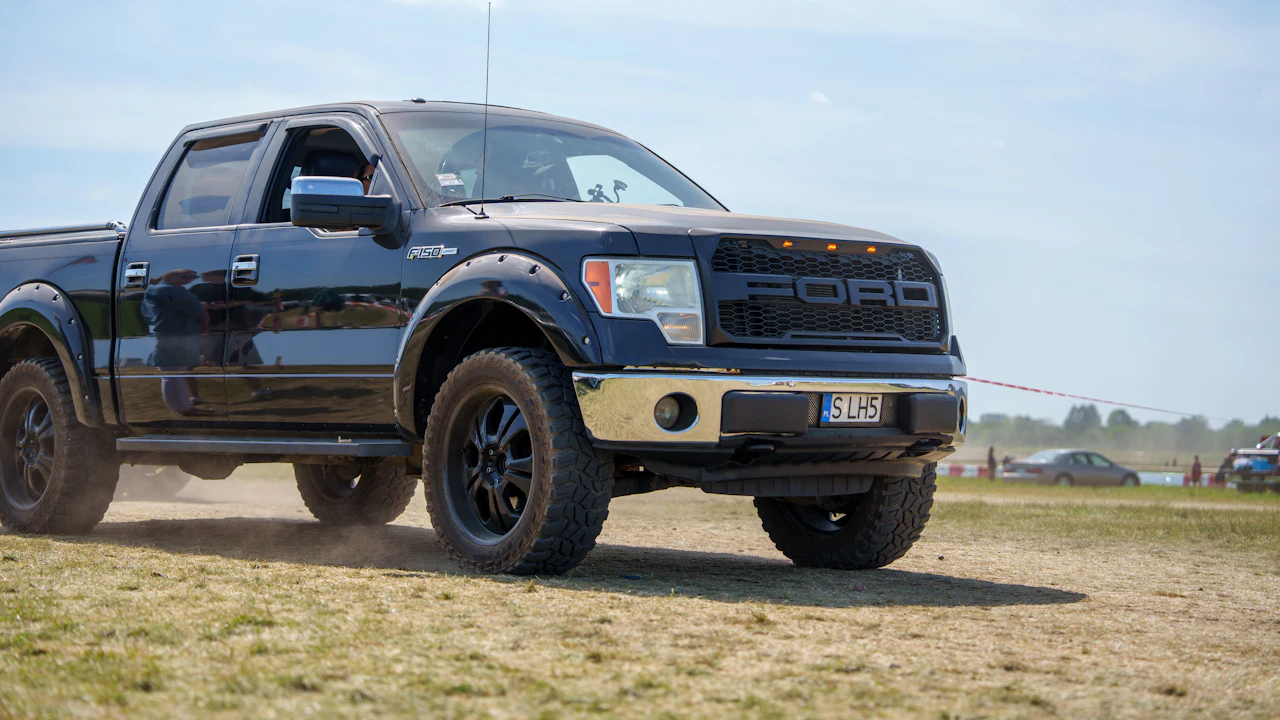
No conversation about American car companies survives long without becoming a pickup conversation — the full-size truck lines are the Detroit companies’ commercial spine and the used market’s densest territory. The registry’s contribution to that conversation is precision about three things buyers actually contest.
Origin, per truck: the same nameplate has run concurrently from American, Canadian and Mexican plants for decades, so plant arguments about “the good ones” resolve per vehicle, at the first and eleventh characters, or not at all. Configuration: the middle block separates the trim-and-drivetrain thickets our trim-by-number page maps, in a market where configuration moves five figures of price. And class: weight-rating boundaries decide licensing, insurance and emissions treatment, and our weight-rating guide reads them from the same filings.
The truck market is also where work-history laundering concentrates — fleet lives retailed as gentle private ownership — which is why the records sequence below leans hardest on the odometer line and title chain precisely when the tailgate is proudest.
The other American car companies
The registry’s American pages hold a second population the logo lists exclude: the foreign-headquartered companies manufacturing here at scale. The Japanese families’ American filings — sixteen codes for Honda, twelve for Toyota — sit beside Korean operations like the Georgia plant our Kia page reads, German operations, and the joint ventures filing under combined names.
Call them what the industry does — transplants — and note what the registry refuses to do: rank them against the natives. It files them identically, because the thing it measures — who builds vehicles on American ground — they simply do. A list of “American car companies” that means companies manufacturing cars in America is therefore much longer than the Detroit roll-call, and the registry is its only complete edition.
The buyer’s use is symmetry: whatever weight you give assembly origin, apply it evenly. The number grants no badge an exemption, in either direction.
Assembly is one number; content is another
Precision demands one more distinction before the folklore section closes. The first character records where a vehicle was assembled — where the registrant that assigned its number built it up. Content — where the parts came from — is a different measurement, tracked by different rules: the window-sticker parts-content disclosures, domestic-content percentages, engine and transmission origin lines. A truck assembled in an American plant from a continental parts web, and one assembled across a border from majority-American components, can each claim a kind of American-ness — and the two claims are simply different facts.
The registry answers the assembly question flawlessly and the content question not at all; the original window sticker, retrievable by the routes our sticker page maps, answers content for the specific car. Buyers who care about the flag should decide which flag-fact they care about, then read the document that actually records it — because sellers blur the two constantly, and rarely by accident.
Dead badges, live records
American automotive history is a graveyard of badges — Pontiac, Saturn, Oldsmobile, Mercury, Plymouth — and the registry handles the estate the way it handles everything: codes are never recycled, so the filings of dead brands persist, resolving orphaned vehicles decades after the last dealership sign came down. The parent structures above decide who answers for each estate: the divisions’ orphans resolve through the corporation that consolidated them, which is why a dead badge’s recall letter still arrives with a live company’s name on it.
Used-market consequences are real. Orphaned cars decode normally — the registrant answers even though the marketing department is gone — and their records systems run on: titles pool, recalls remain administrable through the surviving parent, the theft flag works. What thins is the ecosystem — parts, expertise, values — which is a pricing fact rather than a records one. An orphan with a clean chain and a strong community can be the used market’s best value; an orphan without either is a parts car wearing optimism.
The newest registrants, read the same way
The electric newcomers earn a section precisely because their registers demonstrate the method on easy mode. A young manufacturer’s filing is short and legible — a code or two, a plant or two, model lines countable on one hand — and everything this page teaches applies without the archaeology: registrant, country, plant letter, middle block. The used-market caveats are the young-company ones rather than the badge ones: thin model-year history for our complaint-data methods to chew on, service ecosystems still forming, and value curves with more opinion than evidence in them. The registry treats them exactly as it treats the century-old houses — a manufacturer, filed — and a buyer does best treating their vehicles the same way: specific car, specific records, folklore discounted to zero on account of there not being any yet.
Reading any specific American-badged car
The sequence, adjusted for the parent-filing structure. Decode from the windscreen: first character for country of assignment, registrant for company, middle block for what the parent says the vehicle is, eleventh character for plant. Free layers: the recall lookup — scoped by manufacturer population, which for these brands means the parent’s — plus the theft and write-off flags. Then the pooled record: a single report on the number returns the title chain, brand fields and odometer sequence, which on the pickup-heavy end of this market carries the extra duty our truck pages document — work histories hide in mileage patterns. Then the inspection, which outranks the registry, the badge and this page.
The one-page method, restated
Everything above compresses to a method that fits on an index card. Companies, not badges: resolve the registrant first, and expect the famous names to layer — parent on the outside, brand in the middle block. Geography per vehicle: first character for country, eleventh for plant, and no exemptions for heritage. Records against the number: recalls by manufacturer population, title chain and odometer from the pooled record, inspection above all. And symmetry throughout — whatever standard you hold a transplant to, hold Detroit to, and vice versa, because the registry already does.
The index card outlives the industry’s next reorganisation, which is more than can be said for any brand list, including the one at the top of this page.
Using this page in an actual purchase
The purchase-day compression, mirroring the companion page’s. Resolve the registrant before researching anything — on the divisional badges that means knowing you are really reading the parent’s filings, recalls and platform history. Settle geography from the car, not the advertising, in one character. Treat heritage as a parts-and-community question with a checkable answer rather than a loyalty question with a felt one. And spend the saved argument time where this site always routes it: the specific vehicle’s records and an inspection — because the flag on the brochure never once turned a bad title chain good, and the registry has been saying so, quietly and in public, for as long as anyone has cared to read it.
Common questions
What are the American car companies?
As manufacturers of record: General Motors filing over its divisions, Ford under its own name with the system’s largest register, the Chrysler-lineage group, the young electric makers, and the heavy-truck houses. As badges, the list is longer; as registrants, this is the spine.
Why doesn’t Chevrolet have its own manufacturer codes?
Because General Motors files at parent level for its divisions — the registry tracks the manufacturing entity, and the entity is the corporation. The Chevrolet identity lives in the middle of the number, inside the parent’s scheme.
Are American-brand cars built in America?
Sometimes — and the registry quantifies the hedge: Ford files twenty-eight of sixty codes at home; the Chrysler register is majority-Mexican. The first character of a specific car’s number answers for that car, which is the only answer that matters at a purchase.
What is the most American-made car?
Year by year, content studies crown different models — and repeatedly the crown has landed on Japanese-badged vehicles built in American plants. This site’s registry-grounded contribution: check the specific vehicle’s number rather than the badge, because assembly origin is a per-car fact.
Do Pontiac, Saturn and other dead brands still decode?
Yes — codes are never reissued, so orphaned vehicles resolve against their original filings indefinitely, and their recalls and records remain administrable through the surviving parent. What fades is the parts-and-value ecosystem, not the paperwork.
Where do the Detroit companies build their engines?
A content question, not an assembly one — and therefore outside the registry’s jurisdiction and this page’s first character. The window sticker’s parts-content lines record engine and transmission origin per vehicle; the label-versus-content section above is the map for which document answers which flag-question.
Is Tesla in the registry like the Detroit companies?
The young American electric makers file as manufacturers like anyone else — the registry is indifferent to age and marketing volume. Their registers are simply shorter, in the way young companies’ registers are.
Does “built in Mexico” or “built in Canada” change quality?
The registry records geography, not merit — the same answer this series gives for Japan, Hungary and Georgia. Plant-scoped campaigns and specifications are the checkable differences; rankings are folklore wearing a flag.
How do I tell where my truck was actually built?
First character: 1, 4 or 5 for the United States, 2 Canada, 3 Mexico. Eleventh character: the plant within the registrant. Two glances at the windscreen plate, and the argument at the tailgate is over.
Sources and further reading
- NHTSA VIN decoder
- NHTSA recall lookup
- NMVTIS (US Department of Justice)
- 49 CFR Part 567 — Certification
Recall, complaint and safety-rating figures on this page were retrieved from the federal databases above on August 19, 2026. Federal data changes — re-check any VIN before you rely on it.
Published September 1, 2026 · last updated September 1, 2026. Found something out of date or wrong? Tell us and we will correct it.