Japanese Car Brands: The Map the Registry Draws
The badge tells you who designed the car and stands behind it. The number tells you where it was born. Most brand arguments are about the wrong fact.
The short version
- The Japanese brands sold in America sort into three families — Toyota’s, Honda’s and the Nissan orbit — plus the independents, Subaru and Mazda among them, and the motorcycle-rooted houses.
- The badge and the birthplace are separate facts: the federal build-code registry shows every major Japanese maker holding blocks of American-registered manufacturing codes.
- Honda’s American codes outnumber its Japanese ones in the registry by five to one — sixteen against three — and Toyota registers twelve American codes under plant names from Kentucky to Texas.
- One character of any specific car’s number — the first — settles where it was actually assembled. J opens Japan; a 1, 4 or 5 opens the United States.
- Luxury channels complicate the brand map, not the registry: Lexus and Acura are marques over parent manufacturers, and decode accordingly.
- For a used-car buyer, the brand family matters mostly through recalls, parts commonality and the records — all keyed to the number, not the nameplate.
Lists of Japanese car brands are everywhere, and nearly all of them stop at logos and founding dates. This one is built the way this site builds everything: from the federal identification registry, which records who actually manufactures what, where — and which quietly demolishes the assumption the search usually carries, that a Japanese badge means a Japanese-built car.
How this list was built, and why it reads differently
A note on method before the map, because it is the page’s actual product. Brand lists elsewhere are assembled from marketing history — who sold what badge when. This one is assembled from the same source as every make page on this site: the federal registry of manufacturer identification codes, archived in this site’s own data and cited beneath its figures. That choice has consequences. Marques without manufacturing existence appear here as channels, not companies. Assembly geography appears as counted codes, not vibes. And every claim about a family scales down to a checkable fact about one car — which is what a used-car buyer actually needs a brand list to do.
The brand map, drawn properly
Sorted by industrial family rather than alphabet, the American-market Japanese brands come apart cleanly.
The Toyota family: Toyota itself, and Lexus as its luxury marque — a channel, not a manufacturer, as our Lexus decoder page establishes from the registry’s own silence. Historic sub-brands aside, the family files under the parent’s codes.
The Honda family: Honda, with Acura as the pioneering luxury marque of the same construction — parent-built, channel-sold. The family’s registry entry is the largest Japanese filing in the system, for reasons the next section makes American.
The Nissan orbit: Nissan and its Infiniti marque, carrying the same structure a third time.
The independents: Subaru, whose compact six-code register our Subaru page reads, and Mazda — historically entangled with Ford, presently entangled with Toyota at plant level, stubbornly itself throughout. Mitsubishi persists leaner than its nineties self.
The motorcycle-rooted houses: Suzuki, which left the American car market but remains a powersports presence, and Kawasaki, which never sold cars here at all — worth naming because brand lists routinely misfile both.
What the registry says about “Japanese”
Now the demolition. The federal registry files manufacturing entities and their countries, and the chart above is drawn straight from it: Honda holds sixteen American-registered build codes against three Japanese ones. Toyota’s American filing runs to twelve codes, registered under names that read like a highway atlas — Kentucky, Indiana, Texas, Mississippi, two Kentucky entities. Nissan and Subaru each file American codes alongside their home ones.
Decades of transplant manufacturing sit behind those numbers — American plants, American workforces, American-assigned vehicle numbers — and the registry has recorded every step, in public, keyed to the first character of every car’s number. The upshot for any specific vehicle is mechanical: J opens a Japanese-assigned number; 1, 4 or 5 opens an American plant; and the eleventh character names which one. The most American-built vehicle in a given year’s market has, more than once, worn a Japanese badge.
So the phrase “Japanese car” describes engineering lineage and corporate parentage — real things — but not, for most of the fleet, geography. The badge tells you who designed the car and stands behind it. The number tells you where it was born. Buyers who conflate the two argue about the wrong facts.
The third countries the argument forgets
The Japan-versus-America framing misses what the registry states plainly: these families build across North America, not just inside it. Honda’s filing includes six Canadian codes and five Mexican ones alongside the American sixteen; Toyota registers Canadian plants and two Mexican operations; Nissan’s Mexican manufacturing history is among the deepest of any foreign maker. A “Japanese” car in an American driveway may open with Japan’s J, an American 1, 4 or 5, Canada’s 2, or Mexico’s 3 — four birthplaces inside one family, distinguishable at a glance and indistinguishable at the badge.
The buyer-relevant note is the usual one, third time in this series: scoping, not scoring. Campaigns and specification packages track plants; the number sorts your car into its true population; and no ranking of countries falls out of a registry that records only who filed where.
Marques, channels and why Acura decodes as Honda
The three luxury channels — Lexus, Acura, Infiniti — share one structure the registry makes unambiguous: each is a marque operated by its parent manufacturer, not a manufacturing entity of its own. Their vehicles file under parent codes and decode accordingly, which surprises owners annually and means nothing except that the registry tracks builders rather than brands.
The practical corollaries. Recall campaigns run per manufacturer population — related fixes span parent and marque because the metal is shared. Parts commonality follows the same seams, which is where the luxury channels’ famous value-retention meets its quieter cousin, the shared-component service bill. And history checking is identical across the channel wall: same number format, same records systems, same checking sequence, whatever the dealership’s coffee tastes like.
The fleet America never sees
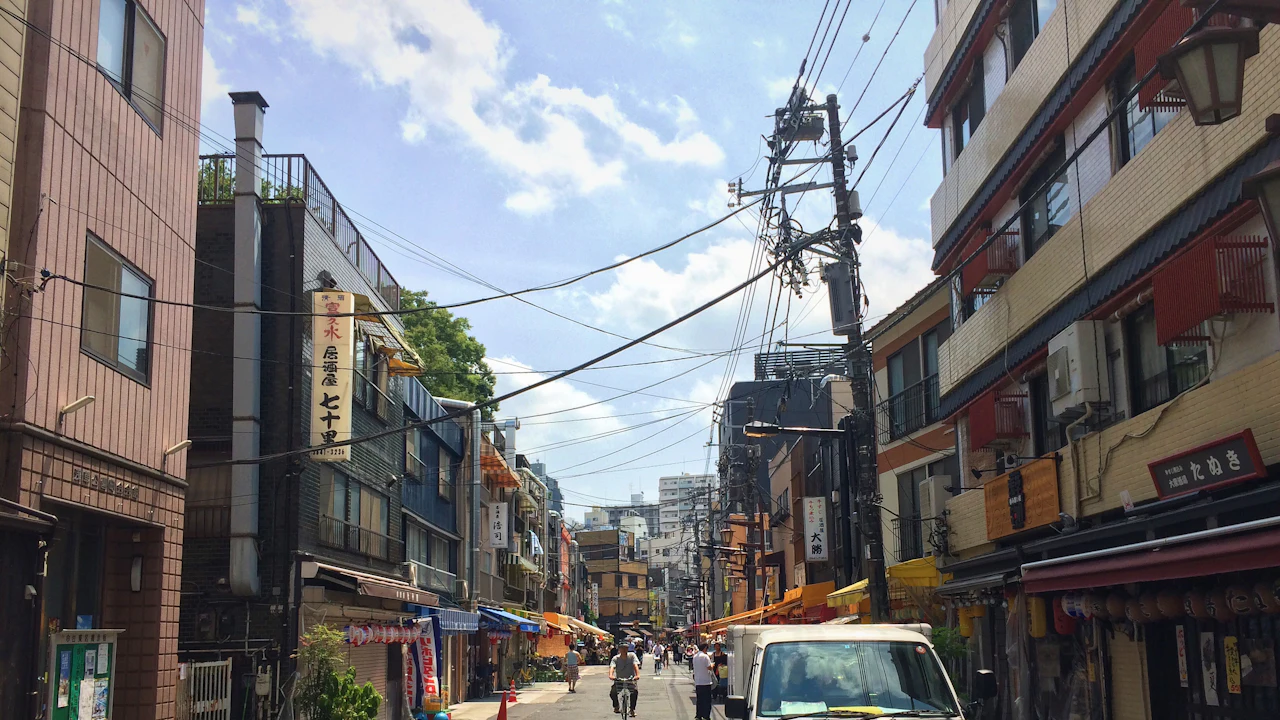
The photograph above holds a vehicle class this page’s subject brands sell by the million and America meets only as a curiosity: the kei class — the home market’s miniature trucks and vans, built to dimensional and displacement rules with no American equivalent. They matter to this page for two American reasons.
First, they are arriving anyway. The twenty-five-year import rule feeds a steady stream of kei trucks into American barns and back roads, and every one is a grey-market vehicle wearing a Japanese-brand badge while sitting outside the American records ecosystem — number formats that predate or sidestep the federal standard, no domestic recall administration, titles improvised through whichever state was accommodating that year. Our pre-standard decoding guide is the right toolkit; the ordinary checks this page just prescribed mostly are not.
Second, they calibrate the brand map. The same registrants filing American codes for crossovers file entire vehicle universes at home — classes, variants and badges that never crossed the ocean. A brand list built from the American showroom is a list of what each family chose to export, which is a marketing decision wearing an industrial costume. The registry’s virtue is that it records the decision per vehicle: whatever the family builds anywhere, the number on a specific car says what it is and where it came from.
The map is moving: electrification and the next filings
Brand maps rot, and this one is mid-rot in an instructive way. The families above are electrifying on different strategies — hybrid-first giants, joint-venture platforms, battery plants rising next to existing transplant operations — and every strategy eventually becomes registry filings: new manufacturing entities, new American codes, new plant letters inside existing registrants.
The forecastable constant is the method, not the map. Whatever alliances reshuffle the badges, the registry will file the actual builders, the first character will keep saying where each vehicle was assigned, and the records systems will keep keying to the number. A reader who learned this page’s method — families for context, registry for facts, number for the specific car — owns a tool that survives every reorganisation the industry has planned.
The reliability question, handled honestly
The search behind this page usually carries it, so here is this site’s standing answer. Brand-level reliability folklore — Japanese brands as a category — is a statistical statement about fleets, built substantially on the era when the transplants earned it. It prices into the used market already: the dependability premium on the big Japanese badges is real money, which means you pay for the reputation whether or not your specific car upholds it.
And specific cars are what anyone actually buys. Every family above has built standout years and troubled ones, gold-standard powertrains and expensive experiments — our model-year pages document both directions from federal complaint data. The brand’s average never sits in your driveway; the specific car’s record does, and the record is checkable: the recall history, the title chain, the odometer sequence. Folklore sets the asking price. Records justify, or puncture, it — on the car in front of you.
Alliances, and why the map has soft borders
The clean family diagram above has always had soft borders, and honesty requires drawing them. The Nissan orbit’s decades-long entanglement with a French partner made its corporate nationality a genuinely mixed question long before any badge admitted it. Toyota’s web of stakes and ventures — the jointly named plant in its own American register, holdings in smaller makers, platform-sharing arrangements — blurs the independent category from the other side. And supplier networks cross every border on the page: the components inside a family’s car are sourced from an ecosystem no brand map has ever contained.
The registry’s discipline is what keeps the softness from becoming mush. However tangled the equity, each vehicle is filed by exactly one manufacturing entity in exactly one place — the alliances negotiate upstream, the filings stay atomic. Which restates the page’s method one final way: family maps for orientation, filings for facts, and when the two disagree about a specific car, the filing wins by design.
What the family map is actually good for
Used practically, the brand families above answer three buyer questions the logos cannot.
Platform kinship. Marque and parent share architecture, so the luxury-channel car’s mechanical reputation is usually the parent model’s reputation wearing better seats — research both nameplates before buying either.
Recall reach. Family-wide components mean family-wide campaigns; the era’s great airbag recall cut across every family on this page. Per-vehicle checking is the only resolution — the free federal lookup against the number, covered in our recall guide.
Longevity infrastructure. The independents’ and giants’ long-running powertrains carry deep parts and knowledge ecosystems, which is half of what the longevity reputation cashes out to: not that nothing breaks, but that everything that breaks is understood and stocked. That is a purchasable property of a model generation, and the number identifies the generation precisely.
The shrunken and the departed, as used-market facts
Two families deserve their used-market footnote because the departure dynamics differ instructively. Suzuki left the American car market entirely, leaving its cars in the orphan condition the American-brands page maps for Pontiac and Saturn: decoding intact, records systems live, ecosystem thinning — a value-or-trap question settled per car by community strength and the chain. Mitsubishi shrank without leaving, which is the stranger position: a live manufacturer, current recalls administration, full records — and a dealer network sparse enough that ownership logistics resemble the orphan case in parts of the country. Neither condition shows on a badge; both show in five minutes of ecosystem research, which for these two families belongs in the buying sequence as surely as the record check.
What the badge is worth at resale, mechanically
One more honest economics section, because the brand premium works through a mechanism worth seeing whole. The dependability reputation raises used asking prices — that is the premium every buyer feels. Less noticed: it also compresses the spread. Strong-reputation fleets hold value predictably, which narrows the gap between good and mediocre examples of the same model — and a narrow spread punishes careless buying twice, because the mediocre example was barely discounted for its mediocrity.
The arbitrage this creates runs in the buyer’s favour only through documentation. In a fleet where everything is priced as reliable, the car that can prove it — unbroken records, clean chain, closed campaigns — costs little more than the car that merely claims it, while the difference in what you actually receive is large. Reputation-heavy markets are documentation-rewarding markets, and the checking sequence below is where the reward is collected.
Reading any specific Japanese-brand car
The sequence, family-agnostic. Decode from the windscreen: first character for country, eleventh for plant, middle block for the build. Free federal layers: recall status, the theft flag, the write-off flag. Then the pooled record: one report against the number for the title chain, brands and the mileage line — on the high-mileage examples these fleets are famous for, the recorded odometer sequence is the document that separates a two-hundred-thousand-mile virtue story from a rollback wearing one. Then the inspection, which outranks everything, reputation included.
Using this page in an actual purchase
Collapsed to practice, the page works as a pre-purchase orientation layer. Identify the family, because the family names the parent whose recall population and platform kinships you are actually researching. Read the channel, because a luxury marque’s car should be researched under both its names — the marque for market and trim questions, the parent for engineering ones. Check the geography on the specific car, one character, before anyone’s assembly folklore enters the price. Then drop the brand layer entirely and run the per-vehicle sequence — decode, free flags, pooled record, inspection — because from that point on the car is not Japanese or American or anything else; it is seventeen characters with a biography, which is the only nationality the checks recognise.
Common questions
Which Japanese car brands are sold in the US?
Toyota and Lexus; Honda and Acura; Nissan and Infiniti; Subaru; Mazda; Mitsubishi — plus the motorcycle houses in powersports. The luxury names are marques over the first three parents rather than separate manufacturers.
Are Japanese cars sold in America actually built in Japan?
Very often not: the registry shows large American code blocks for every major maker — Honda’s American filings outnumber its Japanese ones. The first character of a specific car’s number settles it: J for Japan, 1, 4 or 5 for the United States.
Is a Japan-built example better than a US-built one?
The registry records geography, not merit, and this site declines to invent a ranking the data does not contain. Campaigns and specifications occasionally differ by plant — that is scoping information, checkable in one character, and the honest whole of it.
Why does my Acura VIN decode as a Honda?
Because Honda is the registered manufacturer and Acura is its channel. Same structure as Lexus under Toyota and Infiniti under Nissan; nothing about the specific car is in question.
Do Japanese brands share parts with each other?
Within families, extensively — marque and parent especially. Across families, far less than forum shorthand implies. The joint ventures that do exist file their own codes, which is the registry keeping even the collaborations honest.
Are Datsun and Scion separate brands?
Both were channels of their parents — the Nissan orbit’s earlier American name, and Toyota’s youth-market experiment — and both resolve exactly as the live marques do: under the parent’s filings. Their orphaned badges join the dead-brand economics the American-companies page maps: paperwork immortal, ecosystem mortal.
Which family does Mazda belong to?
Itself — the register’s American entry includes a jointly named Mazda-Toyota plant, and history includes a long Ford chapter, but the company files as its own manufacturer and always has.
Does the Japanese-brand reliability premium make used ones a bad deal?
It makes them an efficient deal: you pay approximately what the dependability statistics are worth. The margin lives in specifics — strong years of unfashionable models, documented cars whose records outshine their folklore — which is precisely what per-vehicle checking finds.
How do I check where my specific car was built?
First character of the number: J is Japan, 1, 4 or 5 the United States, other prefixes their own countries. The eleventh character then names the plant within the manufacturer’s filing.
Sources and further reading
- NHTSA VIN decoder
- NHTSA recall lookup
- NMVTIS (US Department of Justice)
- NHTSA Office of Defects Investigation complaint database
Recall, complaint and safety-rating figures on this page were retrieved from the federal databases above on August 19, 2026. Federal data changes — re-check any VIN before you rely on it.
Published September 1, 2026 · last updated September 1, 2026. Found something out of date or wrong? Tell us and we will correct it.