How to Read a VIN: What Each of the 17 Characters Means
Seventeen characters with a fixed grammar. Learn which positions carry what and you can read most of a car's identity — and spot a fake — off the number itself.

The short version
- A VIN is seventeen characters with a fixed grammar. Once you know which positions carry what, you can read most of a car’s identity off the number without any tool.
- Read it off the car in two places first — the driver’s door-jamb label and the base of the windshield — and confirm they match each other and the title before you trust either.
- The first three characters are the World Manufacturer Identifier: who built it and where. Positions four through eight describe the vehicle. Position nine is a check digit, and position ten is the model year.
- The letters I, O and Q never appear in a VIN — they were excluded so they cannot be confused with 1 and 0. Seeing one means a misread or a fake.
- Position nine is arithmetic, not information: it is computed from the other sixteen characters, so a genuine VIN can be checked for typos with no database at all.
- Reading the VIN yourself tells you what the car was built as. What happened to it since is a separate record — and the free federal decode fills in what the eye cannot.
The seventeen characters on a car’s VIN look like a random string, and most people treat them as one — something to be typed into a box, not read. But a VIN has a grammar as fixed as a phone number’s, set by an international standard and required on every car sold in the United States since 1981. Learn the grammar and you can read a surprising amount straight off the plate: who built the car, roughly where, what model year it is, and whether the number is even genuine. This guide teaches the read — position by position — and, just as important, where to find the number on the car and how to know it has not been touched.
Before you read it, find it — in two places
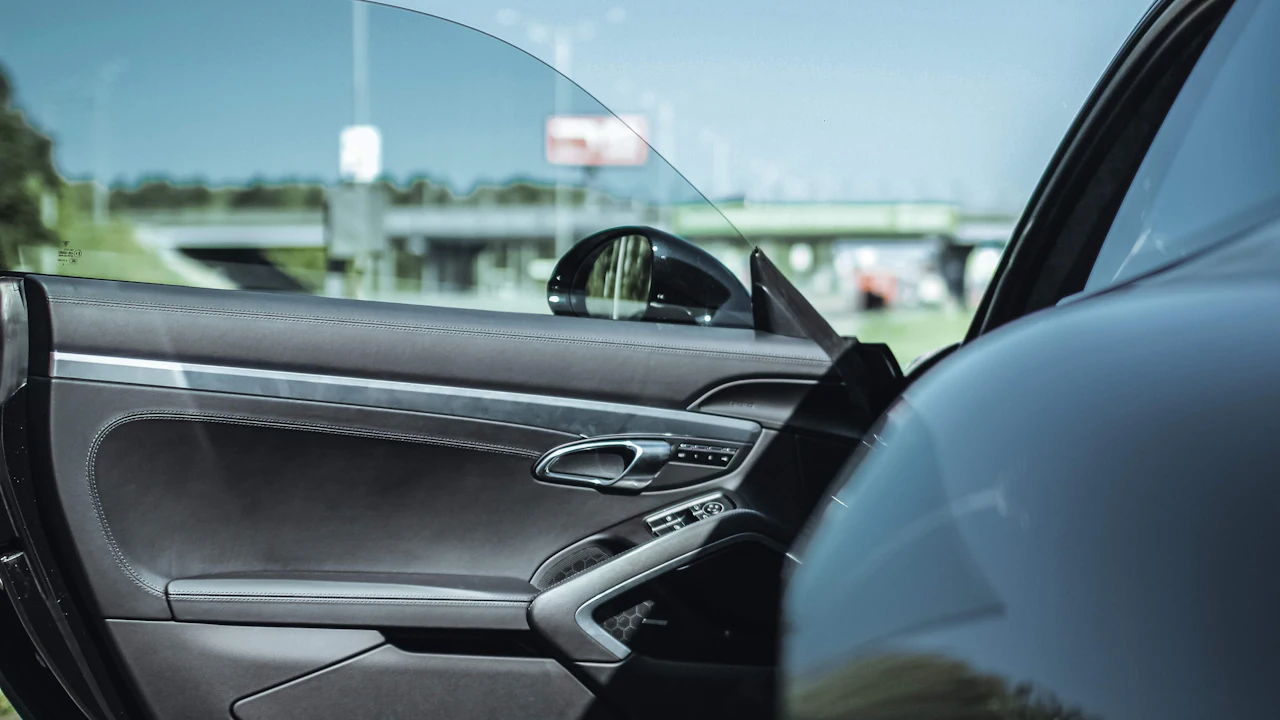
Reading a VIN starts with locating it, and a careful reader checks two spots rather than one. The base of the windshield on the driver’s side carries a stamped plate visible from outside the glass. The driver’s door jamb — the frame you see when the door is open — carries a certification label that repeats the full VIN alongside the build date and weight ratings, a label whose required contents are set by federal rule. Our guide to every place the VIN appears maps the rest.
Check both, because the whole point of reading a VIN carefully is that the copies must agree. On a genuine car the windshield plate, the door-jamb label and the title all show the identical seventeen characters. When they do not, you have stopped reading a VIN and started finding a problem — which is the subject of our guide to a VIN that does not match.
The VIN alphabet: three letters that never appear
A VIN uses the digits 0 to 9 and the capital letters A to Z with three deliberate exceptions: I, O and Q are never used. They were excluded by the standard precisely because they are too easily confused with 1, 0 and 0 again. This single rule is the first thing a reader checks, because it is the cheapest error-catcher there is: if you think you see an O in a VIN, you are looking at a zero, and if you think you see an I, you are looking at a one. A number that genuinely contains one of those letters is not a VIN — it is a transcription error or a fabrication.
Positions 1–3: the World Manufacturer Identifier
The first three characters are the World Manufacturer Identifier, or WMI — the code the federal registry issues to the company that certifies the vehicle. Read carefully, they carry three facts: the region of the world where the code was issued (the first character), the manufacturer (the first three together), and often the broad vehicle type. The catch that trips people up is that the WMI names the company, not the badge — which is why a Chevrolet and a GMC can share opening characters, and why every Lexus decodes to Toyota. Our guide to the one decoder behind every make and the WMI lookup tool settle exactly who a code belongs to.
Positions 4–8: the Vehicle Descriptor Section
Characters four through eight are the Vehicle Descriptor Section — the part that describes the car itself: the model line, the body style, the restraint system, and often the engine family. This is the section that varies most between manufacturers, because each maker fills it to its own scheme within the standard. That is also why a plain-eye read only takes you so far here: you can tell that these five characters encode the vehicle’s specification, but turning them into “5.3-litre V8, extended cab” needs the manufacturer’s own key, which is what the federal decode supplies.
Position 9: the check digit, which is pure arithmetic
The ninth character is the strangest and most useful: it carries no information about the car at all. It is a check digit, computed from the other sixteen characters by a fixed formula in federal rule — each character is converted to a number, multiplied by a position weight, the products are summed, and the remainder after dividing by eleven is the check digit (a remainder of ten is written as X). Because it is arithmetic, you can verify a VIN for typos with no database whatsoever, which is exactly what our VIN validator does. A number whose check digit does not compute cannot be a real VIN — the single most powerful thing a reader can confirm unaided.
Why the check digit matters when reading. The most common error in reading a VIN is a single transposed or misread character. The check digit is designed to catch precisely that: change one character and the arithmetic almost always breaks. So the honest way to read a VIN is to read it, then run the check digit — if it verifies, your read was clean; if it fails, you misread a character or the number is not genuine.
Position 10: the model year
The tenth character is the model year, drawn from a fixed thirty-character cycle that repeats every thirty years. A letter or digit here maps to a specific year — and because the cycle repeats, one character can mean two years three decades apart. In practice the rest of the car settles which, and on newer vehicles a letter in position seven marks the post-2010 half of the cycle. Our model-year chart lays out the whole cycle both ways.
Position 11: the assembly plant
The eleventh character identifies the specific factory that assembled the car, within the manufacturer’s own plant codes. On its own it is a single letter or digit that means nothing until you have the maker’s key, but it is genuine information — it is how two otherwise identical cars can be traced to different assembly lines, which occasionally matters for parts and for recall scope.
Positions 12–17: the serial number
The last six characters are the sequential production number — the car’s unique serial within its plant and model year. This is what makes the VIN unique to one vehicle rather than one model: everything before it can be shared by thousands of cars off the same line, and these six characters are what separate yours from all of them. On lower-volume manufacturers the standard borrows a couple of these positions for extra manufacturer identification, which is why a small-maker VIN can carry a six-character manufacturer code rather than three — an arrangement that covers more of the registered identifiers than the three-character one does, as our digit-by-digit measurement of what each position is worth sets out.
What reading the VIN cannot tell you
A clean read tells you what the car was built as. It does not tell you what happened to it afterwards, and it cannot — the number was assigned at the factory and never changes, so it carries no record of accidents, title brands, odometer history or ownership. The federal registry publishes 144 possible decode variables, but even a full decode describes the build, not the life. For the life you need the records: the free federal recall and complaint checks, and the paid history report for the title-brand and odometer chapters the number itself will never hold.
Read it, then let the decode finish the job
Reading the VIN by eye gets you the shape of the car and, crucially, a check on whether the number is genuine and consistent. To turn positions four through eight into a named engine and trim, you need the manufacturer’s key — and that is exactly what the free federal decoder returns. Our VIN check runs it in your browser: you read the number to confirm it is real and matches the car, and the decode fills in the specification the raw characters only gesture at.
Common questions
How do I read a VIN number myself?
Locate it on the car in two places — the driver’s door jamb and the base of the windshield — and confirm they match. Then read the grammar: the first three characters are the manufacturer and region, four to eight describe the vehicle, nine is a check digit, ten is the model year, eleven is the plant, and the last six are the unique serial. Remember that I, O and Q never appear.
What does each number in a VIN mean?
Each position has a fixed job. Positions one to three identify the manufacturer and world region; four to eight describe the vehicle’s model, body and engine family; nine is an arithmetic check digit; ten is the model year; eleven is the assembly plant; and twelve to seventeen are the sequential production number that makes the VIN unique to one car.
Can I tell if a VIN is fake just by reading it?
Often, yes. If it contains the letters I, O or Q, or is not exactly seventeen characters, it is not a valid VIN. And because position nine is computed from the rest by a fixed formula, a VIN whose check digit does not verify cannot be genuine — our validator runs that arithmetic for you, no database needed.
Does reading the VIN show the car’s history?
No. The VIN is assigned at the factory and never changes, so it describes what the car was built as, not what happened to it. Accidents, title brands and odometer history live in separate records — the free federal recall and complaint checks, and a paid history report for the title and odometer chapters.
Sources and further reading
Recall, complaint and safety-rating figures on this page were retrieved from the federal databases above on August 19, 2026. Federal data changes — re-check any VIN before you rely on it.
Published September 2, 2026 · last updated September 2, 2026. Found something out of date or wrong? Tell us and we will correct it.