John Deere VIN Decoder: One Federal Code, and the Machines It Does Not Cover
The federal register holds exactly one code for John Deere — 17N, a bus and motorhome chassis prefix. Tractors and mowers are not in it at all.
The short version
- The federal register holds one world manufacturer identifier under this name, and no more. Asking NHTSA’s vPIC register for JOHN DEERE returns a single row: the code 17N, registered to JOHN DEERE WATERLOO WORKS, country recorded as UNITED STATES (USA), vehicle type Incomplete Vehicle, entered on 22 September 2016 and last amended on 9 August 2019.
- That row is not a summary of the entry. It is the entry. There is no second code, no European or Canadian filing, no parent company name, no common name and no manufacturer URL — those fields come back empty.
- The vehicle-type field is the most useful word on the row. Incomplete Vehicle means a chassis consigned to another manufacturer to be finished. The register is describing a rolling platform, not a completed machine.
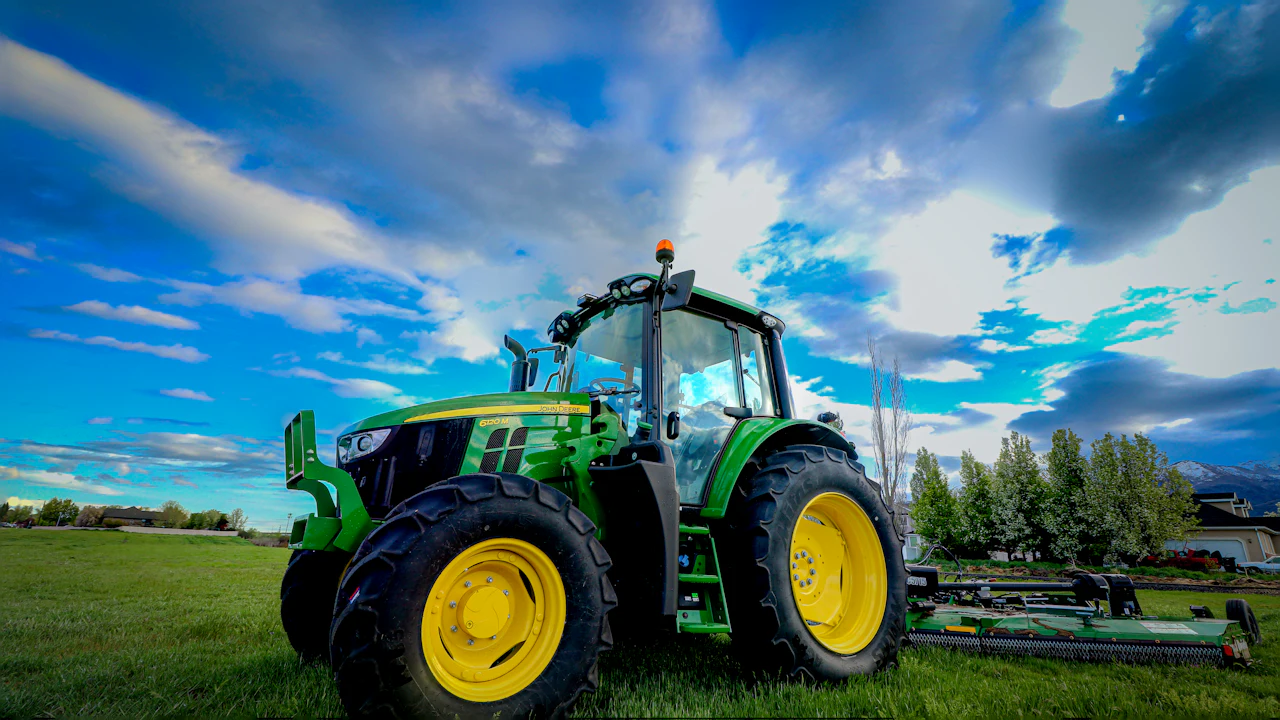
- If what you are holding is a tractor, a combine, a mower, a skid steer or a utility vehicle, this register does not cover it and never has. Farm and turf machinery is not a motor vehicle under the federal rule, it carries a product identification number rather than a seventeen-character VIN, and no federal decoder reads it. That is an absence to report, not a number to invent.
- Against that single code the decoder holds eighteen model names for the make, and every one of them is a chassis designation: eight bus variants, five recreational-vehicle variants, four commercial variants, and one entry called simply John Deere Chassis.
- The make is filed against two of the register’s nine vehicle types — Trailer and Incomplete Vehicle — yet filtering the code query to Trailer returns nothing at all. The type association and the issued code do not line up.
- Query the register for “John” instead of the full name and forty-three rows come back. Forty-two of them belong to unrelated trailer, motorcycle and low-speed-vehicle builders. Reading a raw result without checking the names is how people conclude this maker holds dozens of codes.
- What no decode of any kind carries: engine hours, condition, attachments fitted or removed, service history, or whether the machine was ever titled in the first place.
Search for a John Deere VIN decoder and you will be offered input boxes, most of them implying that this maker has a numbering scheme of its own that some specialist tool has cracked. The honest answer is stranger and more useful than that, and it has two halves.
The first half: for road vehicles, there is nothing brand-specific to crack. The seventeen-character vehicle identification number is a federal standard, laid out identically on a saloon, a pickup, a motorcycle and a bus chassis, and one public register resolves the manufacturer prefix on all of them. The second half is the part the input boxes never say. Under this maker’s name, that register holds exactly one code — and the code is not for a tractor.
This page works from a live read of the register rather than from a manufacturer briefing. Everything printed below came back from NHTSA’s vPIC endpoints on the day of writing, and where a query returned nothing, the nothing is reported as nothing. A page that says plainly “the federal register holds one code for this manufacturer, here is what it covers, and here is the very large category it does not cover” is more use to somebody standing next to a machine than a page that pads one row into a specification sheet.
One register reads every road VIN, and it is not brand-specific
The vehicle identification number is fixed by federal rule and by international standard, and its shape does not change by badge. Positions one to three are the world manufacturer identifier, assigned centrally to the legal entity that builds the vehicle. Positions four to eight are the descriptor section, a scheme the manufacturer designs for itself. Position nine is a check digit computed arithmetically from the other sixteen characters. Position ten carries the model year. Position eleven identifies the assembling plant. The final six are the serial.
Our guide to reading a VIN position by position sets that layout out in full, and the by-make index collects what the register holds for each manufacturer we have read so far.
Where a genuinely brand-specific decoder would earn its keep is the middle block, and this is where every page of this kind has to be honest rather than helpful-sounding. Positions four to eight belong to the manufacturer, and the federal register does not publish the key to them. What the register does record is narrower and, in its own way, more dependable: who holds a prefix, what vehicle class the prefix was filed under, which country the registrant filed from, when the code was entered and when the row was last touched.
So this page prints no position-by-position table and no plant-code list for this maker, because we hold neither from a source we would stand behind. Decoding a specific number returns the descriptor fields as the federal system resolves them for that specific vehicle, which is a different and far more reliable thing than a printed key reverse-engineered from a handful of samples.
The whole entry, printed rather than summarised
A VIN opens with three characters the manufacturer does not choose for itself. They are assigned, published in full and free to look up. Under this maker’s name there is exactly one of them, so here it is, field by field, as the register spells it.
17N. Registered to JOHN DEERE WATERLOO WORKS. Vehicle type: Incomplete Vehicle. Country: UNITED STATES (USA). Entered in the register on 22 September 2016, made available to the public on the same date, and last updated on 9 August 2019.
That is not an extract. That is the whole of it. Alongside those fields, the decoder’s own prefix lookup returns the make as JOHN DEERE and the manufacturer name as JOHN DEERE WATERLOO WORKS, and then returns nothing at all for parent company, for common name and for manufacturer URL. Empty strings, not placeholder text. A reader who expects a corporate hierarchy to appear — a group name above the works, a division below it — will not find one here, because the register was never asked for one.
Two small details in that row repay attention. The first is the registrant name itself. It is a works, not a corporation: the register names a plant in Waterloo, Iowa rather than the company that owns it, and the manufacturer record behind the code confirms the same city and state. Asking the register for “Deere & Company” returns zero rows. The corporate name is not what filed.
The second is the code’s own first character. Under the standard, the opening character of a world manufacturer identifier encodes the country region, and codes beginning with the digit 1 are United States assignments. So the country field and the first character agree here, which is the ordinary case and worth noting only because it is one of the few cross-checks a reader can run on a prefix without any tool at all.
“Incomplete Vehicle” is the most important word on the row
The register sorts every code into one of nine vehicle types: Motorcycle, Passenger Car, Truck, Bus, Trailer, Multipurpose Passenger Vehicle, Low Speed Vehicle, Incomplete Vehicle and Off-Road Vehicle. This code is filed under Incomplete Vehicle, and that single word explains almost everything odd about the entry.
An incomplete vehicle is a chassis with a powertrain and running gear that is shipped to a second manufacturer, who builds the body onto it and certifies the finished result. The first builder issues the number and files a document describing what it has supplied; the final-stage builder completes the vehicle and attaches its own certification label. That is why the label in the door aperture of a bus or a motorhome frequently names a company that is not the company that built the chassis underneath it, and why the weight ratings on that label belong to the finished vehicle rather than to the bare frame. Our page on GVWR by VIN covers how those ratings are established and where to read them.
Filed this way, the code tells a buyer something quite precise and quite narrow. It says the number was issued at the chassis stage. It does not say what was eventually built on top, who built it, or in what year the completed vehicle was sold. Those are facts about the second manufacturer, and they reach a record through the final-stage certification and the first titling rather than through the prefix.
Notice also what the type field is not. It is not Off-Road Vehicle, even though the register plainly has that category and uses it for other makers of recreational and utility machines. It is not Truck, and it is not Bus, despite the model names discussed below. One code, one class, and that class is the platform rather than the product.
The machines this register does not hold
This is the section most visitors actually need, and it is a section about an absence.
The overwhelming majority of searches for a decoder under this name are made by somebody holding a farm tractor, a compact utility tractor, a lawn tractor, a zero-turn mower, a combine, a skid steer, an excavator or a utility side-by-side. None of those are covered by the register described on this page, and no amount of querying will make them appear. The federal VIN scheme applies to motor vehicles manufactured for use on public roads. Agricultural and construction machinery falls outside that definition, so the machines are not issued world manufacturer identifiers and their identification numbers are not filed anywhere in vPIC.
What those machines carry instead is a product identification number, assigned under the manufacturer’s own scheme and industry practice rather than under the federal rule. It is stamped or plated on the frame in a location that varies by product family, it is the number a dealer parts counter will ask for, and it is the number that identifies the machine for warranty, recall and service purposes. This page prints no key to it, because the federal register does not hold one and this site does not publish decoding tables it cannot source. If somebody offers you a chart claiming to break down a tractor serial by position, ask them where it came from before you rely on it.
It is worth being concrete about how thoroughly absent this equipment is. Asking the register for codes under “gator” returns eleven rows, and every single one of them belongs to an unrelated business — trailer builders, chopper shops and a utility-vehicle company operating under a different name. Not one of them is this maker. Asking for the maker by name returns the one chassis code and nothing else. The equipment simply is not there.
That has a practical consequence worth stating plainly. If you are checking a used tractor or mower, the free federal recall lookup that works so well on cars will not resolve the number, because the number is not a VIN. Recall and safety information for that equipment comes from the manufacturer’s own service channel and from the Consumer Product Safety Commission’s recall notices rather than from the road-vehicle system. Treat any site that claims to run a “VIN check” on farm equipment with suspicion: at best it is decoding nothing, and at worst it is charging for the privilege.
The nearest thing this site publishes to a guide for machines in that awkward middle ground is our page on ATV and off-road VIN lookups, which covers the class of machine that does hold federal codes but is titled inconsistently from state to state. Agricultural equipment sits one step further out again: no federal identifier at all, and titling that varies from a full state title in some places to nothing but a bill of sale in others.
Eighteen model names, and every one is a chassis
Set against that one code, the decoder holds eighteen model names under the make. Read them and the shape of this entry becomes unmistakable, because not one of them is a machine anybody would recognise from a dealership yard.
Eight are bus designations: LB/Bus, MB/BUS, MD/BUS, UB/Bus, VB/BUS, SB/BUS STYLE C, SB/BUS STYLE D and SB/BUS RD. Five are recreational-vehicle designations: LC/RV, MC/RV, TC/RV, VC/RV and XC/RV. Four are commercial designations: LT/COMMERCIAL, ST/COMMERCIAL, MT/COMMERCIAL FORWARD and MT/COMMERCIAL AFT. The eighteenth is listed simply as John Deere Chassis.
Those are not model names in the sense a car buyer uses the phrase. They are platform codes, of the kind a chassis supplier uses internally to distinguish one frame family from another — a bus frame from a motorhome frame, a forward-engine commercial layout from an aft-engine one. Two of them, the forward and aft commercial variants, differ only in where the driveline sits. That is a chassis engineer’s distinction, not a showroom one.
The grouping above is arithmetic on the names themselves rather than a classification we have imposed: every entry carries its family in its own suffix, and the counts are simply how many carry each. Eight, five, four and one, adding to eighteen.
There is a trap in this list that catches careful readers. A model list in the register is the decoder’s vocabulary, not a catalogue and not a production record. A name appears because it was filed. It says nothing about how many were built, when they were built, whether any remain in service, or whether the platform is still supplied. Read the eighteen as a description of what the decoder can recognise, and stop there.
Two dates, and what neither of them means
The row carries three dates and only two distinct values. The code was created on 22 September 2016 and made available to the public on the same day — there is no embargo period on this entry, which is the ordinary case but not a universal one. It was last updated on 9 August 2019, nearly three years later.
Both dates need the same warning, and it is the warning that matters most on any make page. A creation date is the date a code was entered in the register. It is not the date any vehicle carrying that code was built, not the date one was sold, and emphatically not a model year. Codes are registered ahead of production and can sit unused for years. Nothing about 22 September 2016 constrains the age of a chassis carrying this prefix in either direction.
The update date is even easier to over-read. A register row can be amended for reasons that have nothing to do with vehicles — a corrected address, a changed contact, a reclassification, a routine data cleanup. The register records that the row changed on 9 August 2019; it does not record what changed or why. Anyone telling you that a date in this table marks a product transition is reading meaning into a field that does not carry it.
The model year is not in the prefix at all. It sits at position ten of the individual number, drawn from a fixed alphabet that repeats on a thirty-year cycle, which is why reading it correctly requires knowing roughly which cycle you are in rather than just looking up a letter.
Query the register carelessly and you get forty-three rows
Every make page on this site carries a version of this warning, and on this name it bites harder than most.
The register’s manufacturer endpoint matches company names as plain text. Ask it for the full name and it behaves: one row, the chassis code, nothing else. Ask it for “John” and forty-three rows come back, because every registrant whose company name happens to contain those four letters matches. Thirty-eight of the forty-three are filed under the vehicle type Trailer. Three are motorcycles. One is a low-speed vehicle. Exactly one is the incomplete-vehicle chassis code this page is about.
The names in that list are their own explanation: welding shops, truck-body builders, tank fabricators, mobile-solutions outfits and a handful of small motorcycle operations, each of them a real registrant with a real code and none of them connected to this maker. Six of the forty-three hold three-character codes; the remaining thirty-seven hold six-character codes, which is the format the register issues to low-volume builders.
This is exactly how a page ends up claiming that a manufacturer holds dozens of world manufacturer identifiers. Somebody pasted a partial name into the endpoint, counted the rows and published the total. The correct number under this name, checked against the full name and confirmed by searching for “deere” on its own, is one.
One registrant, two make names
One more oddity is worth reporting because a reader running the same queries will hit it. The manufacturer record behind this code returns two make names rather than one: JOHN DEERE, as expected, and OSHKOSH. Both are associated with the same registrant identifier in the register’s own tables.
We are not going to build a corporate story on top of that, because the register does not supply one and the parent-company field on this code is empty. What can be said is what the data says: the register’s make-to-manufacturer table links two make names to this one registrant, and separately holds four distinct registrants of its own carrying the Oshkosh name in various forms. Association tables in vPIC are maintained alongside the code register rather than derived from it, and they accumulate historical links.
The same caution applies to the vehicle types listed against the make. Query the register for vehicle types under JOHN DEERE and two come back: Trailer and Incomplete Vehicle. Then filter the code query to trailers and the answer is zero rows. There is no trailer code under this name. The type association exists in one table and is not backed by an issued code in the other — which is a good reminder that the authoritative thing here is the code row itself, not the summaries built around it.
Reading the number off the machine
Whatever a listing says, work from the number on the vehicle, read with your own eyes, from more than one place.
On a completed road vehicle built on a supplied chassis, there are usually at least two readings available and they may not look alike. There is the chassis manufacturer’s own stamping or plate on the frame, and there is the final-stage manufacturer’s certification label, which carries the vehicle identification number along with the weight ratings for the finished vehicle. On buses and motorhomes the label is commonly inside the entrance door frame or in the driver’s area rather than in the position a car owner would expect.
Before doing anything else with a number, run the check digit. Position nine is computed from the other sixteen characters, so a transcription error usually fails arithmetically before it costs anybody a journey. This is worth doing on every number that arrived by text message or was read off a screen photograph.
Two readings that disagree is a finding, not a typo to be shrugged away. So is a plate that looks newer than the metal around it, fixings that have been disturbed, or a frame stamping that has been ground and restruck. On heavy equipment and commercial chassis, identity tampering is a documented problem precisely because the machines are valuable, are often stored away from public view, and are frequently bought on nothing more than a bill of sale.
On farm and turf equipment, where there is no VIN to check, the same discipline applies to the product identification number: photograph the plate, photograph the frame stamping if there is one, and compare both against whatever paperwork the seller produces. A missing or illegible plate is a reason to walk away rather than a detail to sort out later, because it becomes your registration and your resale problem the moment money changes hands.
The record attached to the number is the real work
Decoding is the cheap part and the fast part. It confirms that a number is well-formed and that the prefix resolves to the registrant it should. Everything a buyer actually loses money over lives in records keyed to the number rather than encoded inside it, and those records are retrieved rather than decoded.
For a completed road vehicle — a bus, a motorhome, a commercial body on a supplied chassis — three retrievals do most of the work. The federal recall lookup is free and authoritative on open campaigns. The theft check is free and answers a question that ends a purchase outright. And the title history is the one that repays paying for: the state-by-state chain, the brands applied along the way, and the odometer readings that entered the record at each titling.
That third one is where a paid report earns its place, and it earns it for a specific reason on this class of vehicle. A chassis supplied by one manufacturer and bodied by another can have a longer and less tidy paper trail than a car does, particularly where it has moved between commercial and private ownership or crossed state lines as fleet stock. If you have reached the point of taking a completed vehicle seriously, pulling a full title and history report against the number before you travel to see it is the cheapest hour in the whole purchase. CarCheckerVIN is one of the services that will run that retrieval; the point is to have the chain in front of you rather than to take a seller’s word for it.
Read the chain rather than the headline. Which states, in what order, with what readings and what brands attached. A short chain with long ownerships reads well. A vehicle that has crossed several states quickly is asking a question the seller should be able to answer without hesitating.
Buying a vehicle built on a supplied chassis
The sequence below is the site’s standard order, with the weightings this class of vehicle deserves.
Read the number off the vehicle yourself, from the frame and from the certification label, and validate the check digit. Decode it and confirm that what comes back agrees with the advert. On a bodied vehicle, expect the decode to describe the chassis rather than the finished product, and do not treat that as an error — it is what an incomplete-vehicle code means.
Establish who completed the vehicle and when. That is the certification label’s job, and it matters more than the chassis prefix for warranty, for parts and for insurance. The weight ratings on that label govern what the vehicle may legally carry, and they belong to the completed vehicle.
Run the free lookups before travelling. Recalls and the theft flag cost nothing and either can settle the matter from the kitchen table. Then buy the title history and read it properly.
Then do the part no record covers. Have the driveline, the frame and the body inspected by somebody who works on this class of vehicle rather than on cars, because the failure modes, the access and the diagnostic tools are different. On a machine that has spent its life in commercial service, hours matter more than miles, and hours are not in any record you can retrieve — they are on the instrument cluster and in whatever service documentation the seller can produce.
For equipment that has no VIN at all, the sequence changes shape entirely. There is no federal record to retrieve, so the entire weight of the purchase falls on the physical inspection, the service documentation, the dealer’s parts-counter history against the product identification number, and the paperwork chain the seller can show you. Buy accordingly, and price the absence of a retrievable history into what you offer.
Selling one
The same information, pointed the other way, is worth money to a seller.
Publish the number. A seller who prints the identification number in the listing is telling every serious buyer that the record will survive being checked, and the buyers who check are the ones who pay properly. Photograph the certification label and the frame stamping clearly enough to read.
State what the vehicle actually is rather than what the badge on the front says. On a bodied vehicle that means naming the chassis and the body builder separately, because a buyer who discovers the distinction late will discount for the confusion. Pull the title history yourself and lead with a clean chain if you have one.
On equipment with no VIN, get ahead of the question rather than waiting to be asked. Hours, service records, the dealer the machine was maintained by, and clear photographs of the product identification plate are the documents that close the sale, precisely because no report exists that a buyer could pull instead.
Common questions
Is there an official John Deere VIN decoder?
Not a separate one, and for road vehicles none is needed. The federal vPIC register resolves the manufacturer prefix for every make on the same terms, and this maker holds one code in it. For agricultural, turf and construction equipment there is no federal decoder at all, because those machines do not carry VINs.
What is John Deere’s WMI code?
17N. It is the only world manufacturer identifier the register holds under this name, it is registered to JOHN DEERE WATERLOO WORKS with the country recorded as the United States, and it is filed under the vehicle type Incomplete Vehicle. It was entered on 22 September 2016 and last updated on 9 August 2019.
Why does a tractor VIN decoder never work?
Because a tractor does not have a VIN. The seventeen-character number is a requirement for motor vehicles built for road use, and farm machinery sits outside that definition. What the machine carries is a product identification number under the manufacturer’s own scheme, and that number is not filed in any federal register a decoder can query.
Can I check a John Deere Gator or lawn tractor by VIN?
Not through the federal system. Searching the register for that product name returns eleven rows, all of them unrelated trailer, motorcycle and utility businesses that merely share the word in their company names. The equipment is not in the register. Use the dealer network and the manufacturer’s own service channel for that number instead.
What does “Incomplete Vehicle” mean on this code?
It means the number is issued at the chassis stage, for a platform that another manufacturer will finish. The second builder attaches the certification label carrying the weight ratings for the completed vehicle. So a decode against this prefix describes the frame and driveline that were supplied, not the bus, motorhome or commercial body eventually built on it.
How many models does the register hold for this make?
Eighteen, and all of them are chassis designations rather than machines: eight bus variants, five recreational-vehicle variants, four commercial variants, and one entry named John Deere Chassis. That list is the decoder’s vocabulary, not a production record.
Does this maker have codes in other countries?
Not under this name in this register. The single row records the United States as the country, and there is no second row filed from anywhere else. Searching under the corporate name rather than the works name returns nothing at all.
Why do some sites list many codes for John Deere?
Almost always because they queried the register with a partial name. Ask it for “John” and forty-three rows come back, forty-two of them belonging to unrelated builders whose company names contain those letters. Filtered properly, the count under this name is one.
Will a VIN check show a machine’s hours or condition?
No. No identification number of any kind carries hours, wear, service history or what has been changed since the machine left the line. Those come from the instrument cluster, from documentation, and from an inspection by somebody who works on that class of equipment.
Where do I find the number on a bodied vehicle?
In two places, and check both. The chassis builder’s stamping or plate is on the frame; the final-stage builder’s certification label carries the vehicle identification number and the completed vehicle’s weight ratings, commonly in the entrance door frame or the driver’s area rather than where a car owner would look. If the two disagree, stop and find out why.
Sources and further reading
- NHTSA VIN decoder
- NHTSA recall lookup
- NMVTIS (US Department of Justice)
- 49 CFR Part 567 — Certification
Recall, complaint and safety-rating figures on this page were retrieved from the federal databases above on August 19, 2026. Federal data changes — re-check any VIN before you rely on it.
Published September 6, 2026 · last updated September 6, 2026. Found something out of date or wrong? Tell us and we will correct it.