Buying a Used Luxury Car (BMW, Mercedes, Range Rover): What the Listing Won’t Tell You
The short version
- Depreciation reduces the purchase price of a luxury car. It does not reduce the parts prices, the labour rates, or the fuel it drinks.
- A 2016 Range Rover Sport with the supercharged V8 is EPA-rated at 16 combined MPG and $4,750 a year in fuel. A 2018 Camry is rated at 34 combined and $1,800.
- Recall load varies enormously across the segment — 13 campaigns on a 2016 Mercedes C300, one on a 2016 Range Rover Evoque.
- Two air bag campaigns were filed against the 2015 BMW 328i in 2024, nine years after the car was built. Old cars keep collecting recalls.
- Low-volume models such as the Porsche Macan S and Maserati Ghibli carry no NHTSA crash ratings at all, because the programme does not test them.
The arithmetic that draws people to used luxury cars is genuinely compelling. A car that cost a great deal new can be bought for a fraction of that three or four years later, and what you get is the same engineering, the same materials and the same equipment that the original buyer paid full price for. On the day of purchase, the used luxury buyer wins comprehensively.
What happens afterwards is where the arithmetic changes. Depreciation applies to the sticker. It does not apply to anything else. Parts are still priced as luxury parts. Labour is still charged at luxury rates. The engine still wants premium fuel and still drinks it at the rate it was designed to. The car does not know it was sold cheaply, and neither does the dealer’s service department.
This guide sets out what the federal records show about ten of the used luxury cars most commonly found on American lots — BMW, Mercedes-Benz, Land Rover, Audi, Porsche and Maserati — and what to check before you decide the arithmetic works for you.
Running costs start at the pump, and they start high
Every one of these cars that the EPA rated requires or recommends premium fuel. That is a permanent surcharge on every mile, and it compounds with fuel economy that is generally poor.
| Car | Engine | Combined | Annual fuel cost | Fuel |
|---|---|---|---|---|
| 2016 Mercedes-Benz C300 | 2.0 L turbo four | 27 MPG | $2,800 | Premium |
| 2015 BMW 328i | 2.0 L turbo four, auto | 27 MPG | $2,800 | Premium |
| 2016 Audi A4 | 2.0 L turbo four, manual | 26 MPG | $2,900 | Premium |
| 2016 Range Rover Evoque | 2.0 L turbo four | 24 MPG | $3,150 | Premium |
| 2015 Mercedes-Benz E350 | 3.5 L six | 23 MPG | $3,300 | Premium |
| 2016 BMW X5 | 3.0 L turbo six | 20 MPG | $3,800 | Premium |
| 2016 Porsche Macan S | 3.0 L turbo six | 19 MPG | $4,000 | Premium |
| 2016 Range Rover Sport | 3.0 L supercharged six | 19 MPG | $4,000 | Premium |
| 2016 Range Rover Sport | 5.0 L supercharged V8 | 16 MPG | $4,750 | Premium |
Put the extremes side by side. The Range Rover Sport with the supercharged V8 is rated at 14 city and 19 highway for 16 combined, with an EPA-estimated annual fuel cost of $4,750 and 552 grams of CO2 per mile. The 2018 Toyota Camry we cover in our midsize saloon comparison is rated at 34 combined and $1,800 a year. That is a difference of $2,950 every year, on the EPA’s own standard assumption of 15,000 miles — before a single service, tyre or repair.
Even at the efficient end of the luxury segment the surcharge is real. The C300 and the 328i both return 27 combined MPG, which is respectable, and both cost $2,800 a year because they want premium. The Camry returns 34 combined on regular and costs $1,800. The engineering gap is not the point; the fuel bill is.
The number that catches people out
The Range Rover Sport with the 3.0-litre supercharged six is rated at $4,000 a year in fuel — the same figure as the Porsche Macan S. If you had assumed the smaller-engined Land Rover was the sensible choice, the EPA disagrees. Look up the specific engine and drivetrain of the car in front of you at fueleconomy.gov rather than assuming from the badge.
Recall load across the segment
Recall campaigns are the clearest window into a manufacturer’s post-sale record, because they are actions the manufacturer filed itself and paid to remedy.
| Car | Campaigns | Concentrations |
|---|---|---|
| 2016 Mercedes-Benz C300 | 13 | Steering (3), electrical (3), structure (2) |
| 2016 Land Rover Range Rover Sport | 11 | Latches, locks and linkages (5), seat belts (3), air bags (2) |
| 2015 Mercedes-Benz E350 | 6 | Communication, air bags, electrical, steering, seat belts, structure (1 each) |
| 2015 Maserati Ghibli | 6 | Fuel system, gasoline (2), suspension (2) |
| 2016 BMW X5 | 5 | Engine and engine cooling (2), diesel fuel system (2) |
| 2016 Audi Q5 | 5 | Engine and engine cooling (2) |
| 2016 Porsche Macan S | 5 | Air bags (2), fuel system, gasoline (2) |
| 2015 BMW 328i | 4 | Air bags (2) |
| 2016 Land Rover Range Rover Evoque | 1 | Suspension — front lower control arm |
| 2016 Audi A4 | Recall data was not returned for this model in our pull. We are not going to report that as zero. | |
Three of those rows deserve elaboration.
The C300’s thirteen campaigns
Three against steering, including campaign 18V850000 covering the steering rack, received in November 2018. Three against the electrical system. Two against structure, including 21V197000 covering body roof and pillars, received in March 2021. Plus communication, fuel system, air bags, electronic stability control and visibility. Its complaint file matches the pattern — 315 reports across 23 categories with structure appearing as its own category at 32 reports.
The Range Rover Sport’s latch and belt cluster
Five of its 11 campaigns concern latches, locks and linkages, including two separate door latch actions — 19V390000 received May 2019 and 20V325000 received June 2020. Three more concern seat belts, including 19V350000 received May 2019. Latches and seat belts are both restraint-adjacent systems, and a concentration there is worth verifying campaign by campaign on any specific car.
The Audi A4’s missing data
Our pull returned no recall record for the 2016 A4. That is a failed lookup, not a clean sheet, and reporting it as “zero recalls” would be a fabrication. If you are buying one, run the VIN yourself — the answer for a specific car is authoritative in a way that a model-level query is not.
Old cars keep collecting recalls
Two of the four campaigns on the 2015 BMW 328i were filed in 2024 — campaign 24V288000 covering side and window air bags, received April 2024, and 24V527000 covering the driver-side frontal air bag inflator module, received July 2024. The car was nine years old. A recall check you ran when you bought the car is not a recall check that is still valid, and the federal lookup covers the last 15 calendar years for exactly this reason. Our guide to checking a car for open recalls explains how to re-run it, and why campaigns stay open for years.
What owners of these cars actually report
| Car | Complaints | Categories | Crash | Fire | Injuries | Deaths | Largest category |
|---|---|---|---|---|---|---|---|
| 2016 Mercedes-Benz C300 | 315 | 23 | 7 | 5 | 8 | 0 | Engine (99) |
| 2015 BMW 328i | 124 | 20 | 6 | 8 | 2 | 0 | Electrical system (56) |
| 2016 Audi Q5 | 77 | 17 | 9 | 1 | 7 | 0 | Engine (26) |
| 2016 Land Rover Range Rover Sport | 75 | 18 | 3 | 0 | 3 | 0 | Steering (23) |
| 2016 BMW X5 | 71 | 21 | 3 | 0 | 2 | 0 | Electrical system (23) |
| 2015 Mercedes-Benz E350 | 57 | 17 | 5 | 0 | 5 | 1 | Air bags (13) |
| 2016 Land Rover Range Rover Evoque | 47 | 18 | 1 | 1 | 1 | 0 | Unknown or other (13) |
| 2016 Porsche Macan S | 29 | 14 | 1 | 0 | 1 | 0 | Air bags (13) |
| 2016 Audi A4 | 25 | 16 | 0 | 2 | 0 | 0 | Engine (8) |
| 2015 Maserati Ghibli | 24 | 16 | 2 | 0 | 1 | 0 | Vehicle speed control (7) |
These volumes are far smaller than mainstream cars produce, for the obvious reason that far fewer were sold. What is comparable is the ordering within each file, and the ordering is instructive.
Electrical dominates the German cars. The 328i’s largest category is the electrical system at 56 of 124 reports, followed by engine and engine cooling at 42. The X5’s largest is also electrical at 23 of 71. This is not surprising to anyone who has owned one — a modern luxury car runs dozens of control modules on a network, and modules, connectors and sensors are the parts that age.
Steering dominates the Range Rover Sport. Twenty-three of 75 reports, with suspension third at 11. Air suspension and complex steering hardware are both expensive systems to repair out of warranty.
Air bags dominate two very different cars. Thirteen of the E350’s 57 reports and 13 of the Macan S’s 29. On the Macan that is nearly half the entire complaint file, and it sits alongside two air bag recall campaigns including 17V133000 covering the occupant classification sensor, received March 2017, and 21V131000 covering the front passenger sensor, received March 2021.
The E350 records one death among 57 complaints. Small files make percentages misleading, but a fatality report is worth reading in the original. Every narrative in the NHTSA complaints database is public.
Where crash ratings simply do not exist
NHTSA’s New Car Assessment Program does not test everything. Its resources go where the volume is, which means several luxury models have partial ratings or none at all.
| Car (configuration tested) | Overall | Frontal | Side | Rollover |
|---|---|---|---|---|
| 2016 Audi A4, 4-door FWD | 5 | 5 | 5 | 5 |
| 2016 BMW X5, SUV AWD | 5 | 5 | 5 | 4 |
| 2015 BMW 328i, 4-door RWD | 5 | 4 | 5 | 5 |
| 2016 Audi Q5, SUV AWD | 4 | 4 | 5 | 4 |
| 2016 Porsche Macan S, SUV AWD | Not rated | |||
| 2015 Maserati Ghibli, 4-door RWD | Not rated | |||
| 2016 Mercedes-Benz C300 | No NCAP record returned in our pull | |||
| 2015 Mercedes-Benz E350 | No NCAP record returned in our pull | |||
| 2016 Range Rover Sport / Evoque | No NCAP record returned in our pull | |||
An unrated car is not an unsafe car. It is a car the federal programme did not test, usually because it sells in small numbers. But it does mean one of the four datasets you would normally use is unavailable, and you should weight the other three accordingly rather than assuming a premium price implies a tested result. Ratings that do exist can be checked at nhtsa.gov/ratings, and note that they are configuration-specific — the 328i figure above is for a rear-wheel-drive saloon and does not transfer to the all-wheel-drive version.
The costs that make or break the purchase
Fuel is the running cost you can look up. These are the ones you cannot, and they are larger.
Parts pricing does not depreciate
A control arm, a headlight assembly, an air suspension strut or a control module is priced against the original vehicle, not against what you paid for it. This is the single biggest reason used luxury ownership surprises people: the car cost a third of its original price and every repair costs full price.
Labour rates and diagnostic time
Luxury dealer labour rates are higher, and the diagnostic time is longer because the systems are more complex and more networked. An intermittent electrical fault on a car with dozens of modules can absorb hours of diagnosis before any part is fitted. Given that electrical system is the largest complaint category on both the 328i and the X5, this is not a hypothetical.
Specialist tooling locks you in
Some procedures require manufacturer-specific diagnostic equipment and software subscriptions that independent garages may not have. Before you buy, find out whether there is a competent independent specialist for that marque within a reasonable distance. If the only option is the franchised dealer, your maintenance costs are whatever they say they are.
Consumables are sized for the performance
Larger wheels take more expensive tyres. Heavier, faster cars eat brakes. A performance model may specify a tyre that is both expensive and short-lived. These are recurring costs, not one-off ones.
Complexity is the compounding factor
Air suspension, adaptive dampers, active anti-roll systems, panoramic roofs, soft-close doors, massaging seats — every one is a feature when it works and a bill when it does not. The Range Rover Sport’s steering and suspension complaint concentration, and the Q5’s sunroof assembly recall 17V001000 received January 2017, are both examples of complexity presenting its invoice.
The pre-purchase inspection is not optional here
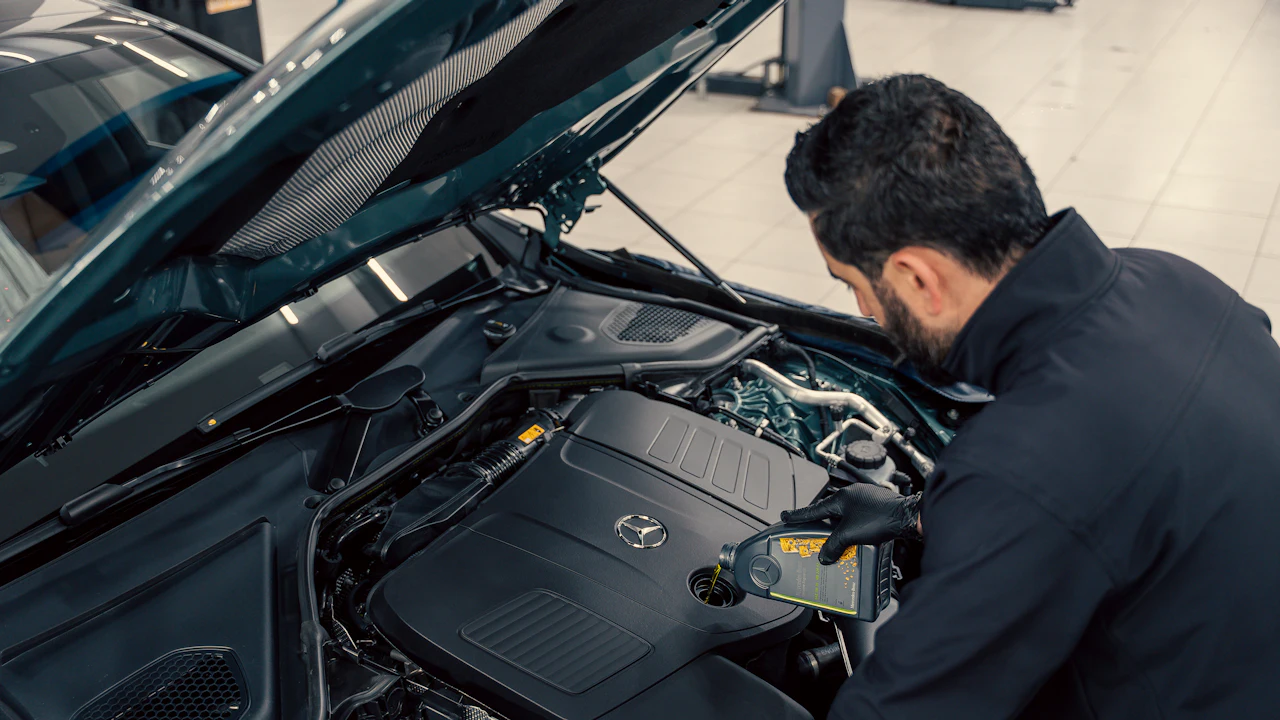
On a mainstream used car, an independent inspection is strongly advisable. On a used luxury car it is the difference between a good purchase and a financial event, and it needs to be done by someone who knows the marque.
- Use a specialist, not a general garage. Marque-specific shops know the known failure points for that model and year, and they have the diagnostic equipment to read every module rather than just the engine.
- Insist on a full module scan, and read the fault history — not just current codes but stored and intermittent ones. This is where an expensive electrical problem announces itself early.
- Test every single feature. Every seat motor, every window, the sunroof through a full cycle, the air suspension through all its heights, the climate control on both sides, every camera and sensor. A dead feature is a bill.
- Check the air suspension properly if fitted. Leave the car parked overnight if you possibly can and see whether it has settled by morning.
- Look at the service history against the schedule, not just for volume. A luxury car serviced at a general garage on a mainstream interval has not been maintained to specification.
- Ask what the next scheduled service is and what it costs before you agree a price. On some of these cars the answer materially changes the deal.
- Verify the whole history independently. A VIN history report gives you ownership count, reported odometer readings and accident records before you spend money on an inspection, which means you only pay for inspections on cars worth inspecting.
Certified pre-owned, extended warranties and what they actually cover
Manufacturer certified pre-owned programmes are the most defensible way to buy in this segment, because the warranty is backed by the manufacturer and honoured at any franchised dealer. Read the specific programme’s terms rather than the brochure: check the duration, whether it runs from the original in-service date or the resale date, the deductible per visit, and — most importantly — the exclusion list.
Third-party extended warranties are a different product entirely. They are insurance policies sold by companies with an interest in denying claims, and the exclusions are where the business model lives. Before buying one, read what is excluded, find out whether the administrator pays the repairing garage directly or reimburses you afterwards, check whether you can use your own specialist, and look the company up in the CFPB consumer complaint database. If the exclusion list covers the systems that actually fail on the car — electrical modules, air suspension, infotainment — the policy is protecting the seller’s margin rather than your wallet.
Who this purchase actually suits
A used luxury car is a good decision for a specific kind of buyer and a poor one for everybody else.
It works if you have a maintenance reserve separate from the purchase budget, there is a competent independent specialist near you, you drive few enough miles that the fuel figures above do not dominate, you chose the model on its record rather than its badge, and you had it inspected by someone who knows it.
One practical filter before you view anything: check the individual car’s recorded past against the model’s known weak points. A used car report by VIN will tell you how many owners it has had, what odometer readings were reported and when, and whether an accident or a title brand is on record — which is exactly the information that decides whether a car in this segment is worth the price of a specialist inspection.
It does not work if the purchase price consumed everything you had, the nearest dealer is the only option for service, you cover high annual mileage, or the appeal is primarily what the car says about you. On that last point, the arithmetic is brutal: the same money spent on a well-kept mainstream car leaves a substantial reserve, and the reserve is what turns car ownership from stressful into boring.
Whichever way you go, the process of verifying the individual car is identical — VIN verification, recall lookup, title brands, odometer history, then an inspection. That sequence is set out in full in our guide to checking a used car’s history before buying, and what it costs to keep once it is yours is covered in our maintenance guide.
Frequently asked questions
Is buying a used luxury car a mistake?
Not inherently, but it is a different purchase from a mainstream car and needs a different budget. Depreciation cuts the purchase price and leaves parts prices, labour rates and fuel consumption untouched. The 2016 Range Rover Sport with the supercharged V8 is EPA-rated at 16 combined MPG and $4,750 a year in fuel against $1,800 for a 2018 Camry. Budget for the ownership, not just the acquisition.
Which used luxury models carry the most recalls?
Among the ten we pulled, the 2016 Mercedes-Benz C300 has the most with 13 campaigns, concentrated in steering, electrical and structure. The 2016 Range Rover Sport is next with 11, five of which concern latches, locks and linkages and three seat belts. At the other end, the 2016 Range Rover Evoque has a single campaign, against a front lower control arm. Recall counts reflect volume and filing behaviour as well as underlying quality.
Why do some luxury cars have no crash test ratings?
NHTSA’s New Car Assessment Program does not test every model, and low-volume vehicles frequently go untested. Neither the 2016 Porsche Macan S nor the 2015 Maserati Ghibli carries an NCAP rating. An untested car is not an unsafe car, but it does mean one of your normal reference points is missing and you should weight the recall and complaint records more heavily.
What actually breaks on used German luxury cars?
The complaint records point at electrical systems first. On the 2015 BMW 328i, electrical system is the largest category at 56 of 124 reports, with engine and engine cooling second at 42. On the 2016 BMW X5, electrical system leads at 23 of 71. Modules, sensors, wiring and connectors age, and diagnosing them absorbs expensive labour before a part is even fitted.
Should I buy certified pre-owned or a third-party warranty?
Manufacturer certified pre-owned is generally worth the premium in this segment, because the coverage is backed by the manufacturer and honoured at any franchised dealer. Third-party warranties vary enormously and their value is decided by the exclusion list. Read what is excluded, check whether the administrator pays the garage directly, and look the company up in the CFPB complaint database before signing.
How much should I set aside for maintenance?
Enough that a single unscheduled repair does not become a crisis. The specific figure depends on the model, its complexity and whether you have access to an independent specialist, but the principle holds regardless: if the purchase price used all of your money, you have bought a car you cannot afford to own. Find out the cost of the next scheduled service before you agree a price, since on several of these models that alone will inform the decision.
Does a used luxury car need premium fuel?
Every one of the models in this comparison that the EPA rated is listed as taking premium. That is a permanent per-mile surcharge on top of fuel economy that is generally worse than a mainstream saloon’s. It is one of the few ownership costs you can calculate exactly before you buy, so calculate it.
For sale near you
Dealer listings, checked liveFinding used cars near you…
Sources and further reading
- EPA fueleconomy.gov
- NHTSA recall lookup
- NHTSA Office of Defects Investigation complaint database
- NHTSA safety ratings
- CFPB consumer complaint database
Recall, complaint and safety-rating figures on this page were retrieved from the federal databases above on August 19, 2026. Federal data changes — re-check any VIN before you rely on it.
Published August 14, 2026 · last updated August 19, 2026. Found something out of date or wrong? Tell us and we will correct it.