Tire Rotation Cost, and What Skipping It Actually Costs
Rotation history is legible in the tread. A sharp front-to-rear difference tells you it was never done — and that you are buying tyres sooner than the fronts suggest.
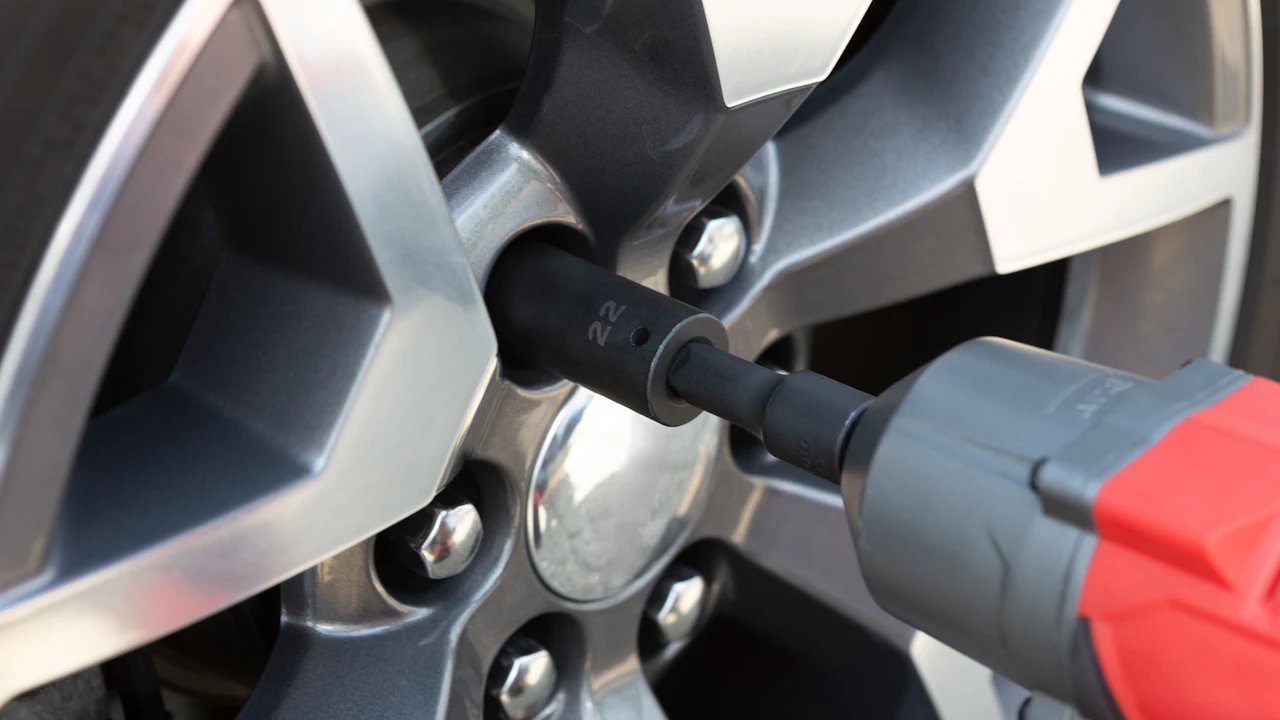
The short version
- Rotation is the cheapest item on any service schedule, and a great deal of the time it costs nothing at all — bundled into an oil change, or included for the life of the tyres by whoever sold them. That is precisely why it gets skipped. Nobody chases a free appointment.
- The four corners of a car do not do the same work. On most cars the front wheels steer, drive and take the larger share of the braking, so the front tyres are consumed faster than the rears. Rotation does not slow that down. It spreads it.
- The payoff is arithmetic rather than safety. Four tyres that arrive at the end together are bought once. Four tyres left where they were wear out in two instalments, and the pair still carrying tread when the other pair dies is money left on the car that you never get back.
- What rotation a car can actually have is decided by what is fitted to it. Directional tread and staggered wheel sizes each remove options, and a car with both has almost none — a restriction that lands hardest on exactly the performance and luxury cars that end up on the used market.
- Rotation history is legible in the tyres themselves. Read the tread at all four corners and a car that was never rotated says so out loud: fronts well down, rears barely touched. That is a statement about the owner as much as about the rubber, and it means two tyres are due sooner than the front tread on its own suggests.
- Neither federal archive this site keeps has anything to say on the subject. Tyres appear in the recall pull as one family among twenty-four, carrying a single campaign out of 145, and the complaint archive has no tyre category at all. Routine wear is not a safety defect, so nobody collects it.
Every service schedule has one item that nobody argues about, nobody researches, and nobody gets round to. Rotating the tyres is that item. It has no dramatic failure mode, it produces no noise when it is neglected, and the shop performing it will very often not charge for it. A job with no price attached and no visible consequence is a job that quietly falls off the list, and on a used car you can usually tell within about two minutes whether it fell off this one.
The reason it matters is that the four corners of a car are not doing the same job as each other, so they do not wear at the same rate. Left alone, one pair of tyres reaches the end of its life while the other pair still has years in it, and the owner buys tyres twice instead of once. Moving the wheels around on a schedule is how you stop that happening. What the car will actually permit, though, is not a free choice: the tread pattern moulded into the tyre and the sizes fitted at each end decide which moves are available, and on some cars they rule out every move there is.
Read that figure as a set of permissions rather than a set of instructions. The point it makes is that rotation is one word covering several different operations, that the operation available to a given car is determined by hardware rather than preference, and that a fair number of cars are excluded from most of them. What follows is why each of those restrictions exists, what it does to the bill, and — the part only a used-car page has any reason to write — how to read the result off a car you are thinking of buying.
Why the four corners wear at different rates
A tyre is consumed by the work it does, and the work is not shared out equally.
Start with steering. On almost every car on the road, only the front wheels turn. Turning is not a gentle process from the tyre’s point of view: the contact patch is asked to point one way while the car is still travelling another, and the difference is resolved by rubber being scrubbed off. Every junction, every roundabout, every parking manoeuvre and every lane change takes a little more from the front tyres than from the rear ones, and none of it touches the back of the car at all.
Then braking. When a car slows, weight transfers forward onto the front axle, which is why the front brakes on essentially every modern car are larger than the rear ones and do the large majority of the stopping. That force reaches the road through the front contact patches. The rear tyres contribute, but far less, and the harder the stop the more lopsided the split becomes.
Then drive. On a front-wheel-drive car — which describes the majority of what is parked on any American street — the front tyres also have to put the engine’s torque into the road. So one axle is steering, braking and driving, and the other is mostly just rolling along behind carrying its share of the weight. On a rear-drive car the split is less brutal, because drive has moved to the back, but steering and the bulk of the braking are still at the front and the fronts still lose. On four-wheel drive it evens out further without ever becoming equal.
There is a static component underneath all of that. On the majority of cars the engine and gearbox sit over the front axle, so the fronts are carrying more of the car before it has moved at all. More load through a contact patch means more heat, more deflection and more wear per mile.
Add those together and the outcome is unsurprising: on a typical front-drive car the front tyres can be finished while the rears still look close to new. The exact ratio depends on the car, the driver and the roads, which is why nobody can honestly print one. What is not in dispute is the direction. Left alone, the fronts go first, and they go first by a wide margin.
The rate is only half of it. The two axles also wear in different shapes. A front tyre is worked hardest at its shoulders, because that is where the load goes when the wheel is turned. A rear tyre, doing less of everything, tends to wear more evenly and more slowly — which sounds like good news and is not entirely, because a tyre that wears slowly enough can reach the end of its useful life for a completely different reason. Rubber ages whether or not the car is driven, and a rear tyre left in place for the whole of a car’s second-hand life can end up with plenty of tread and no business being on the road. That clock, and how to read it off the sidewall, is the subject of our guide to how long tyres last, and it is worth having in mind before you congratulate a car on its healthy-looking rears.
What rotation actually buys
It is worth being precise about this, because the usual claim — that rotation makes tyres last longer — is true only in a specific and slightly slippery sense.
Rotation does not reduce the total amount of rubber a car consumes. The steering, the braking and the driving all still happen, and they still take the same toll. What changes is where the toll is taken from. Instead of one pair absorbing nearly all of it, the wear is redistributed across four tyres, so no single pair reaches the end early.
Three consequences follow from that, and only the first is the one people talk about.
You buy once instead of twice. On a car that is never rotated, the fronts wear out, get replaced, and then wear out again while the original rears are still going. Over the life of a set you make more trips to the fitter, you buy in pairs rather than as a set, and you lose whatever efficiency comes with doing it all at once. That is a modest saving, and on its own it would not justify a page.
You stop running a car with mismatched grip. This is the part that gets left out. A car with two nearly-new tyres and two nearly-finished ones does not behave like a car with four of anything. Shallow tread moves less water, so the worn pair reaches the point of losing grip in the wet before the fresh pair does — and which axle gives up first changes how the car behaves when it does. Whether the worn pair is at the front or the back, you are driving something with a deliberate imbalance built into it, and you did not choose which one. Rotation keeps the four corners within sight of each other, which keeps the car’s behaviour close to what it was designed to have.
You stop tyres ageing out with tread on them. A rear pair that outlives two sets of fronts has been on the car for a long time. The tread survives; the compound does not necessarily. Ending up with four tyres of roughly the same age as well as roughly the same depth is a side effect of rotating, and it is the one nobody mentions.
There is a fourth benefit that has nothing to do with tyres. Rotating means all four wheels come off, which puts a technician within arm’s reach of the brakes, the hubs, the bushes and the underside a few times a year. On a used car of unknown history, that recurring look at the parts nobody can see is arguably worth more than the tyre wear it was booked for. The wider case for attaching small jobs to a schedule is made in our guide to the maintenance habits worth keeping on a used car, which puts rotation and oil on the same cycle for the same reason.
What the car will let you do
The figure above sets out which patterns each kind of fitment permits. This section is about why the restrictions exist, because the reasons are what tell you whether you are looking at neglect or at a car doing exactly what it was designed to do.
Directional tyres
Some tyres are built to turn one way only. The tread is laid out as a series of angled channels that sweep water outwards as the tyre rolls forward, which works well in the direction intended and works against itself in reverse. Manufacturers mark these with an arrow moulded into the sidewall, and the arrow is not advisory.
The practical effect on rotation is a hard constraint. A wheel moved from the left side of the car to the right will be turning the opposite way once it is fitted, so a directional tyre cannot cross the car. It can move forwards and backwards on its own side, and that is the whole of what is available. Front to back on each side still evens out the axle difference, which is the largest part of the problem, so this is a real restriction rather than a fatal one.
The way round it is to have the tyres taken off the wheels and refitted the other way about, which is a proper job with machine time and rebalancing attached. That converts a free service into a paid one, and it is rarely worth doing for its own sake.
Asymmetric tyres, which are a different thing entirely
These get confused with directional tyres constantly, and the confusion costs people rotation options they actually have.
An asymmetric tyre has a different tread design on its inner and outer halves — typically a stiffer, more continuous outboard shoulder for cornering and a more open inboard pattern for water clearance. It is marked “outside” and “inside” on the sidewalls, and those markings refer to which face must point away from the car. They say nothing about direction of travel.
So an asymmetric tyre can cross the car freely. Move the wheel from left to right and the outboard face is still outboard; nothing about the fitting is wrong. If the sidewall carries an inside and outside marking but no arrow, the full range of patterns is open to that car. If it carries an arrow as well — and tyres exist that are both — the arrow wins, and you are back to front-and-back on the same side.
Staggered fitments
This is the constraint that gets explained least often and matters most on the cars people are nervous about buying used.
A staggered fitment means the rear wheels and tyres are a different size from the fronts — usually wider, sometimes a larger diameter as well. It is standard on a great many rear-drive performance saloons, on sports cars, and on the sportier versions of luxury models, because putting more rubber under the driven axle improves traction and putting less under the steered axle sharpens the response.
What it does to rotation is simple and absolute: you cannot move a tyre between axles if it will not fit on the other axle. Front-to-back movement is off the table. What remains is side-to-side, and only if the tyres are non-directional. A staggered car wearing directional tyres — a common combination on exactly this kind of vehicle — has no rotation available to it at all short of dismounting and remounting every tyre. Plenty of manufacturers acknowledge this by simply stating in the handbook that the tyres are not to be rotated.
The buying consequence of a staggered fitment
On a car with different sizes front and rear, a large difference in tread depth between the axles is not evidence of anything. It is the designed outcome. Treating it as neglect is a mistake, and so is the reverse: these cars genuinely do consume tyres an axle at a time, they cannot be balanced out by rotating, and a buyer should price that in as a running characteristic rather than a fault. Check the sizes on the sidewalls before you read anything into the depths.
The spare, and why only one kind can join in
A full-size spare that matches the four road tyres in size, type and construction can be brought into the rotation. Doing so puts five tyres into a four-corner cycle, which stretches the mileage covered by the set and, more usefully on a used car, means the spare is never the decade-old unknown sitting under the boot floor that spares usually are.
A temporary spare cannot join in, and the reason is not caution. A space-saver is a narrower tyre on a smaller rim, often built to a different construction, and it is speed-restricted and distance-restricted by the manufacturer because it is designed to get a car to a tyre shop rather than to carry it. Fitting one into a rotation pattern would put a limp-home component into continuous service, and on a car with a limited-slip differential or all-wheel drive a mismatched rolling diameter is a drivetrain problem in its own right. If the spare in the boot is smaller than the wheels on the car, it is out of the cycle and stays out.
Why there is no figure on this page
This site does not print prices, for the standing reason that a published figure keeps looking authoritative long after it has stopped being accurate. On this particular subject there is a sharper reason on top of that one.
Rotation is frequently free. It is bundled into an oil change as a matter of routine at a great many shops. It is included for the life of the tyres by most outfits that sell you a set, because the rotation appointment brings you back through the door; Costco, for one, lists rotation among the lifetime services on tires bought there, and our Costco tires page reads its terms. It sits inside prepaid maintenance plans sold with new cars, which means a used car may still be carrying one. And where it is charged for, it is charged as one of the smallest lines on any workshop menu.
Publish a number against that and you have described the job wrongly in a specific direction. You have turned something that is very often included into something that looks like a purchase, and on the one maintenance item where the honest answer is simply to have it done, that is exactly the wrong nudge. The reader who takes a figure away from this page and decides it is not worth it has been misled by the presence of the figure, not by its accuracy.
What is worth knowing is what moves the number on the occasions when there is one:
| Input | Why it moves the number | Settle it in advance? |
|---|---|---|
| Whether it is bundled | Attached to an oil change, or included with the tyres you bought, it is frequently included at no separate charge | Yes — ask when booking, and ask what the tyre retailer included when the set was sold |
| Whether balancing is part of it | Rebalancing all four wheels is a separate operation with its own machine time, and some shops fold it in while others price it apart | Yes — ask which of the two you are being quoted for |
| Whether the tyres must be dismounted | Directional tyres on a staggered car cannot be moved at all without taking every tyre off its rim and refitting it the other way round | Yes — read the sidewalls for an arrow and compare the front and rear sizes |
| Whether the pressure sensors need a relearn | Some vehicles work out the new positions on their own; others need a tool or a specific procedure before the system knows which corner is which | Yes — the handbook says, and the shop should know |
| Wheels seized to the hubs | A wheel that has not been off the car in years can corrode onto the hub face hard enough to need real persuasion, and that is time | Partly — where the car has lived, and how long since anyone took a wheel off, are fair questions |
| Locking wheel bolts | No key, a rounded key or a rusted socket turns a five-minute corner into an extraction job | Yes — ask to see the key, and on a used car ask before you buy it |
The fifth row deserves a second look, because it is a cost that exists only as a result of the thing not being done. A car whose wheels have been off several times a year does not seize its wheels to its hubs. A car whose wheels have not moved since the tyres were fitted might. Neglecting rotation makes the eventual rotation harder, which is a small, tidy example of how the cheap jobs get expensive by being left.
And keep the ledger the right way up. The cost of rotation is a rounding error against the cost of not rotating, which arrives as a pair of tyres bought earlier than they needed to be, repeatedly, for as long as the car is owned.
The interval, and why it is bolted to the oil change
This site publishes its own service timeline, and it puts tyre rotation at 5,000 to 7,500 miles with a one-line note attached: pair it with the oil change. Directly above it on the same table, engine oil and filter sits at 5,000 to 7,500 miles. The two share a band, and the note exists because of that overlap rather than in spite of it.
The pairing works because of an asymmetry between the two jobs. Oil has a genuine reason to be on a schedule — it degrades, it accumulates contamination, and being significantly late has consequences inside the engine. Rotation has no such threshold. It is a smoothing operation, and being a thousand miles early or a thousand miles late changes essentially nothing about the outcome. So you take the requirement with no natural deadline and attach it to the requirement that has one, and the loose job inherits the discipline of the strict job. That is the entire logic of the note, and it is why the interval you will see quoted for rotation almost everywhere happens to be an oil-change interval.
The authority for a specific car is its handbook, which may specify a particular pattern, may specify a different interval, and on a staggered fitment may state that rotation is not to be performed at all. Where the handbook and the general figure disagree, the handbook is describing your car and the general figure is describing cars in the aggregate.
Now the part that makes this page a used-car page rather than a maintenance page. Of every item on that schedule, rotation is the only one whose compliance you can verify by looking at the vehicle. You cannot look at a car and see whether the oil was changed on time. You cannot look at it and see whether the brake fluid was ever renewed, or whether the transmission fluid is original. All of those live in paperwork that may or may not exist. Rotation is different, because the evidence is not in a folder. It is bolted to the outside of the car at all four corners, and nobody can take it away except by buying new tyres.
Rotation, balancing and alignment are three different jobs
These get run together constantly, and the confusion is understandable: they are sold at the same counter, often performed during the same visit, and all three involve wheels. They solve unrelated problems.
| Job | What it changes | What it is for |
|---|---|---|
| Rotation | Which corner of the car each wheel and tyre occupies | Evening out the rate at which the four tyres are consumed, so they finish together |
| Balancing | The distribution of mass around a wheel and tyre spinning on its axis | Removing a vibration that appears at speed, by adding small weights to the rim |
| Alignment | How the wheels are angled against the road and the body | Making the wheels point where the car is going, so the tyres are not scrubbed sideways |
Two overlaps are worth knowing about, because they produce genuine misunderstandings at the counter.
The first is that a rotation can appear to cause a vibration. Moving a wheel does not unbalance it, but an imbalance that was already there is much more noticeable at the front of a car than at the back, because the front wheels are connected to the steering wheel you are holding. Move a slightly out-of-balance rear wheel to the front and a fault that was inaudible for a year arrives, apparently, on the day of the service. It was already yours. This is why many shops balance as part of the rotation rather than treating it as an upsell, and why accepting the balance is usually the right call even though nothing about moving a wheel requires it.
The second overlap runs the other way, and it is more important. Rotation cannot correct an angle, and an alignment cannot even out tread that has already gone. If tyres are wearing unevenly across their width rather than simply wearing faster at one end of the car, that is geometry, not rotation, and rotating without dealing with it means handing the fault four tyres to work on instead of two. Which pattern points at which cause — and which ones point at a worn part rather than a setting — is worked through in our guide to wheel alignment and what tyre wear tells you, and this page will not attempt a second version of it.
What rotation cannot undo
Rubber that has been worn away does not come back, and this is the limit that catches people who leave rotation until the wear has already declared itself.
A tyre that has spent thirty thousand miles as a front tyre on a front-drive car has a shape. Moving it to the rear changes the loads it sees; it does not restore the tread it lost or reverse the profile it has taken on. In some cases the move makes things audibly worse, because an irregularly worn tyre that was masked by the noise and vibration of a driven, steered axle becomes perfectly obvious once it is rolling quietly at the back. Nothing has broken. You have simply moved a worn tyre somewhere you can hear it.
The larger limitation is a matter of what moves and what does not. Rotation moves the tyre. The corner stays where it is. If a particular corner of the car has a worn joint, a soft bush, a failing wheel bearing or a damper that has stopped controlling the wheel properly, then the next tyre to arrive at that corner receives the same treatment as the last one. The fault is a property of the car, not of the rubber, and no amount of moving wheels around addresses it. Scalloped, uneven wear from a damper that has given up belongs to our page on worn shocks and struts rather than to this one, and it is one of the clearest cases of a pattern that rotation will spread rather than solve.
Rotation performed instead of a diagnosis destroys the evidence
This is the uncomfortable corollary of everything above. A car with a geometry or suspension fault that is also being rotated conscientiously is harder to read than a neglected one, because the damage that would have concentrated on two tyres has been distributed across four. Nothing improper has happened — the owner did the job on the schedule — but the single clearest signal a buyer could have had is now spread thin. Where a car has been well looked after and the tyres still look wrong, the fault is worth taking more seriously rather than less, because it has been working against a maintenance routine and is still visible.
What the federal archives say, which is almost nothing
Two archived federal pulls sit behind the data on this site, and the honest report on this subject is that both are silent. It is worth saying that plainly rather than reaching for a number that looks relevant.
Recalls
Tyres do appear in that archive as a component family. They carry a single campaign — the smallest entry it is possible to have — out of 145 campaigns spread across twenty-four families. That is not a finding about how reliable tyres are. It is a statement about what a recall is: an action taken against a defect built into a specific production range by a manufacturer. No regulator has ever issued a campaign because an owner failed to move the wheels around, and none ever will, because that is not the kind of thing the machinery was built to catch.
The suspension entry in the same archive is more useful here, for an oblique reason. Four campaigns sit under it, filed by three manufacturers with nothing in common, and the component paths NHTSA attached to them name a front lower control arm, an upper ball joint on a front control arm, and a front wheel bearing. Set that list beside the previous section and the point lands on its own. Every one of those parts belongs to a corner of the car and stays there. The wheel travels; the hardware holding it does not. Whatever a corner does to a tyre, it will do to the next tyre that arrives.
Owner complaints
That archive sorts its usable odometer readings into fifteen component categories, and not one of them is tyres. There is no median to quote, no ranking to place tyres within, and no honest way to press the file into service on this page. The absence is not an oversight worth interpreting — it is what happens when a database collects safety defects and the subject at hand is ordinary consumption. A tyre wearing out is not a defect. An owner whose front tyres went at half the mileage of the rears has not been harmed by anybody and has nothing to report.
Which leaves the position this page started from. No dataset is going to tell you whether the car in front of you was rotated. The car will.
Reading rotation history at a viewing
Here is the part that belongs to a used-car site and to nowhere else. Rotation is the rare maintenance item that leaves a physical record on the outside of the vehicle, free to read, impossible for a seller to talk you out of, and almost never examined.
The method takes about four minutes and needs nothing more than a tread depth gauge, which is a small and inexpensive thing worth keeping in a coat pocket if you look at cars regularly. Do it before the test drive, while the car is cold and nobody is hurrying you.
You are not trying to establish how much tread is left. That is a separate question with its own answer, and the moulded indicator bars settle it without any tools at all. What you are measuring here is the difference between the corners, so the absolute numbers barely matter. Take a reading at each of the four wheels, in the same place on each tyre so you are comparing like with like, and write the four figures down. Then compare front against rear.
| What you find | What it points at |
|---|---|
| All four within sight of each other, same sizes all round | The car has been rotated, or it is young enough that the axles have not yet diverged. Check the manufacture dates on the sidewalls to tell those two apart |
| Fronts clearly down on the rears, same sizes all round | Not rotated. On a front-drive car this is simply what happens when nobody does anything, and it is the most common finding of all |
| Rears down on the fronts on a rear-drive car | Possible without anything being wrong, particularly with a driver who enjoyed it. Interesting rather than damning, and worth a look at the rear tyres for signs of being worked hard |
| Different sizes front and rear | A staggered fitment. The comparison does not apply, the handbook may forbid rotation outright, and the depths tell you nothing about the owner |
| Two tyres on one axle much newer than the other two | A pair was replaced. Ordinary in itself, but it resets the comparison on that axle, so read the dates before reading the depths |
| One corner well out of step with its partner across the same axle | Not a rotation question at all. A single corner behaving differently from the other three is a geometry or suspension finding |
The second row is the one this page exists for, and it carries two separate implications that are worth keeping apart.
The first is financial and immediate. A car with worn fronts and healthy rears is a car that needs two tyres sooner than the average of the four suggests, and then two more later, and it will stay out of step for as long as it is owned unless somebody deliberately buys four at once to bring it back into line. If you price the car on the basis that its tyres look reasonable overall, you have priced it wrong. The fronts are the ones that decide when you next spend money.
The second implication is wider and, honestly, more valuable. Rotation is the cheapest, easiest and most frequently free item on the entire schedule. If it was skipped, the question that follows is what else was, because the items that cost real money and produce no visible symptom — the fluid changes, the filters, the things with intervals measured in years — are considerably easier to skip than a free service attached to an oil change. A neglected rotation is not proof of anything on its own. It is a reasonable prompt to be more sceptical about the maintenance claims that cannot be checked by looking.
Ask for the folder as well
The documentary version of this evidence is unusually easy to find, because rotation appears on invoices even when it costs nothing — typically as a line item with a zero against it. A stack of oil-change invoices with rotation printed on each one is a record of the habit, and it is the kind of detail sellers rarely think to point out because it never cost them anything.
There is a second reason those receipts exist and it is worth knowing. Treadwear warranties on tyres are commonly conditional on the tyres having been rotated at the specified interval, with documentation to prove it. An owner who kept the paperwork may well have kept it for that reason, which means the folder is worth asking about even on a car whose tyres are past the point where a warranty claim would be worth making. What you are really buying is the evidence of the routine.
Four new tyres, and the record that goes with them
A car being sold on four brand-new tyres is not a car with a problem, and the seller who fitted them has almost certainly done a straightforward and generous thing. What it is, from the point of view of everything above, is a reset.
The front-to-rear comparison is the only place rotation history is written, and four new tyres set all four readings back to the same value. That is a different situation from most other missing evidence on a used car, because there is no second copy anywhere. A geometry fault at least leaves a kerbed rim or a worn joint that an inspector can find on a lift. A habit of never rotating leaves nothing at all once the tread is gone — no residue, no component to examine, no symptom to demonstrate. It is the one piece of free evidence that a tyre change erases completely.
So the questions change shape. Ask what the old tyres looked like and whether they went at the same time or whether two were newer than the others. Ask whether the tyres were bought as a set from one place, which is a different answer from four bought over two years. Ask whether the fitter did anything else at the same time. And accept that on this specific question you will be relying on what you are told rather than what you can see, which is exactly the situation the rest of a used-car assessment is designed for. The mechanical picture has a gap in it, so the documentary picture has to carry more: it is worth a couple of minutes to see what the reported history says about the car before the tyres become the thing you are arguing about, because title branding and reported damage are questions no amount of crouching beside a wheel will ever answer.
Where the tread has genuinely told you something — a corner out of step, or wear that is uneven across a tyre rather than merely deeper at one end of the car — hand that specific observation to whoever inspects the car, rather than a general request to look at the suspension. What a competent inspection reaches, and what is worth naming on the list, is set out in our guide to the used car pre-purchase inspection.
Once the car is yours
The whole subject collapses into one habit: attach it to the oil change and stop thinking about it. Every argument on this page fails at the same point, which is remembering to book a free appointment for a job with no symptoms.
Four small things are worth doing around it.
- Have the mileage written on the invoice, and keep the invoices together. That folder is what a future buyer will ask for, and it is what a treadwear warranty claim will require.
- Ask the shop to record the tread depths at each corner while the wheels are off. Some do it as a matter of course. A sequence of those readings across several services is the closest thing a set of tyres has to a service history, and it shows you the wear rate rather than the wear.
- Check whether the car needs its pressure monitoring system taught the new wheel positions. Some work it out on their own and some need a procedure, and a system that has not been told is a system that will name the wrong corner when it matters. What the light means, and what a steady lamp says that a flashing one does not, is covered in our guide to the tyre pressure warning light.
- Make sure the wheel fasteners were torqued to the figure in the handbook rather than run up with a rattle gun, and have them checked again after a short distance. This is the one genuine risk attached to an otherwise trivial job, and it is worth the thirty seconds.
And keep the whole subject in proportion. Rotation is a small, cheap, frequently free operation whose only real consequence is the timing of a purchase you were always going to make. It belongs to the category of used-car facts that are entirely knowable in advance, which is a small category and worth exploiting. The risks that are not knowable in advance are the ones that live in the vehicle’s record rather than on its tyres, and it costs very little to check what has been reported against a VIN before committing to anything. Read the tread first, though. It is free, it takes four minutes, and it is one of the few things on a used car that cannot be presented to you as anything other than what it is.
Common questions
How often should tyres be rotated?
The interval this site publishes is 5,000 to 7,500 miles, with a note to pair it with the oil change — which sits in the same 5,000 to 7,500 mile band on the same schedule. The pairing is the useful part. Rotation has no sharp deadline, so being somewhat early or late makes no practical difference, and attaching it to a job that does have a deadline is the most reliable way of making sure it happens at all. Your handbook is the authority for your specific car, and on some cars it specifies a particular pattern or rules rotation out entirely.
Does rotating tyres actually save money?
Yes, though not by making the rubber last longer in total. The same amount of wear happens either way; rotation changes where it is taken from, so that all four tyres reach the end at roughly the same point instead of one pair being finished while the other pair still has years in it. The saving comes from buying once rather than repeatedly, and from not carrying two nearly-new tyres on a car whose other two are about to be scrapped. There is a handling benefit alongside it, because a car with two worn tyres and two fresh ones has a grip imbalance built into it that the driver did not choose.
Can every car have its tyres rotated?
No, and this is the most under-explained part of the subject. Directional tyres, marked with an arrow on the sidewall, must keep turning the same way, so they can only move front to back on their own side of the car. A staggered fitment, where the rear wheels are a different size from the fronts, rules out front-to-back movement entirely. A car with both — a common specification on performance and luxury models — has no rotation available at all unless every tyre is taken off its rim and refitted the other way round. Asymmetric tyres, which are marked inside and outside, are frequently mistaken for directional ones and are not restricted in the same way: they can cross the car freely.
Is rotation the same thing as balancing or alignment?
They are three separate jobs sold at the same counter. Rotation changes which corner each wheel sits at. Balancing corrects how mass is distributed around a wheel spinning at speed, and is what cures a vibration. Alignment sets the angles at which the wheels point, and is what stops tyres being scrubbed sideways as the car travels. One thing worth knowing: a rotation can appear to cause a vibration, because an imbalance that was tolerable at the back of the car becomes obvious once that wheel is at the front, connected to the steering wheel you are holding. The fault was already there.
A used car has much more tread at the back than the front. Does that matter?
It matters twice. Directly, it means you will be buying two tyres sooner than the overall look of the four suggests, and the car will stay out of step afterwards unless you deliberately replace all four at once. Indirectly, it says the cheapest and most frequently free item on the service schedule was skipped, which is a fair prompt to ask harder questions about the maintenance that cannot be verified by looking. Check the sizes first, though: on a car with a staggered fitment the difference is designed in and means nothing at all.
Is there any point rotating tyres that are already worn unevenly?
Not as a repair. Rubber that has gone does not return, and a tyre that has taken on an irregular shape keeps that shape wherever it is fitted — occasionally becoming noisier at the back than it ever was at the front. More importantly, rotation moves the tyre and not the fault: if a particular corner is chewing tyres because of a worn joint, a soft bush or a tired damper, the next tyre to arrive there is treated exactly the same way. Where uneven wear is already visible, the diagnosis comes first and the rotation comes afterwards.
Why will this page not quote a price?
Partly for the usual reason, that a printed figure decays without looking any different. Mostly because on this job the honest answer is frequently nothing at all: rotation is routinely bundled into an oil change, included for the life of the tyres by whoever sold them, or covered by a prepaid maintenance plan. Printing a number would make an included service look like a purchase, and that is the wrong impression to leave on the one item where the sensible course is simply to have it done. Where a charge does apply, what moves it is whether balancing is included, whether the tyres have to be dismounted, whether the pressure sensors need a relearn, and whether anything has seized.
Sources and further reading
- NHTSA TireWise
- 49 CFR Part 574 — Tire Identification and Recordkeeping
- NHTSA recall lookup
- FTC used car buying guide
Recall, complaint and safety-rating figures on this page were retrieved from the federal databases above on August 19, 2026. Federal data changes — re-check any VIN before you rely on it.
Published August 29, 2026 · last updated August 29, 2026. Found something out of date or wrong? Tell us and we will correct it.