The NMVTIS Report: What the Federal Record Settles, and What It Cannot
Deliberately narrow, and that narrowness is the point. It was built to catch fraud, not to describe a car — which decides exactly who should buy one.
The short version
- NMVTIS is a federal system overseen by the Department of Justice, not a product the Department sells. The consumer report is a narrow window cut into a title-verification machine built for state agencies and police, and only approved providers can sell you a look through it.
- Its authority comes from a legal duty rather than a commercial relationship. The businesses that break cars up, the carriers that write them off and the agencies that title them all owe the system a filing under federal law. No private compiler can manufacture an obligation.
- That duty is what beats title washing. A brand applied by one state stays fastened to the VIN when the car is retitled in the next one, and defeating that trick is the single thing this record does that nothing else can.
- The narrowness is deliberate, not a shortfall. If an event never generated a titling record or an insurer’s total-loss determination, the federal system never learns of it — and that covers a great deal of what worries a buyer.
- Two limits nobody advertises: the insurance reporting duty reaches only the current model year and the four before it, and the salvage and junk obligation only runs from 2009 onward.
- Decisive on a newish car whose title has crossed a state line, or one priced oddly low with a story attached. Close to pointless on an old, cheap, locally titled runabout, where the same money does more good on a lift.
Somebody tells you there is a government version. You have been quoted a price for a commercial report, you suspect a good part of it is the brand name, and then a forum post or a state DMV page mentions that the federal government maintains a vehicle history system of its own. The reasonable inference is that this must be the real one — the unabridged file the private companies are selling you an edited copy of, probably cheaper and possibly free. That inference is wrong in an interesting way. The federal record is not a fuller version of a commercial report. It is a much smaller thing, built for a different purpose, and its value lies precisely in how little it tries to do.
The National Motor Vehicle Title Information System covers a handful of indicators and refuses almost everything else, and the refusal is the design rather than a budget failure. That refusal is also the source of its one irreplaceable strength: because the states and the salvage industry are legally compelled to feed it, it catches a specific fraud that no amount of commercial data-gathering can catch. The figure below sets the small territory it claims against the much larger territory it declines, and the rest of this guide is an argument about why the border runs where it does.
What NMVTIS actually is, and what it is not
Start with the category error, because almost every misunderstanding downstream comes from it. People imagine a federal Carfax: a government agency holding a big file on every car, selling access to it. Neither half of that picture is right.
NMVTIS is a title-verification system. Its primary job is not to tell you anything. Its primary job is to let one state’s motor vehicle agency ask another state’s records a question before it prints a new title, and to let police trace vehicles and parts through the salvage economy. The Department of Justice oversees it, the Bureau of Justice Assistance administers the programme, and the day-to-day operation has sat with the American Association of Motor Vehicle Administrators since 1992. The consumer report is a secondary product — a small, standardised extract that approved businesses are permitted to sell out of a system that exists for other users.
The Department states the system’s aims plainly enough. It exists to stop stolen vehicles entering and re-entering interstate commerce, to shield states and buyers from fraud, to cut the use of stolen vehicles in criminal enterprise, and to protect consumers from unsafe vehicles. Read that list and notice what is absent from it. Nothing in there is about helping you evaluate a car. Every clause is about crime, and the consumer benefit arrives as a consequence of the anti-crime purpose rather than as the purpose itself.
Why the Department cannot sell you one
This surprises people who have found the government pages and gone looking for a checkout button. There is none, and the reason is written into the founding statute. The Anti-Car Theft Act requires the system to fund itself through user fees rather than lean on federal appropriations, which is why it was built from the beginning as fee-for-service and why the transaction has been pushed out to private businesses that the Department approves and lists. You buy the federal record from a company. The company is checked, named on a public register, and selling a standardised product — but it is a company, and it sets its own price.
What falls out of that, for a buyer, is that the phrase “free NMVTIS report” ought to raise an eyebrow rather than a cheer. The record has never been free, cannot be free under the law that created it, and any site offering the federal file at no charge is offering you something else with the federal name attached to it. The genuinely free federal tools for a car — the manufacturer’s build decode and the open safety recall lookup — sit at a different agency entirely and answer different questions.
The duty is the product
Here is the fact that explains why this record exists at all rather than being folded into somebody’s commercial database. The Department describes NMVTIS as the one system open to the public anywhere in the country that every insurer, every auto recycler and every junk or salvage operation is compelled by federal law to file into, and to do so at regular intervals. Not permitted to. Compelled to.
Sit with the difference between that and how every commercial vehicle history compiler works. A commercial compiler builds coverage by signing agreements. It approaches insurers, body shops, service chains, auction houses and state agencies, and it acquires whatever each will sell or share. The resulting file is genuinely valuable and often much thicker than the federal one, but every line in it exists because somebody chose to supply it, and anything a supplier declines to share, or has never been asked for, is simply absent. Coverage is a function of commercial reach and it changes when a contract lapses.
The federal file is assembled by obligation instead. A yard breaking cars for parts is not filing because it spotted an advantage in doing so. It files because a regulation says so, every month, with penalties waiting at the other end if it does not. That distinction sounds abstract until you consider what it means for the businesses least likely to volunteer information: the small yard at the end of an industrial road that has no interest in anybody knowing which cars passed through it. A compiler cannot buy that yard’s cooperation. A federal reporting rule does not need to.
What the obligation actually obliges
The reporting duty is more specific than most summaries of it suggest, and the specifics matter because they tell you what is genuinely in the file. A yard taking in junk or salvage vehicles has to file, every month, the identity and contact details of the reporting business, the VIN of each vehicle, the date it came into inventory, the name of the person or business it came from, and a statement of what happened to it. That last element is coded: the vehicle was scrapped, or crushed, or sold, or the outcome was not yet known when the report was filed — and if it was not known, a follow-up report is required once it is. There is also a field recording whether the vehicle is destined for export out of the country.
That is not a summary line saying a car was written off. It is an inventory entry with a date, a source and an eventual fate, filed by the business that physically had the car. When people ask what makes the federal salvage data different from a commercial damage flag, this is the answer: one is a record of a transaction that a regulated business had to disclose, the other is a report somebody chose to pass on.
The insurance side has its own precision, and one detail in it is worth knowing before you read any total-loss field anywhere. An insurer’s duty is triggered by the determination, not by the payment. If a carrier decides a vehicle is salvage or a total loss, that decision has to be reported whether or not a claim was ever paid out on it — which includes third-party claims, where the insurer paying is not the insurer of the car in question. A great deal of confusion about total-loss records comes from people assuming the trigger is money changing hands. It is not. It is the judgement call.
Why this is the one claim in the category you can take at face value. Every vehicle history provider on earth says it has comprehensive data, and none of them can prove it, because proving comprehensiveness means proving a negative about records you do not hold. The federal claim is different in kind and much smaller: not that the file is complete, but that a defined set of businesses had a legal duty to file into it. You can go and read the rule. That is a verifiable statement about a process rather than an unverifiable one about coverage.
Title washing, and the one trick only this record beats
If you take one working idea from this page, take this one, because it is the reason the federal record exists as a consumer product at all.
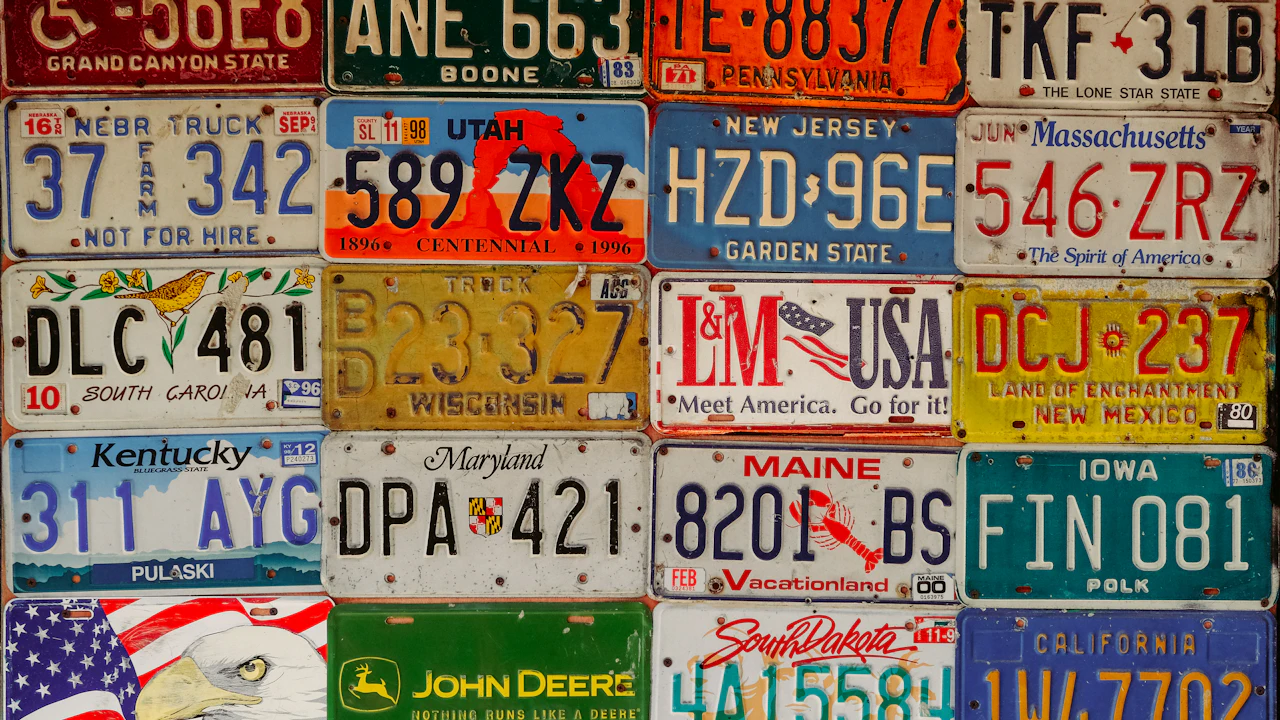
A vehicle brand is a permanent mark a state puts on a title: salvage, junk, flood, rebuilt, and a long list of state-specific variants beyond those. It is a warning that travels with the car and it hurts the car’s value badly, which creates an obvious incentive to remove it. The historic method for removing it was geographic. States define brands differently, apply them at different damage thresholds and use different words for the same idea, so a car branded in one state could be moved to another, retitled under a system that did not recognise the incoming brand or simply never saw it, and emerge holding a clean piece of paper. Do that once or twice and a written-off car acquires a spotless title in a state a thousand miles from the wreck. The trade name for it is title washing, and it worked because state title records did not talk to one another.
NMVTIS is, at its heart, the fix for exactly that. Brand history is held against the VIN federally rather than against the title in one state’s filing cabinet, so a brand applied anywhere stays visible everywhere. A fully participating state does not merely deposit its records into the system; it queries the system before it issues a new title, which means the wash is supposed to fail at the counter rather than being caught afterwards by a buyer. The federal brand history you can buy is a view onto that same consolidated record. What the states are checking, you can check.
No commercial provider can do this, and the obstacle is structural rather than any question of effort or budget. Beating title washing requires the participation of every state titling authority in the country, including the ones with no commercial interest in cooperating with a data vendor and no obligation to. A private compiler with agreements covering most states still has holes exactly where a washer would choose to go. The value of a national brand check collapses if it is national minus a few — because the few are where the car goes.
The honest qualification, which the marketing skips
It would be convenient to leave the argument there, and it would be slightly untrue. The Department’s own material is careful on this point and so should we be: all states are involved with NMVTIS, but at differing levels of participation. Some participate fully, meaning they both supply their data and make inquiries against the system before issuing new titles. Others supply data only, or are still building the capability to do more. The Department publishes a participation map and encourages people to ask states directly.
What that means for you, in practice. The consolidated brand history is strong and it is the best defence available to a private buyer, but it is not a sealed border. A state that supplies its records but does not query the system before printing a title can still hand out a clean-looking document to a car that is branded elsewhere — and the brand will show up in a federal report even though it did not show up on the paperwork in the seller’s hand. Which is, if you think about it, the whole argument for buying the report: the mismatch between a clean title in front of you and a brand in the federal record is the exact thing you are paying to discover.
That mismatch is also the reason to run the check even when a seller produces a title that looks immaculate. A washed title is, by construction, a document that looks fine. If a clean-looking title were sufficient evidence, the fraud would not work and the system would not have needed building. For the wider question of what each brand actually means once you find one, and how a salvage designation is arrived at in the first place, our guide to what a salvage title is and what it does to a car takes the brands one at a time.
Why the boundary sits exactly where it does
The clean contrast is the federal database built for people rather than vehicles: the National Driver Register, which shares this system’s pooled-pointer architecture and inverts every access rule — closed to the public, open about yourself. Reading the two side by side is the fastest way to see where records law draws its lines.
Now the other half of the asymmetry. The federal record is silent about service history, about the great majority of accidents, about how many people have owned the car, about where it has lived, and about open safety recalls. Buyers routinely read that silence as a gap somebody should get around to filling. It is not a gap. It is the edge of the system, and the edge follows a single rule that is worth stating as plainly as possible.
NMVTIS knows about titling events and mandated salvage reporting. It knows about nothing else. Everything the record holds is either something a state agency did to a title, or something a regulated business had to file. If an event in a car’s life did not cause a state to touch the title, and did not cross an insurer’s total-loss threshold or pass through a yard, it left no federal trace, because there was no mechanism by which it could have.
Run the common worries through that rule and the shape of the boundary stops being arbitrary.
- An accident that was repaired. Take a car struck hard enough that a wing came off, a rail had to be pulled straight and a quarter of the bodywork went back to bare metal. Put it back together and return it to the road, and it produces no titling event whatsoever. The title is unchanged, no state brands anything, and unless the insurer wrote the car off, no total-loss determination exists. That car is federally invisible and always will be. This is the largest single category of thing buyers want a report for, and the federal record cannot address it in principle.
- Repairs paid in cash. No insurer, no claim, no determination, nothing to report. Common on older cars and on damage the owner would rather not put on a policy.
- Service and maintenance. A dealer service department is not a titling agency and has no reporting duty. The Department says so outright when it separates its system from private vendors, naming what a car has had done to it, what campaigns are outstanding on it and how it has been looked after as the material those vendors usefully supply and NMVTIS never set out to hold.
- Ownership count. Title transfers do happen, but the consumer extract is not built to hand you a list of owners, and there is a privacy rule underneath that. No personally identifying information reaches individual consumers through NMVTIS. Limited identifying data exists inside the system for law enforcement, regulatory and investigative use, under federal driver privacy law. The report tells you about the vehicle, not about the people.
- Open safety recalls. A recall is a manufacturer filing to the highway safety regulator. It is not a title event, so it is outside the boundary — and it is also free from that regulator by VIN, which makes paying anyone for it a mistake rather than a purchase.
- Mechanical condition. Not a record of any kind. No database has driven the car.
There is a further constraint on scope that gets almost no attention, and it is financial rather than philosophical. Because the statute forbids the system from running on federal money, every field it carries has to be paid for by the fees charged on reports and inquiries. A system funded by user fees and required to stay affordable has a strong structural reason to stop at the indicators that justify its existence, and no mechanism at all for absorbing the cost of a nationwide service-record feed. The scope discipline is partly a policy choice about what a government record should be. It is also a budget.
So the correct way to hold the two products in your head is not better and worse. The federal record is authoritative and narrow. A commercial compilation is broad and unguaranteed. On brand history the commercial file is the weaker instrument no matter what it costs; on a repaired collision the federal file has nothing to say at any price. If you want the reasoning behind why a commercial compilation is right about some things and structurally blind about others, we set out the mechanism in how accurate a commercial report actually is, which is a different question from this one and deserves its own page.
Four edges of the federal record that the summaries leave out
Everything above is roughly what a careful reader would find on the government pages. The four points below are also on those pages, buried in material written for insurers and scrapyards rather than for buyers, and each one changes how much weight a specific car’s report deserves. None of them appears in any vendor’s description of the product.
The insurance duty only reaches recent model years
This is the big one and it is genuinely surprising. Junk and salvage yards must report every qualifying vehicle they take in, regardless of how old it is. Insurance carriers operate under a narrower rule: their monthly inventory duty covers vehicles of the current model year or any of the four model years before it. An insurer that writes off a car older than that window has no federal reporting obligation arising from the write-off itself.
Follow the consequence carefully, because it is easy to overstate. It does not mean an old total loss is invisible: if the car went to a salvage yard, the yard had to file it, and if a state applied a salvage or junk brand to the title, that brand is in the brand history permanently. What it means is that the specific insurer-declared total-loss channel — the fastest and most direct of the federal feeds — is aimed at newer vehicles. On a car a decade old, the federal record leans on the state brand and the yard inventory instead, which are strong but slower and depend on the car actually reaching a yard or a titling counter in a state that brands promptly.
Small yards, self-insurers and rental fleets sit outside it
The junk and salvage reporting duty applies to businesses handling five or more such vehicles in a year. Below that line there is no obligation. The threshold is sensible — nobody wants a monthly federal filing requirement attached to a farmer with two dead pickups — but it is a line, and a line has a side.
Two more exclusions are worth knowing because they map onto whole categories of used car. An insurance carrier, for this purpose, is a business that underwrites automobile insurance. Organisations that self-insure their own fleets are not carriers and are not required to report. Rental companies are explicitly outside it too: renting cars, and even offering damage waivers or renters’ policies underwritten by somebody else, does not make a company an insurance underwriter. So a large fleet operator that carries its own risk and disposes of a badly damaged vehicle internally can do so without triggering the insurer reporting rule at all. Ex-fleet and ex-rental cars are a substantial slice of the used market, and this is a real reason not to treat a clean federal report on one as the end of the enquiry.
The salvage and junk record effectively begins in 2009
The regulations required insurers and yards to start filing by the end of March 2009, with that first report covering that month, and the Department’s enforcement attention runs from April 2009 onward. Before that, there was no federal salvage inventory to be in.
State title brands are the older layer and reach back further, since a brand recorded on a title persists in state records. But the specific insurance and salvage-yard feeds — the ones that make the federal record distinctive — are a product of that start date. On a car built and wrecked before it, the federal report is thinner than its reputation, and the thinness is chronological rather than a failure of the search.
Not every vehicle is an automobile, federally speaking
NMVTIS covers cars, buses, trucks, motorcycles, recreational vehicles, motor homes and tractors. But the reporting rules hang off a statutory definition of an automobile that generally means a four-wheeled vehicle rated under ten thousand pounds gross weight, with carve-outs for rail vehicles, certain vehicles assembled by more than one manufacturer, and certain work trucks. Heavy pickups and larger commercial vehicles can fall outside it.
Separately, the Department notes that commercial vehicles may be missing where a state keeps their titles in a database other than its primary title system, since some states put commercial registration under a different agency. If you are buying a heavy-duty truck, a chassis-cab, or anything titled commercially, do not assume the federal record covers it the way it covers a sedan. Ask the provider what came back and what the search actually reached.
Set out side by side, the four limits stop looking like fine print and start looking like the actual shape of the thing you are buying.
| Who files | What sets it off | Where the duty runs out |
|---|---|---|
| State titling agencies | Issuing or amending a title, including the moment a brand is applied to one | Involvement is universal but uneven — supplying records and querying before printing a title are separate commitments, and not every state has made both |
| Insurance carriers | Deciding a vehicle is salvage or a total loss, paid claim or not, including third-party claims | Current model year and the four before it. A business that carries its own fleet risk is not underwriting insurance and owes nothing |
| Junk yards, salvage yards, auto recyclers | Taking a qualifying vehicle into inventory during the previous month, at any age | Operations handling fewer than five such vehicles across a whole year fall below the threshold entirely |
| Rental and leasing companies | Nothing, in that capacity | Hiring cars out, and selling damage waivers or cover underwritten elsewhere, does not make a company an insurance underwriter |
How to get one, and what it costs
The mechanics are simple and the pitfalls are all in the choosing. We have since taken two of the approved providers apart page by page — one that sells the record per report and one that sells it as packages and subscriptions — and both walkthroughs apply the checklist below.
A public register of every business cleared to sell these reports is published by the Department, split into the firms allowed to serve private buyers as well as trade accounts and the firms restricted to the trade alone. A private buyer can only be served by the first group. That register is the entire verification mechanism available to you, and it is more than you get in most consumer markets: rather than judging a website by its badges, you can check whether the government has actually approved it, in about a minute, before you enter a card number.
On price, the honest description is a shape rather than a figure. Fees are set by each provider, vary between them, and are charged per report; the Department has published indicative ranges in the past that are now well out of date and are not worth repeating here as though they were current. The commercial names withhold their retail figure in much the same way, which is why our guide to what a commercial report costs has to timestamp everything it prints. What can be said with confidence is that the federal record is a cheap product by design — the system is meant to keep key vehicle history information available, accessible and affordable — and that it is cheap because it is narrow, not because somebody is subsidising it.
Before you pay any provider for the federal record
- Find the provider on the approved list yourself. Do not accept a logo, a seal or a sentence claiming approval. Open the Department’s register and look for the name. Approved providers sometimes operate under several storefront brands, and the register names those beneath the parent business, so a site that is not listed under its own name may still be listed underneath somebody.
- Establish what you are buying. Some approved providers sell the federal extract on its own; others wrap it inside a larger commercial report. Both are legitimate, but they are different purchases at different prices, and you should know which one is in your basket.
- Check whether the price is per VIN or per subscription. A per-report charge that quietly renews is the most common complaint in this whole category, and the moment to read the terms is at the checkout rather than a month afterwards.
- Test the search before you trust the result. A valid VIN is seventeen characters and never contains the letters I, O or Q. A site that happily returns a report on a string you invented is not searching anything.
- Know what an empty answer means. If a report comes back with no brand, odometer or title data, the Department’s explanation is that participating states have not reported any for that vehicle. It is worth asking the provider to explain a blank rather than assuming either that the car is spotless or that you were cheated.
The escalation route almost nobody uses
Here is a genuinely useful entitlement that goes unmentioned in every comparison of these products. Approved NMVTIS data providers are required to give their customers a route to the state that titled the vehicle, so that a buyer can request information beyond what the federal extract contains. The federal report is a standardised summary; the state holds the underlying title record.
That matters when the summary raises a question it cannot answer. A brand you do not recognise, a title date that does not fit the seller’s account, an odometer entry that looks wrong — those are exactly the cases where a complete copy of the state record settles something and a second commercial report does not. It takes longer and it involves a state agency rather than a website, which is why almost nobody does it. On a car worth real money with an unexplained entry against it, it is the best next step available.
How current the data is
One more mechanical detail that affects how you read a result. States do not all report at the same speed. Some update the system in real time as title transactions occur; others send updates on a daily cycle, and some over a period of days. A title transfer that happened last week may not have landed yet.
The practical rule that follows: a federal report is strong evidence about a car’s past and weak evidence about its last fortnight. If a seller has recently retitled a vehicle, particularly in a different state, treat a clean result as provisional. This is one of the few cases where running the same check again a week later is a sensible use of money rather than an anxious one.
The cars this record decides something about
Most guidance on this subject sorts buyers by budget or by temperament. The federal record is better sorted by the car, because its coverage rules are all about the vehicle rather than about you. A short list of attributes decides whether this report is likely to change anything.
Buy it without hesitating when
- The title has crossed a state line, especially recently. This is the case the system was constructed for. A car titled in one state and now being sold in another is not suspicious by itself — people move — but it is the exact geometry that title washing needs, and this is the only check that closes it.
- The car is recent enough for the insurance feed to bite. Within about five model years, an insurer-declared total loss carries a federal reporting duty. That is the sharpest instrument in the set and it is pointed at newer cars.
- The price is meaningfully under the market and the seller has an explanation. Cheap cars are usually cheap for a reason that is either visible or documented. The federal record is the fastest way to test the documented half.
- The car spent time in a region that floods or hails. Flood brands are brands, and they are permanent in the brand history once applied. The federal record will not catch a flooded car that was cleaned up and sold before any insurer or state was involved, but it does catch the ones that were processed properly and then moved.
- You are buying privately, sight unseen or at distance. A private seller owes you no disclosure document and no statutory warranty. Paperwork verification is doing more work here than in any other purchase.
Where your money is better spent elsewhere
- An old, cheap car that has never been titled outside one state. The insurance feed does not reach it, the title has never had an opportunity to be washed, and the real risks on a fifteen-year-old commuter are a rusted subframe and a tired transmission. Those are inspection findings, not record findings.
- A car your own mechanic has already had on a lift. If a competent independent has been under it and found nothing structural, the marginal value of a paperwork check has fallen a long way. It has not fallen to zero — a brand is a legal fact about the car that no inspection reveals — but the urgency has gone.
- A franchised dealer’s certified stock where a report is already attached. Read the one you were given, and put the money you have just saved towards having the car looked at by somebody the dealer does not employ.
- Any car, if it is the reason you skip the inspection. The federal government agrees with this one, incidentally. Its guidance is that consumers should get an independent vehicle inspection as well as a report, not instead of one.
The awkward middle case is a car that qualifies on one attribute and not the others — recent but locally titled, or well travelled but a dozen years old. There the federal record is worth having and is unlikely to be sufficient, and the sensible move is to treat it as the first of two checks rather than the only one: read the brand history, and if it comes back clean on a car you are still serious about, put the same VIN through a commercial report to reach the collision and ownership fields the federal system was never built to hold.
If you want the checks in the order they should actually happen, with the free federal steps first and the paid ones positioned where they earn their cost, we have set that order down separately in the step-by-step verification routine.
Reading it next to a commercial report
The last question a searcher usually has is whether the federal record replaces the commercial one. It does not, in either direction, and by now the reason should be obvious: they are answering different questions from different filing cabinets, and neither cabinet contains the other.
There is also a piece of factual housekeeping that catches a lot of people out. The two most recognisable commercial names are not among the providers approved to sell NMVTIS reports to the public — the Department’s register puts them in the commercial-only category, serving dealerships. That is not an accusation about the quality of their data, which is a separate matter, but it does mean that buying either of them is not a way of obtaining the federal record. We work through what each of those two products actually holds, and how they differ from one another, in our comparison of the two big commercial reports, and we take the second of them apart on its own terms in what a credit bureau can and cannot see in a car; there is no need to re-run either argument here.
What is worth doing here is naming what the commercial layer adds beyond the federal five, since that is the trade you are actually deciding about. It adds reported collision damage that never reached a total-loss determination, service and maintenance entries where a business chose to report them, ownership count and duration, registration geography, and sometimes photographs and auction listings. Those are the fields that describe a car rather than screen it, and if the thing keeping you awake is an unreported repair rather than a washed title, that is the layer you need.
On a car where both questions are live — a newish vehicle, out-of-state title, a seller you do not know — buying both is a defensible use of money, and cheap relative to the mistake it protects against. Our own partner charges $14.99 for a single report, with a free preview beforehand that confirms the vehicle, shows photographs where any exist and counts the records on file before you commit; that figure was read off their published pricing page and recorded with its date, and you should check it there rather than here at the moment you buy. If you have already run the federal record and want to see what a commercial compilation adds on top, that is the sequence we would recommend — federal first, because it is cheaper and answers the question with the worst consequences attached.
The order matters more than the total. Buyers who purchase the broad commercial report first and the federal record second usually never buy the second one, because the first came back thick and reassuring and felt like enough. Buyers who go the other way round have already settled the brand question before they decide whether the extra breadth is worth paying for. Same two products, same total cost, and a meaningfully better decision.
Neither product, in any combination, examines the car. The Federal Trade Commission puts this about as directly as a government agency puts anything: a vehicle history report is not a substitute for an independent inspection, because while it may list accidents and flood damage, it will typically not list mechanical problems. That is the failure mode that costs the most money in this whole subject, and it costs it to people who did their paperwork diligence properly and stopped there. What an independent mechanic finds that no record contains is the subject of our page on the pre-purchase inspection.
What a clean federal report has actually told you
Worth ending the substantive part of this page on, because it is the single most misread result in the category. A federal report that comes back with almost nothing on it is not a failed search and it is not a thin product. The Department is unusually emphatic about this: a clean report is a good thing, the report is intentionally concise, and it exists to warn you when a brand, total loss or salvage record indicates the vehicle may be unsafe. An empty warning field is a warning that was not issued.
What it has told you, precisely, is this. No participating state has recorded a brand against this VIN. No insurer within the reporting window has declared it a total loss. No yard has filed it into inventory. That is a specific, valuable, legally-backed absence, and it is exactly what you paid for. What it has not told you is anything about how the car drives, what has been replaced, who owned it, or what happened to it that nobody was obliged to write down. Those questions have other answers, and one of them involves a mechanic and a lift. If you want the broader survey of which product answers which question, our guide to the alternatives to a single-brand report maps the market as a whole.
Common questions
What is an NMVTIS report?
It is a standardised vehicle history extract from the National Motor Vehicle Title Information System, a federal system overseen by the US Department of Justice. The Department describes it as intended to only provide data on five key indicators associated with prevention auto fraud and theft, and it is deliberately much shorter than a commercial report. Its authority rests on compulsion: the agencies that issue titles, the carriers that underwrite motor policies and the operations that dismantle or scrap vehicles all file into it because federal law says they must, not because they have chosen to.
Where can I get an NMVTIS report, and is it free?
Only from a business the Department has approved to sell them to the public, and no, it is not free. The Anti-Car Theft Act requires the system to be funded by user fees rather than by federal money, so it was built as fee-for-service and the Department sells nothing directly. Prices are set by each approved provider and differ between them, though the product is inexpensive by design. Anywhere advertising a free federal report is offering you something other than the federal record.
Does an NMVTIS report replace a commercial vehicle history report?
No, and it is not trying to. The federal record is the authoritative source on title brands, and no commercial compiler can match it there, because beating title washing requires every state titling authority to participate and a private company cannot compel that. It says nothing about repaired collisions, service history, ownership count or registration geography, because none of those are titling events. If what keeps you up at night is a laundered brand or a concealed write-off, the federal record is the right purchase. If it is a repaired collision, no amount of money spent here will reach it.
Why is my NMVTIS report almost empty?
Usually because there is nothing to report, which is the outcome you were hoping for. The Department states plainly that a clean report is a good thing and that the report is intentionally concise: it is designed to raise a flag when a brand, total loss or salvage record exists, so an empty result means no participating state and no reporting business has filed anything against that VIN. Occasionally a blank reflects a state that has not reported particular data, which is worth raising with the provider rather than guessing about.
Does an NMVTIS report show accidents?
Only the most severe ones, and only through a side door. It shows total losses declared by insurers and salvage history, both of which imply serious damage. It does not show collisions that were repaired without an insurer writing the car off, because a repair is not a titling event and nobody has a duty to file it. That is the largest category of thing a buyer wants to know and the largest thing this record structurally cannot see.
Do all states participate in NMVTIS?
All states are involved, but at different levels. Some participate fully, both supplying their title data and querying the system before issuing a new title. Others supply data only, or are still developing the capacity to do more. The Department publishes a participation map and suggests asking states directly. The practical effect is that a brand applied elsewhere can still show up in a federal report even when a state has issued a clean-looking title, which is one of the strongest reasons to buy the report rather than trust the paperwork.
Does my personal information appear in an NMVTIS report?
Not in the version a consumer receives. No personally identifying information is made available to individual consumers through the system. Limited identifying data does exist inside NMVTIS for law enforcement, regulatory and investigative purposes, and state access to their own records is governed by federal driver privacy law and by state statute. The consumer report describes the vehicle and its title history, not the people who have owned it.
Sources and further reading
- NMVTIS (US Department of Justice)
- FTC used car buying guide
- NMVTIS approved data providers
- Understanding an NMVTIS Vehicle History Report
- TxDMV salvage vehicles and title brands
- NHTSA recall lookup
- NHTSA VIN decoder
Recall, complaint and safety-rating figures on this page were retrieved from the federal databases above on August 19, 2026. Federal data changes — re-check any VIN before you rely on it.
Published August 30, 2026 · last updated August 30, 2026. Found something out of date or wrong? Tell us and we will correct it.