What Is a Branded Title? Every Brand, and What Each One Costs You
Not every brand comes from a crash. Some record a buyback, a theft claim, or a previous life as a taxi.
The short version
- A branded title is an ordinary title with a permanent label added by a state — salvage, flood, lemon, junk and a dozen others. The label describes the vehicle’s status, not its condition today.
- Not every brand comes from a crash. Some record a manufacturer buyback, a theft claim, an odometer problem or a previous life as a taxi or police car.
- Brands follow the VIN, not the paperwork. A title reprinted in a new state can lose the wording while the federal record keeps it.
- A clean title is not a clean bill of health. It means nothing was reported — cash repairs and claims under the total-loss threshold leave no brand at all.
- Brands are permanent and they compound: lower value, restricted physical damage cover, fewer lenders, fewer buyers when you sell.
You are reading a listing, or a history report, or the back of a title someone has photographed badly, and there is a word on it you were not expecting. Branded. Or a specific brand — salvage, reconstructed, flood, buyback — printed in a box that everything else on the document treats as routine.
The question underneath is always the same one: does this word mean the car is damaged, and how much is it going to cost me. The honest answer is that brands are a category, not a verdict, and the category contains everything from a car that was underwater to a car that was a taxi. What you do next depends entirely on which brand it is.
This guide covers what a brand is, who applies one and why, the full list of brands you are likely to meet, which of them have nothing to do with damage at all, how a brand disappears from paperwork without disappearing from the record, and how to check any VIN for one. If you want the specific mechanics of the two most common brands, the guides to salvage titles and rebuilt titles go considerably deeper than this page does.
What a branded title actually is
A title is a state document proving who owns a vehicle. It carries the VIN, the owner, the lienholder if there is one, and the vehicle’s description. On most cars that is all it carries.
A brand is an additional label the state attaches to that document. NMVTIS — the National Motor Vehicle Title Information System, operated by the US Department of Justice — defines a brand as a descriptive label regarding the status of a motor vehicle, and gives junk, salvage and flood as its examples. A branded title is simply a title that carries one.
Three properties make brands behave differently from everything else on a used car listing, and they are worth understanding before the individual brands make sense.
- A brand is attached to the vehicle, not the owner. It follows the VIN through every sale, every state and every reprint of the document. Selling the car does not reset it.
- A brand is a status, not a condition report. It records that something was reported about the vehicle at a point in time. It does not describe the car as it sits in front of you today, and no brand is ever updated to reflect a subsequent repair.
- A brand is permanent. Once applied, it stays in the federal record even when a state reprint drops the wording. This is the property most buyers get wrong, and it is the one that determines the resale value of the car for the rest of its life.
The distinction that clears up most confusion. A brand is not the same thing as an accident record. A brand is something a state wrote onto a legal document. An accident entry on a commercial history report is something a body shop or insurer reported to a private data company. The two come from different systems, appear on different records, and one can exist without the other in either direction.
How a brand gets applied, and by whom
Brands originate in a small number of places, and knowing which one produced the brand on the car in front of you tells you more than the word itself.
- An insurer. By far the most common route. The insurer declares a total loss, takes ownership of the wreck, and reports it. A salvage brand follows.
- A state titling agency. States apply brands directly in some situations, including when a vehicle is inspected after repair, when it is imported, or when an odometer discrepancy is recorded at the point of transfer.
- A manufacturer. When a maker repurchases a vehicle under a state lemon law, the resulting title carries a buyback or lemon brand.
- A federally required reporter. NMVTIS is the only publicly available system in the United States to which all insurance carriers, auto recyclers, junk yards and salvage yards are required under federal law to report on a regular basis. That reporting duty is why the federal record catches vehicles that never went through a normal titling event.
Notice what is absent from that list. A previous owner cannot apply a brand, and neither can a dealer, a body shop or a buyer who is unhappy with the car. Brands are institutional records. That is what makes them more reliable than anything else on a listing — and also why a car can go through something serious and never acquire one, because nobody with the power to apply a brand was ever involved.
The brands you will actually encounter
The vocabulary varies by state, which is the source of most of the confusion on this topic. The federal brand set is the closest thing to a common language, and Texas publishes the NMVTIS brands alongside the federal description of each one, which makes it a useful public reference for what the terms mean rather than what any one vendor says they mean.
| Brand | What it records | What it should change for you |
|---|---|---|
| Salvage | An insurer or the state declared the vehicle a total loss. Not road legal in that condition. | Find out what the damage actually was. The threshold is financial, so it ranges from a scratched bumper on a cheap car to a destroyed structure. |
| Rebuilt / reconstructed | A salvage vehicle repaired and passed through a state re-inspection, then re-titled for road use. | Ask who did the repair and whether they can prove it. The inspection does not assess repair quality. |
| Flood / water damage | The vehicle was damaged by water. | Treat as a category apart. Corrosion and electrical faults surface for years afterwards in places ordinary rust never appears. |
| Fire damage | The vehicle was damaged by fire. | Heat damage to wiring looms and structural adhesive is hard to inspect and expensive to be wrong about. |
| Hail damage | Cosmetic damage extensive enough to cross the total-loss threshold. | Often the least mechanically serious brand there is. Check that water did not enter through broken glass or a punctured roof. |
| Lemon / manufacturer buyback | The maker repurchased the vehicle because it could not fix a defect within the attempts state law allows. | Nothing was wrecked. Find out what the defect was and whether it was identified and fixed before resale. |
| Theft recovery / salvage – stolen | Reported stolen, a claim was paid, and the jurisdiction reported it as salvage. | Confirm with the reporting jurisdiction that it is no longer recorded as stolen, then inspect for theft damage: ignition, steering column, locks, stripped interior. |
| Odometer discrepancy / not actual mileage | The recorded mileage is known or believed not to reflect the vehicle’s true mileage. | Every mileage-based judgement you have made about the car is void. Treat the reading as unknown, not as approximately right. |
| Owner retained / salvage retention | Declared a total loss, but the owner took the settlement and kept the wreck rather than handing it over. | Ask why they wanted it. Someone who has seen the damage close up and still chose to keep the car is telling you something an insurer’s arithmetic did not. |
| Junk / certificate of destruction / non-repairable | Federally defined as incapable of operating on public roads, with no value except as parts or scrap. | Not a negotiation. A running car offered on a junk title means something is wrong with the paperwork or the seller. |
| Police, taxi, fleet or livery use | The vehicle previously served in a commercial or government role. | No damage implied at all. Expect hard duty cycles, high idle hours and mileage that understates the wear. |
| Grey market / imported | Built for a different market and imported, sometimes with modifications for compliance. | Parts availability, recall coverage and specification differences all become your problem. |
The junk row does more work than the others and it hides a distinction. Junk, non-repairable and certificate of destruction are three separate state instruments rather than three names for one, and our guide to what separates the three sets out the one difference that matters — in several states a private buyer cannot lawfully take assignment of one of them at all.
The chart above orders the most common brands by how much they should worry you, which is a different ordering from how often you will see them. Salvage is the one people search for. Flood is the one that keeps costing money years later.
Damage brands, and why they are not interchangeable
Most branded cars carry a damage brand, and the instinct is to treat them as one category with a single answer. They behave very differently.
Collision damage is bounded. Something hit the car in a defined place, the repair either restored the structure or it did not, and a competent inspector with the car on a lift can usually tell you which. The failure mode is knowable. That is what makes a documented collision repair the most defensible branded purchase available.
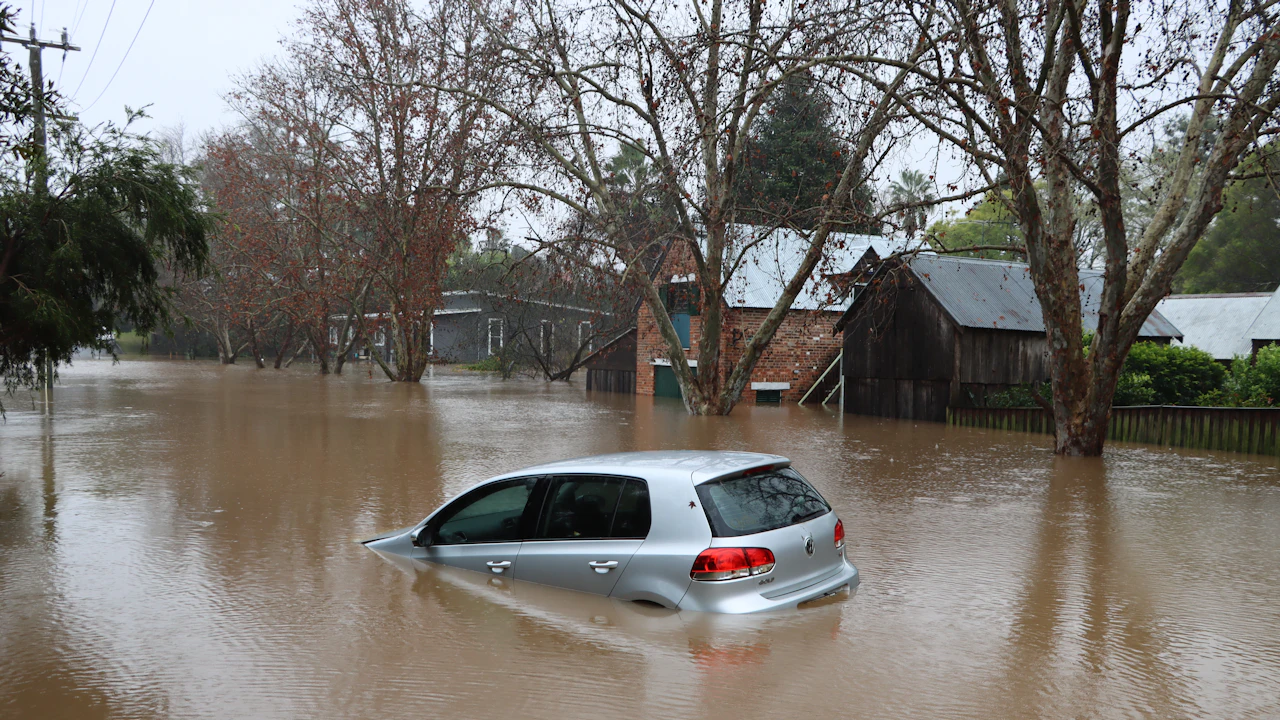
Flood damage is not bounded, and it is the reason a blanket rule about brands fails in the opposite direction. Water goes everywhere. It sits in connectors, wicks up wiring looms, gets under sound deadening, and produces faults that appear slowly, intermittently and years later — control modules that behave oddly in the wet, corrosion in places no ordinary rust reaches, seat rails and bolt heads rusting inside a dry cabin. NHTSA maintains standing public guidance on flood-damaged vehicles precisely because the damage outlives the repair. Our guide to telling ordinary corrosion from water damage covers where each one starts and why the difference is diagnostic.
Fire damage sits between the two. The visible damage may be limited to one area, but heat travels through a wiring loom and softens structural adhesive well beyond the scorch marks, and none of that is visible once new panels are on.
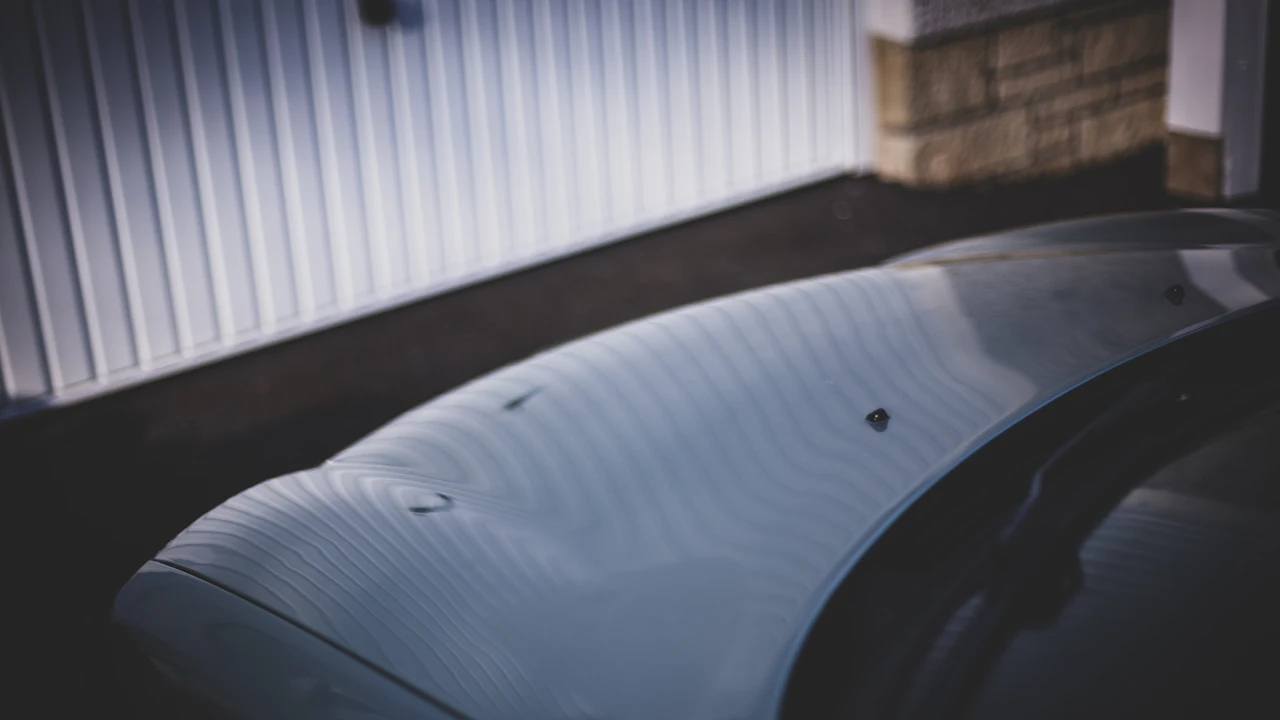
Hail is the clearest illustration of why the brand alone tells you so little. A hailstorm can dent every horizontal panel on a car without touching anything mechanical. On a vehicle with modest market value, the cost of replacing or repairing all of those panels can easily exceed what the car was worth that morning — so it is written off, branded, and enters the market carrying the same word as a car that folded in half.
The brands that have nothing to do with damage
This is the part that surprises people, and it is where blanket advice does the most harm. Several brands record events in which the car was never damaged at all.
Lemon or manufacturer buyback. Nothing was wrecked. The manufacturer repurchased the vehicle because it could not resolve a defect within the number of attempts state law allows. The car may be cosmetically and structurally perfect — and may still carry the underlying fault, unless the manufacturer identified and fixed it before putting the car back on the market. New York publishes its own Used Car Lemon Law guidance covering the rights that attach to used vehicles bought from dealers there. The question to ask about a buyback is never how bad the damage was. It is what the defect was, how many attempts it survived, and what was done about it afterwards — which is the subject of the full guide to lemon titles.
Theft recovery. Stolen, claim paid, brand applied, vehicle recovered — sometimes almost intact. This is routinely the most defensible brand on the list, with conditions. Confirm with the reporting jurisdiction that the vehicle is no longer recorded as stolen, and inspect for the damage theft actually causes rather than the damage collisions cause: ignition and steering column, door locks and glass, and anything stripped from the interior or engine bay. Our guide to checking whether a car is stolen covers the free lookups that apply here.
Odometer discrepancy. A brand of pure information rather than physical damage, and one that quietly invalidates every other judgement you have made. If the mileage is not the mileage, then the service history means something different, the wear is not proportionate to the reading, and the price is anchored to a number that is not true. NHTSA’s guidance on odometer fraud explains how the discrepancy usually gets recorded, and our guide to checking mileage against a VIN covers what the recorded history can and cannot confirm.
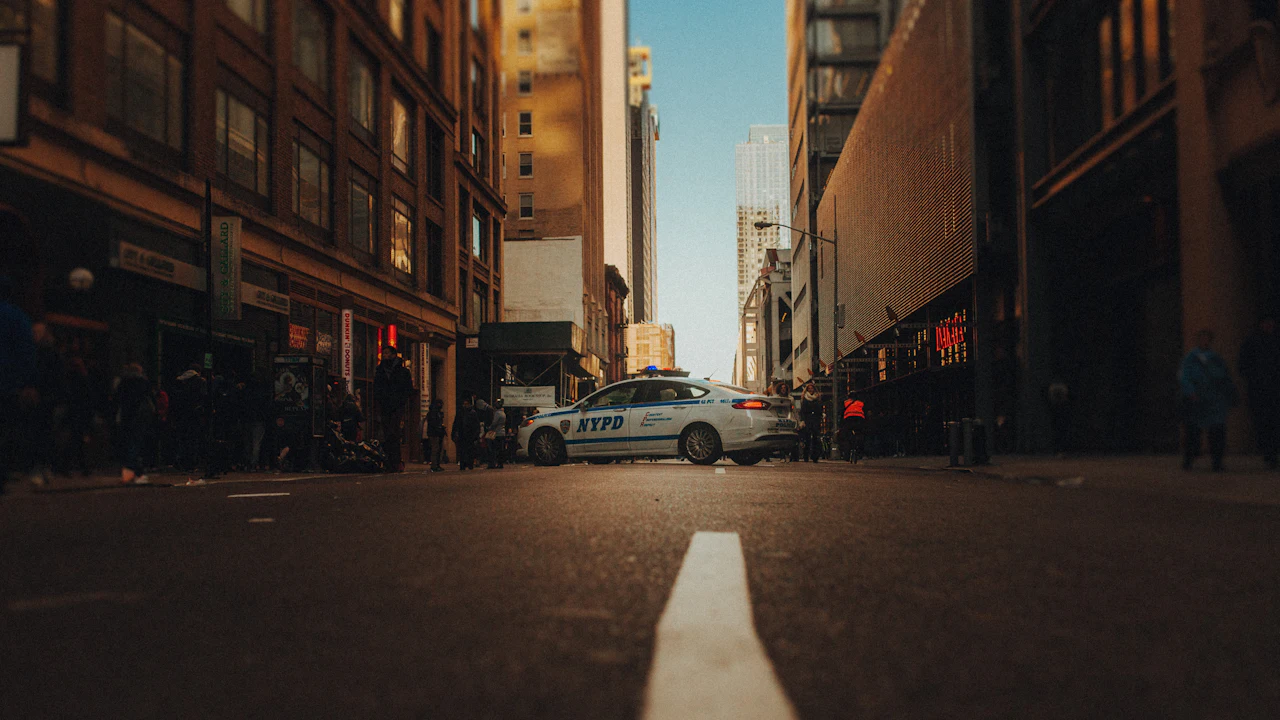
Fleet, police, taxi and livery use. No damage implied whatsoever. What these brands record is a duty cycle: constant short trips, long idle hours, many drivers, and maintenance carried out to a schedule rather than to a standard. Idle hours in particular do not show up in the mileage at all, which is why a low-mileage ex-fleet car can be considerably more worn than the reading suggests.
Is a branded title permanent?
Yes, and the ways people expect it not to be are worth naming individually because each one costs somebody money every year.
Repairing the car does not remove the brand. A salvage vehicle that is repaired and passes state re-inspection becomes rebuilt — a different brand, not the absence of one. There is no procedure anywhere in the United States that converts a branded vehicle back to a clean title.
Time does not remove the brand. Brands do not expire, age off, or become irrelevant after a number of years. A flood brand from a decade ago is on the record in exactly the same way as one from last month.
Selling the car does not remove the brand. It is attached to the VIN. Every subsequent owner inherits it, which is also why every subsequent owner pays less for it.
Moving the car to another state can remove the wording — but not the record. This is the one case where something genuinely changes, and it is the subject of the next section.
Title washing: how a brand goes missing
States apply brands, and states do not share vocabulary. One state’s salvage is another’s reconstructed. Some brands have no equivalent at all in the receiving state’s system. Every time a vehicle is retitled across a state line, the incoming brand has to be translated into the new state’s categories, and translation loses information.
Move a car through enough jurisdictions and the brand can weaken, change wording, or vanish from the document you are eventually handed. The car has not changed. The paperwork has.
This is not a theoretical loophole. It is the reason the federal system exists at all. NMVTIS keeps the history of brands applied to a vehicle by any state, not just by the one that issued the paper in front of you, and its reporting requirements reach the salvage yards and insurers that state titling systems do not.
The rule that follows from this. Do not read the title in your hand and stop. Read the vehicle’s title history across every state it has been registered in. A car that has moved through several states in quick succession — particularly if the moves cluster around a gap in the service record — deserves considerably more scrutiny than its current document alone will ever give you.
What a brand does to value, insurance and lending
Every brand, regardless of what caused it, produces the same set of consequences. They are financial rather than mechanical, and they arrive after the money has moved.
Value. The discount is permanent and it applies at both ends. You buy at a discount, which is the attraction, and you sell at a discount, to a smaller pool of buyers. There is no reliable national figure for the size of the gap because it depends on the brand, the vehicle, the local market and how well the history can be evidenced. The test worth applying is whether the gap you buy at is wider than the gap you will sell at.
Insurance. Liability cover is generally obtainable. The part that pays for damage to your own car is the part that becomes conditional, and how conditional depends on both the insurer and which brand the car carries — flood and fire attract noticeably more caution than hail or fleet use. Do not treat a quoted premium as an answer, because a cheap premium on a depressed valuation is not the bargain it looks like. Ring your own insurer with the VIN, name the brand out loud, and get physical damage cover confirmed before you buy rather than after.
Lending. Many lenders will not secure a loan against branded collateral, and those that will often want a larger deposit, a shorter term or a higher rate. The collateral is worth less and harder to resell after a repossession, so the branded market skews heavily towards cash. The CFPB’s auto loan resources are worth reading before assuming finance will be available at all.
Disclosure. A brand is on the title, which is a public record, so it cannot simply go unmentioned when you sell — and nor can a dealer omit it when selling to you. The FTC’s Used Car Rule requires a Buyers Guide displayed on every used vehicle a dealer offers, with the consumer-side guidance on buying a used car from a dealer as its companion. If you are the one selling, it is worth seeing what a buyer’s own check will return on your VIN before you write the advert, because the disclosure reads very differently when it comes from you first.
Why a clean title is not a clean bill of health
The mirror image of this topic gets far less attention and costs buyers more money in aggregate. A clean title does not mean nothing happened to the car. It means nothing was reported that met the threshold for a brand.
A cash repair, a claim that fell under the total-loss threshold, or a shop with no duty to report to anybody will all leave a badly damaged car carrying a title that reads perfectly clean. None of those routes is fraud, and none of them is rare. The full set of them, and what a clean title is genuinely worth once you know about them, is the subject of the companion guide to what a clean title actually proves.
It is the same asymmetry that makes commercial history reports weaker than their marketing suggests — they can only show what somebody chose to report. Where those gaps sit, and how large they are, is the subject of how accurate those reports actually are. The practical conclusion for this page is narrow: a title check and a physical inspection answer different questions, and neither one substitutes for the other.
How to check whether a title is branded
This takes about ten minutes and should happen before you drive anywhere to look at a car.
- Get the VIN in writing before anything else, then check that the same seventeen characters appear on the dashboard, on the door jamb and on the title itself. Three places, one number. Any disagreement between them ends the process there.
- Run the free federal checks first. The NHTSA VIN decoder confirms the vehicle is what the advert claims, and the recall lookup shows open safety campaigns. Neither costs anything.
- Check the free theft and total-loss lookup. NICB VINCheck reports what participating insurers filed, so it is a useful free signal rather than a complete record — a car stolen from an uninsured owner can be absent from it entirely.
- Pull the title and brand history across every state. This is what NMVTIS holds, and it is the only record that survives a car being retitled elsewhere. You can run a branded title check against the VIN before spending anything else on the car.
- Verify the provider is approved against the Department of Justice register of NMVTIS data providers if federal title data is what you are paying for. It is the only way to test a provider’s claim instead of taking its word.
- Read the physical title before money moves — the document itself, not a photograph — and look at the registration geography for the state-hopping pattern described above.
- Book an independent inspection and make the sale conditional on it. No database has ever examined a car.
The Department of Justice’s own advice runs in the same order: before deciding to purchase, obtain an independent vehicle inspection, get an NMVTIS report, and consult other available resources. If you want the full sequence rather than the title-specific part of it, our guide to checking a used car’s history sets out the whole process, and the comparison of report providers covers who sells what.
Should you buy a branded-title car?
The question cannot be answered at the level of the brand, which is why so much advice on it is useless. It can be answered at the level of the specific car, in four steps.
- Identify which brand it is and what caused it. Hail and a folded structure are not the same purchase. Neither are a buyback and a flood car.
- Establish whether the failure mode is knowable. Collision damage and theft damage are inspectable. Flood damage and an unresolved manufacturer defect are much less so.
- Get the evidence, or price for its absence. Photographs of the damage, parts invoices, the name of the shop, the prior title. A seller with none of it is selling you an unknown, and the discount has to pay for that.
- Confirm you can absorb the financial consequences. Cash purchase, physical damage cover confirmed in advance, and no expectation of getting the money back out on resale.
If all four hold, a branded car can be a genuinely good purchase and the discount is real money. If any one of them fails — particularly the fourth — the saving is a loan against your own resale value, and the interest is charged in ways that do not show up until you sell. A full pre-purchase inspection by someone who knows collision repair is the single step that turns this from a gamble into a decision.
Frequently asked questions
What does branded title mean?
It means a state has attached a permanent descriptive label to the vehicle’s title recording something about its status — that it was declared a total loss, damaged by flood or fire, repurchased by the manufacturer, reported stolen, or used as a fleet or police vehicle, among others. The brand describes an event that was reported, not the vehicle’s condition today, and it follows the VIN rather than the owner.
What is the difference between a branded title and a salvage title?
Branded is the category and salvage is one brand inside it. Every salvage title is a branded title, but a branded title might instead record flood damage, a manufacturer buyback, an odometer discrepancy, a theft claim or previous fleet use. Asking whether a car is branded is the first question; asking which brand it carries is the one that actually determines what you should do.
Is a branded title bad?
It is a permanent financial constraint rather than a verdict on the car. Every brand costs you value, insurance options, access to lending and future buyers. What it tells you about the vehicle itself depends entirely on which brand it is — a hail brand and a flood brand imply completely different risks, and the word branded alone does not distinguish them.
Can a branded title be removed or cleared?
No. Repairing the car does not remove it — a repaired salvage vehicle becomes rebuilt, which is a different brand rather than the absence of one. Time does not remove it, and neither does selling the car. The only thing that can change is the wording on a state-issued document when a vehicle is retitled elsewhere, and the underlying record in NMVTIS persists regardless.
Does a branded title mean the car was in an accident?
Not necessarily. Several brands record events with no collision involved at all: a manufacturer buyback under a lemon law, a theft claim on a vehicle later recovered intact, an odometer discrepancy, or previous service as a taxi, police or fleet vehicle. Flood and fire brands involve damage but not a crash. The brand tells you a reportable event occurred; it does not tell you it was a collision.
How much does a branded title reduce a car’s value?
Substantially, and permanently, but there is no reliable national percentage. The size of the discount depends on the brand, the vehicle, the local market and how thoroughly the history and any repair can be evidenced. The useful comparison is not the headline discount but whether the gap you buy at is wider than the gap you will sell at, once restricted insurance and limited financing are counted.
Can you insure a car with a branded title?
Liability cover is generally available. Comprehensive and collision cover is the difficulty — an insurer may decline it, may require its own inspection first, or may write it on terms that pay out based on a value already depressed by the brand. Ring your own insurer with the VIN before you buy and ask directly whether physical damage cover is available and how a total loss would be valued.
How do I check if a car has a branded title?
Get the VIN in writing and match it to the vehicle and the physical title. Run the free federal decoder and recall lookups, then check the free theft and total-loss lookup. Then pull the title and brand history across every state the vehicle has been registered in, since that is the only record that survives retitling. Read the physical title before money moves, and book an independent inspection regardless of what the record says.
Do branded titles show up on a vehicle history report?
Usually, but the coverage depends on where the report gets its data. Federal title records reach the insurers, salvage yards and recyclers that are required by law to report, which is why brands rarely escape them entirely. Commercial reports draw on additional sources and have different gaps — an event nobody reported cannot appear on any report, from any provider.
Is a clean title a guarantee the car is undamaged?
No, and this is the most expensive misunderstanding on the topic. A clean title means nothing was reported that met the threshold for a brand. A car repaired with cash, or damaged below the total-loss threshold, or fixed by a shop that reports to nobody, keeps a clean title with the damage entirely unrecorded. A title check confirms what was reported; an inspection confirms what happened.
What is title washing?
Moving a vehicle between states so that a brand weakens, changes wording or disappears from the title document. It works because states use different vocabulary and each receiving state has to translate an incoming brand into its own categories. It fails against the federal record, which retains brands applied by any state — which is exactly why checking title history across every state matters more than reading the document you are handed.
Should I avoid branded-title cars entirely?
As a default rule it is defensible, because the failure modes are hidden and the financial penalties are certain. It stops being correct in specific cases: a knowable cause such as hail or a theft recovery, a documented and independently inspected repair, a cash purchase with physical damage cover confirmed in advance, and a discount wide enough to pay for the constraints. If you cannot satisfy all four, the default is the right answer.
Sources and further reading
- NMVTIS (US Department of Justice)
- NMVTIS approved data providers
- Understanding an NMVTIS Vehicle History Report
- TxDMV salvage vehicles and title brands
- NHTSA flood-damaged vehicles
- NY Attorney General: Used Car Lemon Law
- NHTSA odometer fraud
- NICB VINCheck
- NHTSA VIN decoder
- NHTSA recall lookup
- FTC Used Car Rule
- FTC used car buying guide
- CFPB auto loan resources
Recall, complaint and safety-rating figures on this page were retrieved from the federal databases above on August 19, 2026. Federal data changes — re-check any VIN before you rely on it.
Published August 24, 2026 · last updated August 24, 2026. Found something out of date or wrong? Tell us and we will correct it.