Allstate Roadside Assistance: Plans, Tow Limits and Claims
Allstate sells roadside help as Allstate Motor Club memberships, a pay-per-use service and a line on its auto policies. What each one costs and covers as Allstate prints it, how rescues are counted, who pays for the fuel, when using it is an insurance claim, and what the public pages leave out about cancelling.
The short version
- Allstate sells roadside help four ways: memberships from Allstate Motor Club, Inc. (marketed as Allstate Roadside), a pay-per-use service once called Good Hands Rescue, roadside coverage added to an Allstate auto policy, and programs other businesses sell under their own names.
- On 25 October 2026 Allstate printed Roadside Assist at $75 for the first year and $78 after, with tows up to 15 miles; Roadside Advantage at $99, then $111, with tows up to 25 miles and tire and wheel repair. Roadside Elite, sold through agents or by phone, tows up to 100 miles.
- The plan cards say “Up to 5 rescues a year,” but the footnotes give 3 a year for you and one household member. The 5 needs a paid household add-on.
- Using a membership is “not considered an insurance claim,” Allstate says. Roadside on an auto policy is different: “you will need to file a claim,” and the price of that coverage may go up.
- Rescue benefits start 72 hours after you join. Fuel delivery is a listed service, but the fuel itself is charged at a flat rate when you ask.
- No Allstate page we read prints cancellation or refund terms. Everything is “subject to the terms and conditions in the Membership Guide,” which Allstate does not post. Ask for it before you pay.
Allstate roadside assistance is not one product. The name covers a motor-club membership you can buy without being an Allstate customer, a one-off service you pay for when you are stuck, a coverage line on an Allstate car insurance policy, and roadside programs Allstate runs for car makers, insurers and other businesses. Each has its own limits and its own answer on whether using it counts against your insurance. On 25 October 2026 we read Allstate’s roadside overview, its membership plans page and footnotes, its pay-per-use page, its roadside FAQ, its business and rescuer-network pages and both sets of website terms, then The Allstate Corporation’s 2025 Form 10-K and June 30, 2026 Form 10-Q and California’s list of motor clubs. This site has no commercial relationship with Allstate or any roadside, warranty or insurance company. We print no phone numbers; use the one on your own plan’s documents or Allstate’s roadside page.
The four ways Allstate sells roadside help
Allstate’s FAQ page says “You can get roadside assistance in two different ways”: buy a membership, or use pay-per-use “with no ongoing commitment.” Its overview page adds a third, “auto policy roadside plans,” in the answers to its own questions, and a separate business site sells a fourth. They differ in who stands behind them and in what happens when you use them.
| Product | Who stands behind it | Allstate policy needed? | How you pay |
|---|---|---|---|
| Allstate Roadside membership: Roadside Assist, Roadside Advantage, Roadside Elite | Allstate Motor Club, Inc. | No | An annual fee; Assist and Advantage online, Elite through an agent or by phone |
| Pay-per-use (formerly Good Hands Rescue) | Not named on the pages we read | No | A fee each time you ask for help; the overview prints a tow at $154 |
| Roadside on an Allstate auto policy | The Allstate insurer that issues your policy | Yes | Part of the policy; each use is filed as a claim |
| Programs for other businesses | Allstate Roadside Services, under the business’s name or both names | Depends on the program | Set by the business that offers it |
So first settle which one you have. A membership card or roadside login means a motor-club plan; roadside on your auto policy’s declarations means the insurance version; paying on the spot when stuck was pay-per-use. If a car maker, phone carrier or employer gave you roadside help, Allstate may run it under another name, and that plan’s own terms apply.
Who stands behind Allstate Roadside
The membership plans page names the company in its footnote: “All membership plans are product of and are administered by Allstate Motor Club, Inc., Allstate Roadside is the marketing name for Allstate Motor Club, Inc., a member of the Allstate family of companies.” It is not among the insurers on Allstate’s underwriting companies page: a membership is a motor-club contract, not an insurance policy. Our page on mechanical breakdown insurance explains why the kind of company behind a promise matters.
Public records fill in the rest. Exhibit 21 to The Allstate Corporation’s 2025 Form 10-K, its list of subsidiaries, gives “Allstate Motor Club, Inc. Delaware.” The California Department of Insurance’s “List of Motor Club Assigned CA Company Codes” (a one-page PDF dated 12-01-2025 in its file name) includes “ALLSTATE MOTOR CLUB, INC. M3426.” The same exhibit lists other motor clubs in Allstate’s group, National General Motor Club, Inc. (NatGen Motor Club in Texas) and four Signature Motor Club or Signature Nationwide Auto Club companies, so a card naming one of them can come from Allstate’s group without saying Allstate.
In the 10-K, roadside is one of five businesses in a segment called Protection Services. The filing describes Roadside as “Towing, jump-start, lockout, fuel delivery and tire change services,” sold through “Allstate exclusive agents, direct to consumer, wholesale partners, affinity groups and on-demand mobile application service.” The figures it reports:
| Measure | 2023 | 2024 | 2025 | First half of 2026 |
|---|---|---|---|---|
| Roadside assistance revenue ($ millions) | 195 | 150 | 160 | 96 (75 a year earlier) |
| Roadside adjusted net income ($ millions) | 24 | 39 | 46 | 25 (22 a year earlier) |
| Roadside policies in force (thousands, end of period) | 553 | 758 | 1,244 | 1,520 on June 30 (988 a year earlier) |
By our arithmetic, Roadside policies in force more than doubled between the end of 2023 and the end of 2025 while roadside revenue fell $35 million, or 17.9%, and by June 30, 2026 they stood at about 1.52 million, 53.8% more than a year before. The 10-K says policy counts “are based on items rather than customers” but does not say how a Roadside membership or program is counted, or split the count by product. They also book roadside revenues as premiums “as the products are backed by insurance”; that is accounting, and it does not change Allstate’s answer on claims.
For businesses, Allstate offers “white-label or co-branded, data-driven roadside services with 24/7 support, managed entirely by Allstate,” claiming “over 65 years and 40 million rescues.” One example this site has read: GM’s 2018 certified pre-owned brochure said “Roadside assistance provided by Allstate” (see our Chevrolet certified pre-owned page). Allstate’s name is also on products that are not roadside plans, such as the “Allstate® Tire Road Hazard Protection” sold by Tire Agent (read 17 October 2026) and the GAP that Enterprise Car Sales says it offers with Allstate (read 6 October 2026); the 10-K places road hazard and GAP products in a different business, Dealer Services. Other firms, such as Agero, also run roadside help under other brands’ names.
Allstate Roadside membership plans, limits and prices
The plans page offers two memberships online, Roadside Assist and Roadside Advantage. The overview’s answers and the FAQ page describe a third, Roadside Elite, which you join through “your Allstate agent” or by phone. Everything the three pages print about each:
| Term | Roadside Assist | Roadside Advantage | Roadside Elite |
|---|---|---|---|
| First-year price | $75 (shown as $6.25 a month) | $99 (shown as $8.25 a month) | Not printed |
| Renewal, year two onward | $78 a year | $111 a year | Not printed |
| Towing | Up to 15 miles per tow | Up to 25 miles per tow | Up to 100 miles |
| Rescues a year | 3 for you and one household member; 5 with the household add-on | 3 for you and one household member; 5 with the household add-on | 5 for you or a household member; 7 with the household upgrade |
| Household add-on | $45 a year, up to 5 more members | $50, up to 5 more members | Not printed |
| Trip interruption | Up to $1,000 | Up to $1,500 | Not printed |
| Tire and wheel repair or replacement | “No coverage” | Two incidents per household a year, up to $100 each; not in Massachusetts | Not printed |
| Motorcycle and RV protection | Listed | Listed | Not printed |
| Where you buy it | Online or through an agent | Online or through an agent | Through an agent or by phone |
The monthly figure is the first-year price spread over twelve months ($6.25 times 12 is $75, and $8.25 times 12 is $99, by our arithmetic), and the overview advertises “Join for as little as $75.” Renewal costs more: $3 more for Assist and $12 (12.1%) more for Advantage, by our arithmetic. With the household add-on at the printed prices, the first year comes to $120 for Assist and $149 for Advantage, and renewal to $123 and $161 if the add-on price stays the same (our arithmetic; Allstate prints the parts, not these totals). Allstate says “additional services, discounts, and offers” are “subject to change”; treat every price here as the one printed on 25 October 2026.
The towing limit is the term to check against your own driving: how far is the repair shop you trust? Allstate describes the tow as going “to the destination of your choice, including your home, a repair facility or a dealership, up to your plan’s towing benefit limit.” The pages do not say what a tow beyond 15 or 25 miles costs you, so ask before you join if your usual shop is farther away.
How rescues are counted, and who is covered
The number on the plan cards is the most generous reading. Both cards say “Up to 5 rescues a year.” The footnotes say what that means: “Roadside Assist includes 3 rescues per year for a primary member and one additional household member. 5 rescues per year for a primary member, one additional household member and up to 5 additional household members,” and the same for Advantage. The overview’s answer agrees: “Three service calls per year for you or a household member,” and “Five service calls per year for 3-7 household members with household plan upgrade.” So a single driver or a couple gets 3 rescues a year; the 5 comes with the paid add-on, for a household of up to seven people.
The household count is printed two ways. The cards say “up to 5 other household members for an additional charge”; footnote 7 says “7 total members including you and a free household member,” which is six others by our arithmetic. The Membership Guide decides who counts as a household member.
A membership follows the person, not the car. Allstate’s answer: “Roadside Assist, Advantage and Elite all cover any car that you drive or ride in as a passenger.” That differs from the policy version, which covers named insureds “in any car they are driving, but not as passengers.”
Two timing rules matter. “You can start using your rescue benefits 72 hours after enrolling, subject to payment of dues,” so joining from the roadside will not cover the breakdown you are having; Allstate’s answer for that moment is pay-per-use. And the count runs per “annual membership period”; once it is used up, “Additional roadside services can be requested on a pay-per-use basis.”
Fuel, tires, batteries, lockouts and trip interruption
The plan cards list “Fuel delivery and cost of fuel.” The footnote says otherwise: “Member pays for fuel, which is charged as a flat rate at the time of rescue request. One fuel delivery within a 24-hour period allowed.” The plans page intro and the pay-per-use page both say “fuel at member’s expense,” and Allstate’s own roadside article says that “in most cases, the gas is provided at cost to the customer.” The delivery is the benefit; the fuel is yours to pay for.
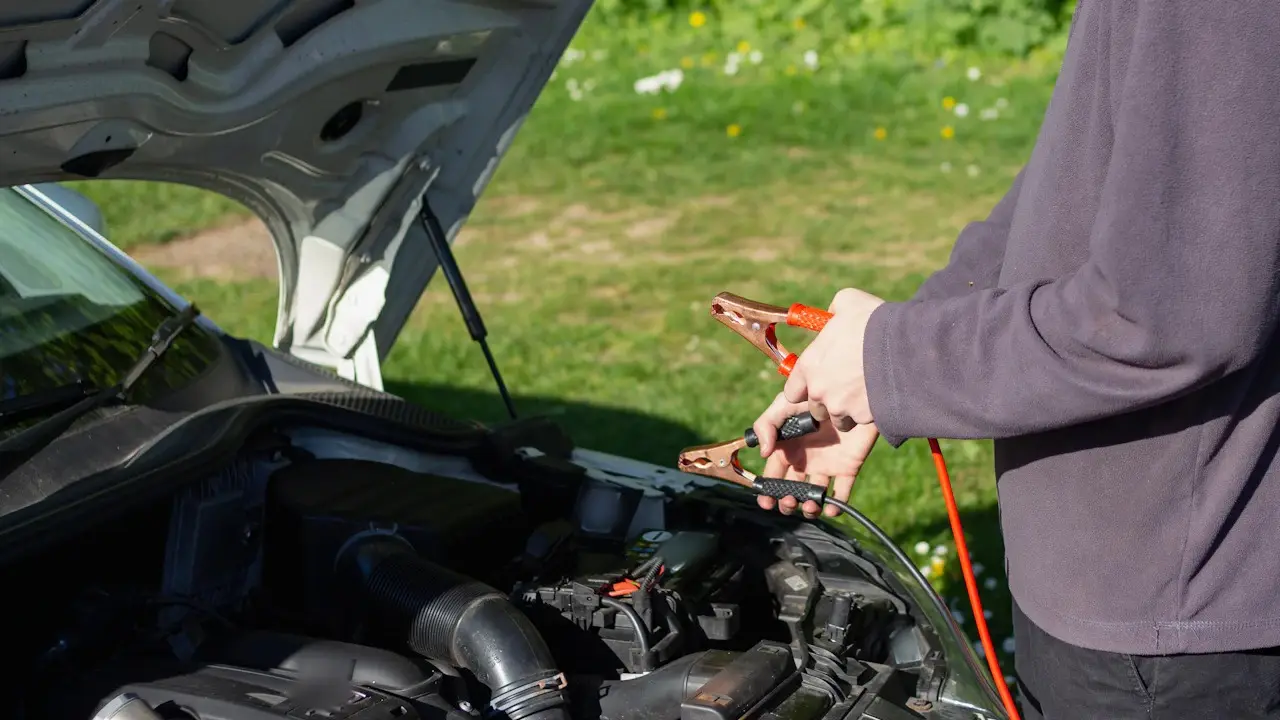
The other services are listed in plain terms: “Jump-starting your vehicle if your battery is out of power,” “Unlocking your vehicle if you’re locked out,” and “Changing a flat tire, including putting on your spare.” A jump start does not tell you whether the battery is failing (see bad-battery symptoms and battery warranties); a lockout opens the car but does not replace a lost key (see why a second key matters); and a tire change needs a spare, while Allstate’s own article notes that “Not all new cars come with a spare tire” (some use run-flat tires instead).
Roadside Advantage adds tire and wheel repair. The benefit “applies if tire and/or wheel on an eligible vehicle is damaged due to a covered road hazard and is safely repairable. If it can’t be safely repaired, it may be replaced with the same or comparable quality tire/wheel.” Allstate reimburses “two incidents per household per year (up to $100 each),” so at most $200 a year by our arithmetic, and the benefit is “Not available in MA.” Roadside Assist’s card says “No coverage.”
Trip interruption is the long-distance benefit: up to $1,000 on Assist and $1,500 on Advantage. Footnote 5 sets the conditions. You must be “more than 100 miles from your place of residence in an eligible vehicle,” the car must become “inoperable or unsafe to drive due to collision or mechanical breakdown,” and it must be “towed by a commercial service provider or driven to a repair facility in the vicinity.” Expenses count if “incurred within 3 days of the incident or until the repair is complete, whichever is shorter,” subject to “documentation requirements,” so keep receipts. What qualifies: a rental car or commercial transportation (including airline, bus or train fare), meals and lodging near where the car broke down, and ambulance charges, which “are not available in the states of California or Massachusetts.”
It is also the only part of the membership with a printed list of exclusions. Allstate says trip interruption does not cover, “including but not limited to”:
- fire, or theft;
- meals or lodging bought away from where the car was disabled, or not provided by a commercial business;
- renting tow bars or other equipment to tow the car home;
- expenses of anyone not listed on the membership;
- personal items, groceries, sundries, alcohol and other miscellaneous items;
- regular maintenance such as an oil change or tire rotation;
- repair expenses and medical expenses;
- expenses paid by your insurance company.
No consumer page we read mentions winching (pulling a car out of a ditch, mud or snow), as a service or as an exclusion. If you need it, ask before you buy.
Pay-per-use: roadside help without a membership
Pay-per-use is for drivers with no plan: “With pay-per-use (previously known as Good Hands Rescue), you don’t have to be an Allstate customer to experience the benefits of mobile access roadside assistance.” There is no sign-up fee (“With no membership fees, you pay only when you need help”), and you “Receive a confirmation and ETA the moment help is dispatched.” The page lists five services:
- towing (“flat-bed tow trucks for electric cars”);
- tire change;
- lockouts;
- jump-starts;
- fuel delivery (“fuel at member’s expense”).
The only price we found is on the overview page, which advertises: “Get your vehicle towed for just $154.” The pay-per-use page itself prints no prices, and no page we read prices a jump start, lockout or tire change, says how far the $154 tow goes, or names the company that provides pay-per-use. The FAQ says only that “Pay-per-use roadside assistance means that you pay a fee every time you request assistance.” The charge appears when you request help, which we did not do.
If you already have roadside help through your car, its tires or a warranty (see the table below), that plan may cover the job before you pay for one.
Roadside on an Allstate auto policy
Allstate’s roadside pages describe the policy option only in answers to their own questions, under the name “auto policy roadside plans.” What they say:
- calls: “Unlimited service calls”;
- towing: “Possible reimbursement on towing costs based upon how far your vehicle is towed and the details of your coverage”;
- who is covered: “named insureds in any car they are driving, but not as passengers”;
- claims: “for auto policy roadside plans, you will need to file a claim for towing and other services related to your event.”
“Possible reimbursement” suggests you may pay first and claim the money back. The pages print no mileage limit, dollar cap or deductible for this option; those sit in your policy. Allstate’s own summary on its car-coverages page says so in general terms: “Your insurance policy is the legal contract that contains the terms and limitations of your coverage.” Its website terms add that coverage descriptions on the site “are for general description purposes only” and that “The Site shall not amend, modify or supplement any insurance policy or contract.”
Allstate’s general article on towing and labor cost coverage (last updated November 2023) describes this kind of add-on across insurers, not Allstate’s own: services “will vary by insurer,” it “doesn’t typically cover the cost of any needed parts,” and there may be “a cap on the cost of each incident or a limit on the number of claims you can file each year.” For your own policy, the declarations page and policy booklet are the answer; we did not read Allstate’s policy wording for this coverage.
Does using Allstate roadside count as an insurance claim?
Allstate answers this directly, and the answer depends on which product you have:
| Product | Is using it an insurance claim? | Can it change what you pay? |
|---|---|---|
| Membership (Assist, Advantage, Elite) | No: “roadside assistance from your membership plan is not considered an insurance claim” | No: events “will not impact your auto insurance premium” |
| Roadside on an auto policy | Yes: “you will need to file a claim for towing and other services” | Yes: “the price of roadside coverage may increase” |
| Pay-per-use | Not addressed on the pages we read; no policy or membership is involved | Not addressed |
The overview’s fuller sentence adds a condition: “the price of roadside coverage may increase if you receive towing or other services that require you to file an auto insurance claim or if your roadside assistance is an added feature to your auto insurance policy.” For members, the FAQ page adds that services “will not be recorded as a claim on your auto insurance policy.” The same page also says, without qualification, “Roadside assistance is separate from your Allstate auto insurance policy, so it won’t impact your insurance rate,” which is true of a membership but not, by the overview’s own words, of the policy version.
If roadside help is part of your Allstate auto policy, each use is a claim. Allstate says you “will need to file a claim for towing and other services,” and that the price of the roadside coverage may increase. A membership is the version Allstate says is not a claim. Check your declarations page to see which one you have before you call.
How a rescue request works, as Allstate describes it
You request help by phone, in the Allstate app or on Allstate’s roadside website, where, Allstate says, “you can get qualified help and use real-time tracking.” Allstate promises an “Allstate-approved nationwide network of providers across the United States and Canada” and says “Most requests handled in 30 minutes or less,” without defining “handled.”
Who arrives depends on the job. Allstate’s FAQ credits “the only crowd-sourced rescue network in the industry” for “faster rescues.” Its recruiting page explains that network, the Good Hands Rescue Network: “a network of independent roadside professionals” who change tires, deliver fuel, jump-start cars and perform lockouts. That list leaves out towing; Allstate’s business contact page separately seeks “high-performing providers for all levels of towing requests as well as non-tow roadside assistance.” The recruiting page describes the dispatch:
- “The Rescue Network app automatically picks the rescuer closest to a customer event and offers the service opportunity to them.” If that rescuer does not accept within “a short period of time,” the offer goes “to the next closest rescuer.”
- Offers are “estimated to be within a 45-minute drive,” and “most rescues are within 30 mins” of the rescuer’s location; GPS sets the arrival estimate, though rescuers “can add extra time.”
- The program covers “select cities across the U.S.,” and “Due to the legal restrictions, lockout services are not available everywhere.”
About the person who shows up: rescuers are independent contractors who sign “an independent service contract” and pass a “background check process including ongoing checks” and a drug screen, but “do not need to have special certifications or a Commercial Driver’s License (CDL).” They must carry a “Jump starter battery pack (commercial-grade - no jumper cables)”; our guide to jump packs explains why. A rescuer “should never solicit a tip from a customer.” Allstate says rescuers earn “an average of $22+ per rescue” on 2026 offers; that is what Allstate pays them, not what you pay.
Before you buy: cancelling, the Membership Guide, and roadside you may already have
We looked for Allstate’s cancellation and refund terms and did not find them. No page we read says whether a membership renews automatically, how to cancel, or whether a refund is full, partial or none. The plans page points elsewhere: “All benefits are subject to the terms and conditions in the Membership Guide, including the membership benefit summary.” The guide is not posted on the public pages or listed in Allstate’s sitemap, and its robots.txt closes Allstate’s document folder to automated readers, so we did not look there. It is also where the definition of a household member, any winching or extra-mileage terms and the meaning of “eligible vehicle” would sit. Ask for it before you pay, and keep a copy.
Before you buy any roadside plan, check what you already have. A car, its tires or a warranty often come with roadside help. This site has read these terms in other plans (copied from our pages, with the date each was read):
| Plan | What it prints | Read on |
|---|---|---|
| Carvana 100-Day Limited Warranty and CarvanaCare | Roadside “includes towing (up to $200), jump start, flat tire assistance, locksmith assistance, and emergency gas/fluids assistance” | 30 September 2026 |
| Volvo roadside | “complimentary towing, regardless of age or mileage,” for 25 miles to an authorized Volvo dealer or Volvo Certified Collision Center | 30 September 2026 |
| Lincoln Protect service contract | If you arrange your own tow, reimbursement “up to $100 per disablement,” with a written request within twenty (20) days | 1 October 2026 |
| Michelin replacement tires | Roadside “for 3 years after you purchase,” and if no inflated spare is available, towing “at no cost (up to 150 miles)” to the nearest approved Michelin retailer | 7 October 2026 |
| Tire Discounters | “With any annual $25 purchase,” reimbursement “up to $75 nationwide” for towing, jump starts, lock-outs and flat changes | 9 October 2026 |
| Sam’s Club tire installation | “For four years from the date of purchase,” emergency roadside help including towing, fuel delivery, lockout, jump start and “winching/extraction” | 7 October 2026 |
This table compares no prices or quality; each plan’s own terms decide what it pays, and the limits are written in miles on some plans and dollars on others. Our guide to extended warranty companies explains how to find out who stands behind a plan bundled with a used car.
- Find out which Allstate product you have. A membership card or roadside login means a motor-club plan; roadside on your declarations page means the policy version, and each use is a claim.
- Measure the tow you would need. Assist covers up to 15 miles per tow, Advantage 25 and Elite 100. Ask what a longer tow costs before you join.
- Count the drivers. The base plans give 3 rescues a year for you and one household member; 5 needs the household add-on ($45 or $50 a year at the printed prices).
- Join before you need it. Rescue benefits start 72 hours after enrolling. In a breakdown today, pay-per-use is Allstate’s option.
- Budget for fuel. Delivery is included; the fuel is charged at a flat rate, one delivery per 24 hours.
- Ask for the Membership Guide. Cancellation, refund, renewal, winching and household rules are not on the public pages.
- Keep receipts on long trips. Trip interruption pays only more than 100 miles from home, within 3 days or until the repair is done, with documentation.
- Check what you already have. Your car’s warranty, a service contract or your tires may include roadside help.
Where Allstate’s own pages disagree
Allstate’s roadside pages do not always match. The differences we found on 25 October 2026:
| Topic | One page says | Another says |
|---|---|---|
| How many plans | Overview: “three plans to choose from” | Plans page: “With two service options”; Elite appears only in the FAQ answers |
| Rescues a year | Plan cards: “Up to 5 rescues a year” | Footnotes: 3 for a member and one household member; 5 only with added household members |
| Household size | Cards: “up to 5 other household members” | Footnote: “7 total members including you and a free household member,” six others by our arithmetic |
| The fuel | Cards: “Fuel delivery and cost of fuel” | Footnote: “Member pays for fuel, which is charged as a flat rate” |
| Out-of-pocket costs | FAQ: “you won’t have any out-of-pocket expenses” | Fuel is charged at a flat rate; tows stop at the plan’s mileage |
| Effect on your rate | FAQ page: roadside “won’t impact your insurance rate” | Overview: on a policy plan you file a claim and “the price of roadside coverage may increase” |
| Trip interruption | Overview: car “towed or driven to a repair facility” | Footnote: “in an eligible vehicle” and “towed by a commercial service provider” |
| Which website terms apply | Footer “terms of use” link: terms last updated June 30, 2026 | Privacy-center terms, effective May 27, 2025, which “apply only to your use of customeronline.allstate.com” |
In most rows the footnote is the stricter statement, and the plans page says the Membership Guide governs all of them. We found no regulator action naming Allstate Motor Club, Inc. in searches on 25 October 2026; that is a search result, not a clearance. Those website terms also bar “bots, scrapers, spiders,” so we read each Allstate page once, by hand, and quote it briefly.
Common questions
Does Allstate roadside assistance count as a claim?
It depends on the product. Allstate says membership use “is not considered an insurance claim” and will not affect your auto premium. If roadside help is part of your Allstate auto policy, “you will need to file a claim,” and the price of that coverage may increase. Your declarations page shows which you have.
How much does Allstate roadside assistance cost?
On 25 October 2026: Roadside Assist $75 for the first year and $78 after; Roadside Advantage $99, then $111; the household add-on $45 or $50 a year. Pay-per-use has no membership fee, and the overview advertises a tow “for just $154.” No Elite price is printed. Prices can change.
How many tows do you get with Allstate roadside, and how far?
Memberships give 3 rescues a year for you and one household member, or 5 with the household add-on; Roadside Elite gives 5, or 7 with its household upgrade. Each tow goes up to 15 miles on Assist, 25 on Advantage and 100 on Elite, to a destination you choose. Auto policy roadside plans include “Unlimited service calls.”
Do I need Allstate insurance to get Allstate roadside assistance?
No. “Roadside membership plans are available even if you do not have an Allstate auto insurance policy,” and pay-per-use is open to anyone. Only the policy version needs an Allstate auto policy. A membership covers “any car that you drive or ride in as a passenger,” in the U.S. or Canada.
What is Allstate Motor Club?
Allstate Motor Club, Inc. is the company behind Allstate Roadside memberships: “Allstate Roadside is the marketing name for Allstate Motor Club, Inc.” It is a Delaware company in The Allstate Corporation’s subsidiary list and appears on California’s list of motor clubs. It is a motor club, not one of Allstate’s insurance companies.
How do I contact Allstate roadside assistance?
We print no phone numbers. Allstate’s roadside page lists the number for plan members and pay-per-use; if your roadside help comes through another company’s program, use the number in that program’s documents. Allstate says requests can also be made in the Allstate app or on its roadside website.
Sources and further reading
Recall, complaint and safety-rating figures on this page were retrieved from the federal databases above on August 19, 2026. Federal data changes — re-check any VIN before you rely on it.
Published October 25, 2026 · last updated October 25, 2026. Found something out of date or wrong? Tell us and we will correct it.